
Lightweight or mid-weight hiking boot
A conservative balance of grip, coverage and structure
Fit first · terrain second · brand third
Choose footwear that already fits your feet, grips uneven stone and survives repeated descents. A famous model that has not passed your trail test is not the best boot.
There is no universal best pair.
That is a conservative starting category, not a rule. Experienced hikers should usually keep a proven hiking shoe or trail runner rather than switch to an unfamiliar heavy boot for Peru.
The winning pair has secure heel hold, downhill toe room, useful tread and several successful training walks behind it.
Choose your footwear categoryFast decision
This identifies categories to try. It cannot select a last, size or volume remotely.
A conservative balance of grip, coverage and structure
Keep the system already tested on steep terrain
Useful against external moisture, with a ventilation trade-off
Faster ventilation and often faster drying in suitable conditions
Do not solve width by buying excessive length
Test it while carrying the expected load
What the route asks of footwear
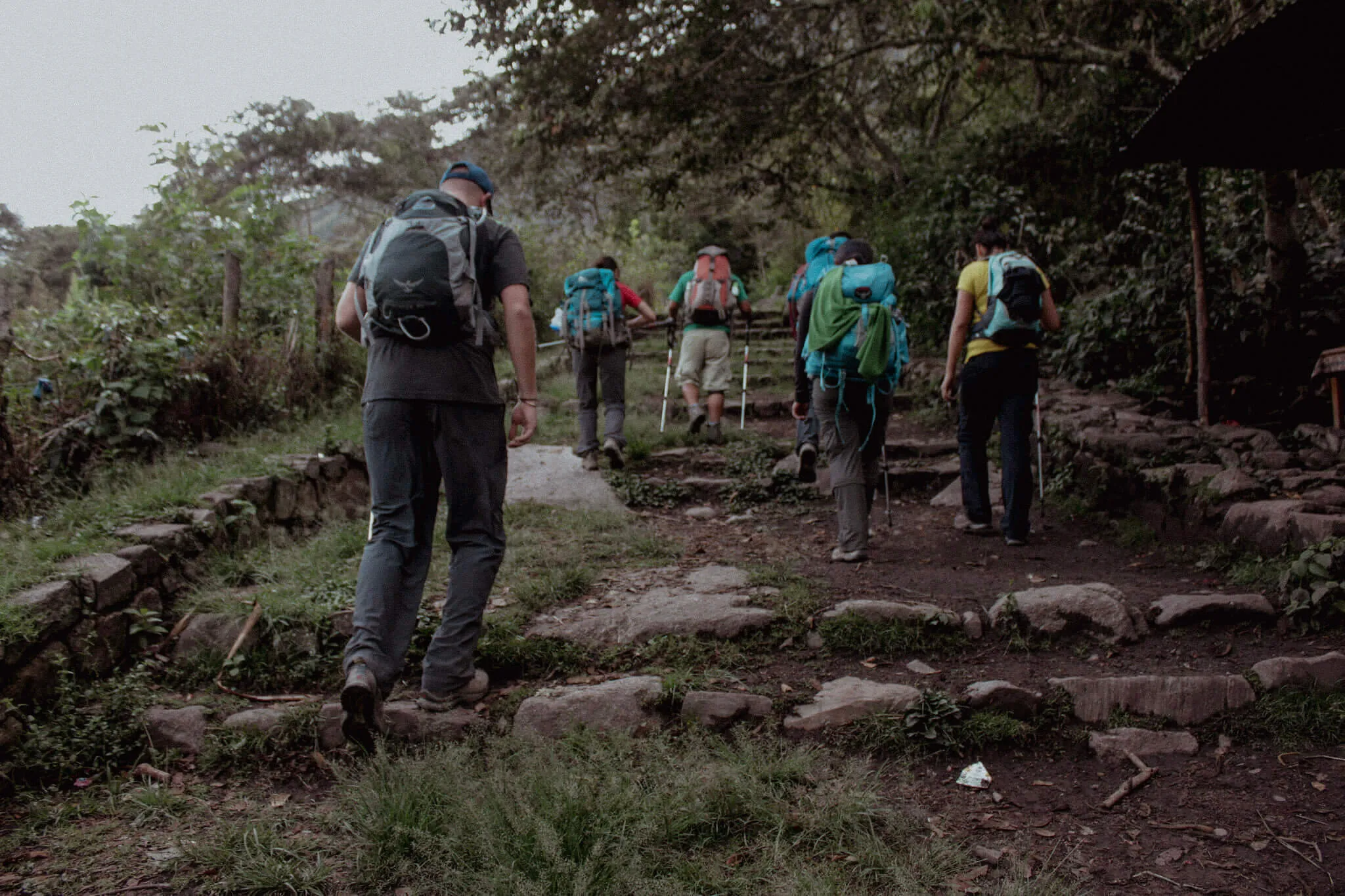
The Classic route’s footwear problem is repetition across changing surfaces, not one dramatic step.
The foot repeatedly lands at different angles. A secure heel and trail-specific outsole matter more than a fashionable upper.
Toes move forward and tired legs change control. Downhill fit is the decisive test.
Rain, mud and polished stone increase the importance of useful tread. Waterproofing cannot compensate for a worn sole.
A minor pressure point becomes thousands of repeated contacts. Proven comfort matters more than five good minutes in a shop.
Boot, shoe or trail runner?
Choose the system you can control after hours of climbing and descending.
More coverage and commonly more structure. Useful for first-time trekkers or hikers who feel more controlled in a boot.
Trade-off: weight, warmth and potentially slower dryingTrail outsole and protective upper with less bulk. Logical for hikers who dislike a collar.
Trade-off: less coverage and easier water entry from aboveFlexible, light and often breathable. Appropriate when already proven on long mountain days.
Trade-off: less protection; some designs require adaptationHow this shortlist was built
We matched manufacturer-published designs to recurring needs: traction, wet-weather management, fit options, structure and prior-user experience.
We did not laboratory-test grip, durability or fit, and we do not convert brand language into an independent score.
Current examples · August 2026
Specifications and regional stock change. Verify the exact version before purchase.
Consider forA practical starting point for many first-time trekkers
Salomon lists a mid height, stable support, GORE-TEX membrane and All-Terrain Contagrip for wet, rocky, muddy and mixed terrain.
Official product page →Consider forHikers who prefer a softer, shoe-like ride
HOKA publishes GORE-TEX construction, a lightweight sugarcane EVA midsole, toe protection and a Vibram Megagrip outsole.
Official product page →Consider forTrekkers prioritizing protection and a substantial upper
La Sportiva describes a waterproof, breathable lining and an outsole designed for steep descents, slick trail and uneven ground.
Official product page →Consider forHikers who know a standard width compresses the foot
KEEN’s current wide version adds overall foot volume and girth, with waterproofing, multidirectional lugs and a heel-capture system.
Official product page →Consider forHikers who prefer a traditional, supportive boot feel
LOWA recommends it for all-day trail hikes and short-to-moderate backpacking trips and offers multiple widths.
Official product page →Consider forExperienced users adapted to low-cut, zero-drop footwear
Altra lists a 0 mm drop, roomy FootShape design, MaxTrac outsole and trail running, hiking and thru-hiking uses.
Official product page →
The home test matters more
Feet can change volume through the day. Try both feet rather than sizing from one.
Sock thickness changes internal volume, heel hold and toe room.
The heel should feel controlled without crushing the midfoot or creating numbness.
Use a descent ramp, steep hill or stairs. Repeated front contact is a failed test.
Walk with the weight you expect to carry; load changes foot pressure and balance.
One good walk is insufficient evidence for multi-day footwear.
Waterproof is a trade-off
A membrane can reduce water entry through the upper. It cannot stop rain entering the collar, erase perspiration or create grip.
Prevent the small problem early
Use moisture-managing hiking socks whose thickness matches the boot volume. Stop when rubbing begins and protect the area before warm skin becomes a blister.
Complete the packing systemNo evidence yet that the shape works.
Everyday soles are not wet-trail soles.
Extra stiffness is not automatically safer.
Secondary footwear, not the trekking pair.
Final go/no-go audit
A “no” identifies work before the trek. It is better evidence than a high online rating.
Footwear follows route choice
The Short Trail removes camping and the Classic route’s high-pass sequence, but still contains sustained ascent and stone.
Compare both routesPlease wait while we check the selected date.
Dates in the same month currently showing permits
Availability data may be delayed. It does not guarantee a permit, tour departure or confirmed booking.
Commercial disclosure
The links go directly to manufacturers and verify specifications; they do not prove fit or a universal recommendation.
Inca Trail Company may earn commissions from some travel referrals elsewhere and sells APIs and tools to tourism businesses. No payment determined this shortlist or its order.
Direct answers
Fit must be tested, not inferred.
For many first-time trekkers, begin with a lightweight or mid-weight hiking boot with reliable trail traction and proven downhill fit. The best final choice matches your foot and has already worked for hours on steep terrain.
No. Experienced hikers may use hiking shoes or trail runners. A mid-cut boot is a conservative default, not an official footwear requirement.
Yes, if you already use them comfortably for long, steep and uneven mountain days. Do not change to minimal or zero-drop footwear immediately before the trek.
Waterproof footwear can help in rain, mud and wet vegetation, but it normally ventilates less and water can still enter over the collar. Choose according to conditions and how hot your feet run.
That depends on experience, confidence, previous injuries, pack weight and fit. A higher collar may provide coverage but does not replace balance, strength or correct fit.
There is no reliable universal number of days. Complete progressively longer walks, hills, descents and consecutive-day outings until the full system is proven.
Only as a last resort. Buying before Peru gives you time to discover rubbing, toe impact, heel movement or a shape mismatch while replacement is still easy.
Use moisture-managing hiking socks whose thickness works with the boot volume. Avoid making a correct fit too tight with an unexpectedly thick sock.
Smooth-soled everyday sneakers are a poor primary choice for a multi-day route with steep, uneven and potentially wet surfaces. A genuine trail shoe is different.
No. The shortlist matches current manufacturer specifications to trail demands and is not a laboratory or long-term wear test. Traveler fit testing remains decisive.
Manufacturer pages support specifications only. Trail suitability and limitations are editorial judgments; brand language is not independent testing.
Reviewed August 9, 2026 · Corrections or field evidence: contact our editorial team
The best pair is already proven
Buy early enough to change your mind, then use hills, stairs, socks and load to decide.