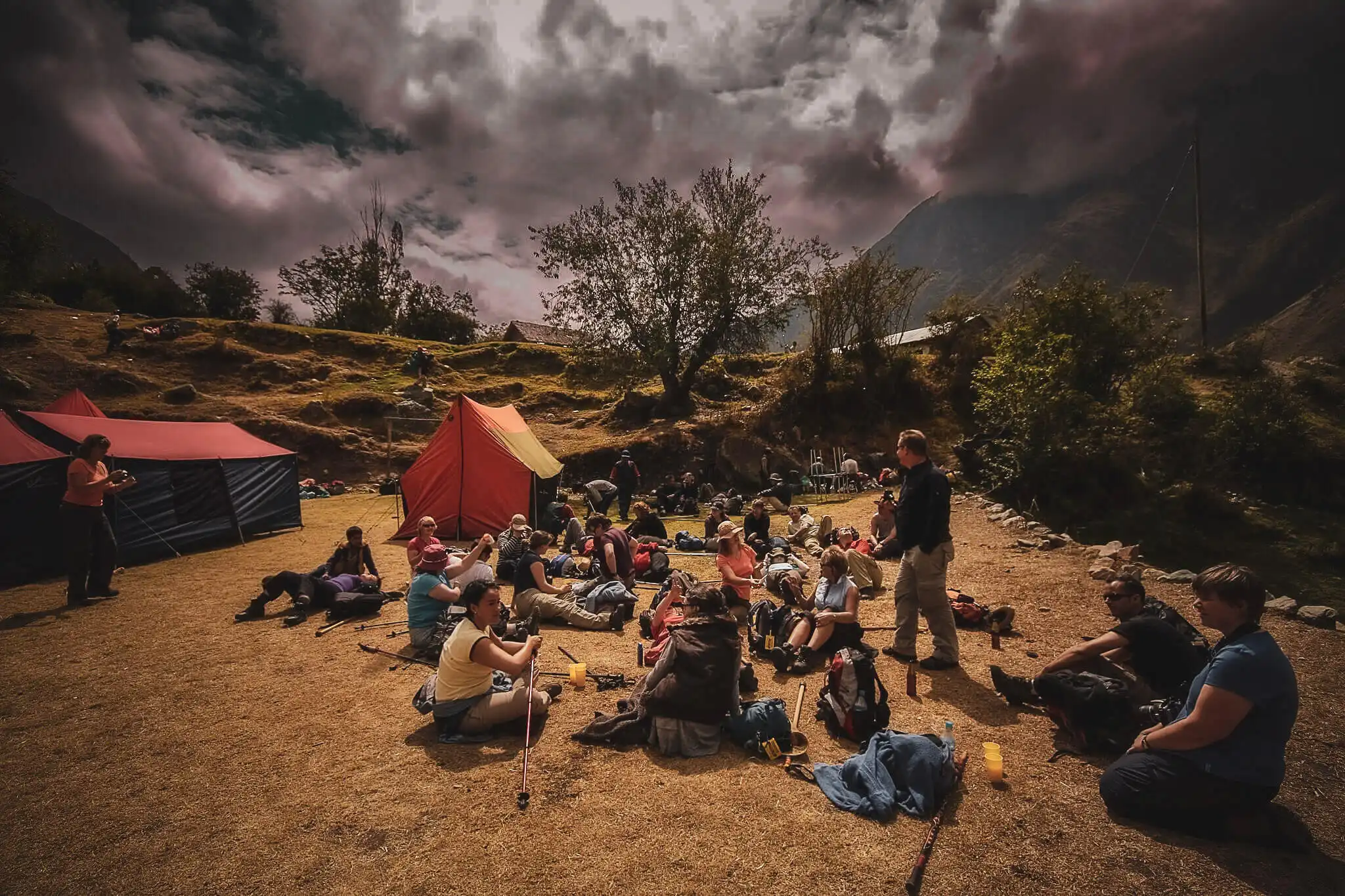
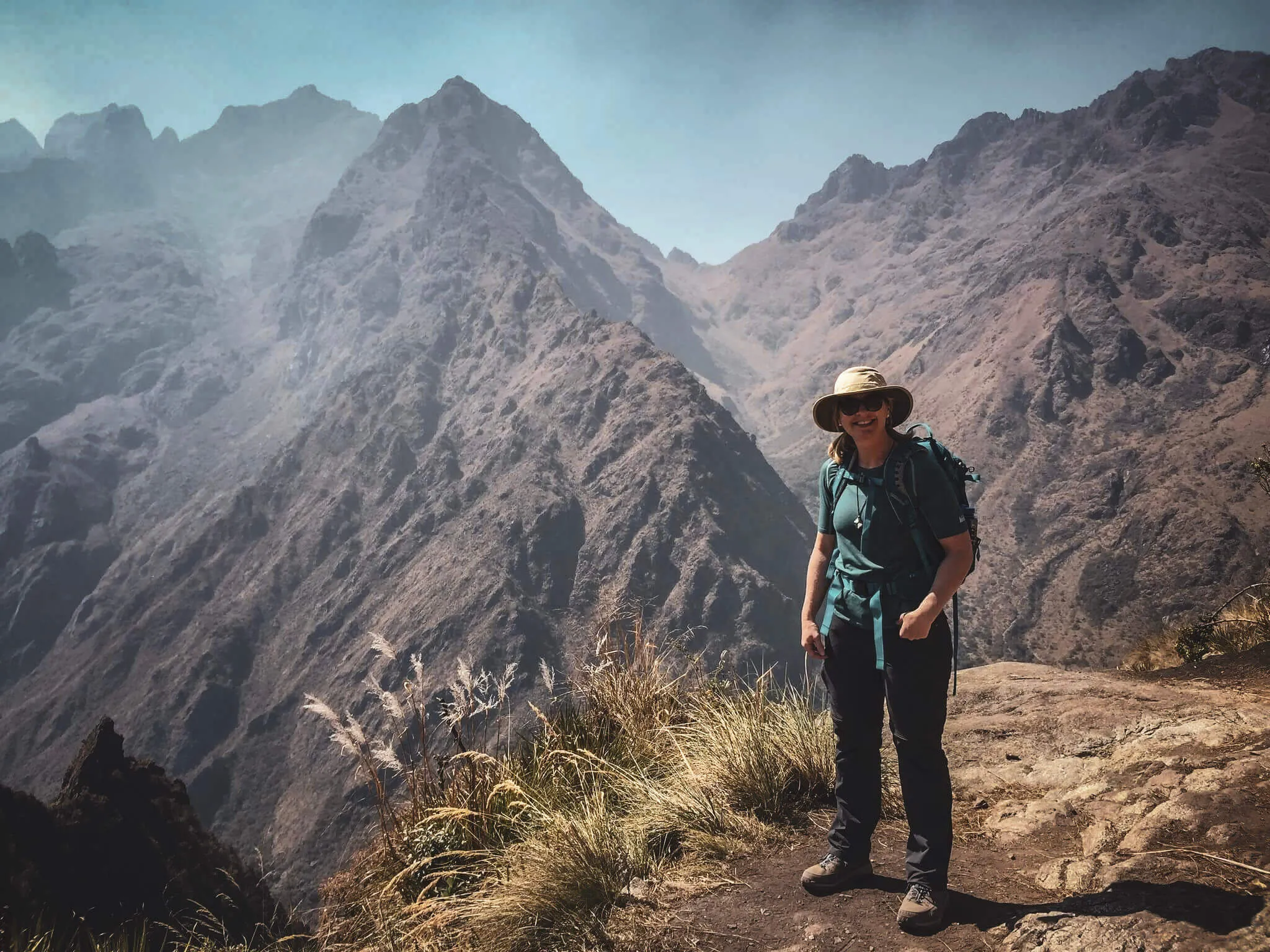
Hikers following the five-day Classic Inca Trail through the Andes

The Classic Inca Trail at a more measured pace

5-Day Inca Trail to Machu Picchu

Follow the complete high-pass and archaeological corridor with one additional day to distribute the walking, camp sequence and time on the trail.

5 days / 4 nightsHighest point 4,215 mReviewed August 9, 2026

Slower than four days.
Still the full mountain trek.

The five-day itinerary suits travelers who value pace, archaeology and photography more than finishing on the standard schedule. It crosses the same demanding terrain, so the extra day should be treated as better distribution—not as a guarantee of easy hiking.

Date before itinerary

Check 5-day Inca Trail availability

The checker uses the regulated Classic Inca Trail inventory because the five-day product follows that corridor. After finding a date, confirm that the operator actually offers a five-day schedule.

  • Available does not mean reserved.
  • The permit does not define the campsite sequence.
  • A five-day package is not automatically five full trail days.
Permit checker

Find a departure

Availability data may be delayed. It does not guarantee a permit, tour departure or confirmed booking.

The essentials

5-day Inca Trail at a glance

Format
5 days / 4 camping nights
Regulated trail
Classic Inca Trail · Km 82
Practical distance
Approx. 42–46 km / 26–29 mi
Highest point
Warmi Wañusqa · 4,215 m / 13,829 ft
Main difference
The same terrain at a more distributed pace
Overall difficulty
Challenging; not an easy version
Accommodation
Four designated camping nights
Access
Dated permit via an authorized operator

A representative schedule

How five days can redistribute the route

There is no universal five-day campsite sequence. The structure below shows the planning logic; the written operator itinerary must control your decision.

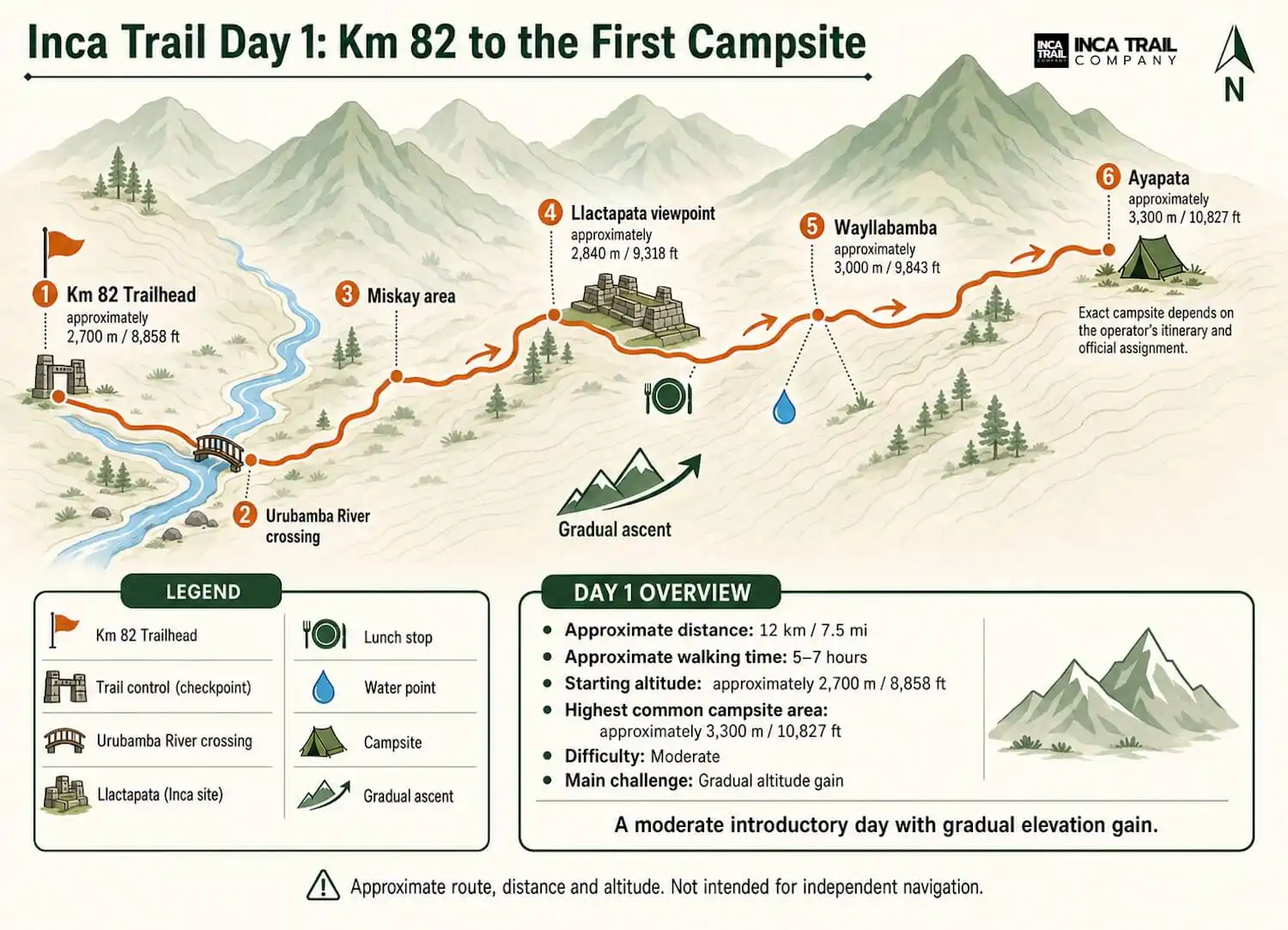
Hikers beginning the five-day Classic Inca Trail near Km 82
Day 01

Km 82 → lower Cusichaca valley

A measured introduction to the trail

After identity and permit control, the route follows the Urubamba and Cusichaca valleys and reveals Patallacta. A five-day schedule can preserve more time for orientation, archaeology and an unhurried first camp.

Walking
Operator-dependent
Highest terrain
Lower-valley terrain
Common overnight
Wayllabamba area or assigned alternative

A gentle opening day does not replace acclimatization. Confirm the actual campsite because it determines how much climbing moves into the next stage.
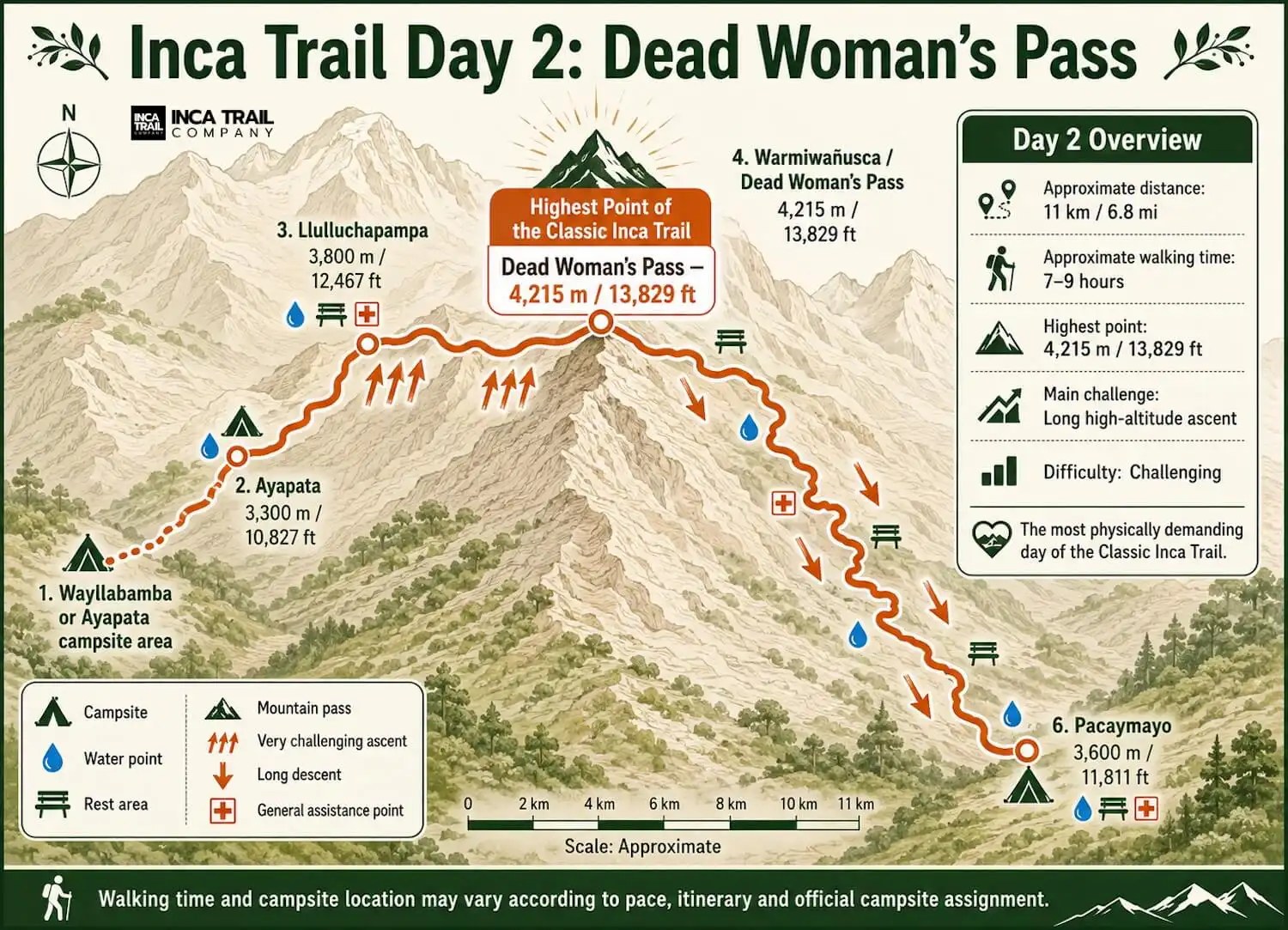
High Andean ascent on the Classic Inca Trail
Day 02

Wayllabamba area → upper valley

The climb is divided, not removed

Many slower schedules use the extra day to distribute the long ascent toward Warmi Wañusqa. Forest, stone steps and thinning air still require a controlled pace even when the day ends before the highest pass.

Walking
Schedule-dependent
Highest terrain
Approaching the high-pass zone
Common overnight
Llulluchapampa area or assigned alternative

Not every operator divides the ascent this way. Ask for the elevation gain, walking hours and campsite—not only the day count.

Classic Inca Trail terrain around the high passes and archaeological sites
Day 03

Warmi Wañusqa → Paqaymayu / high trail

The highest pass remains the test

The trail reaches Dead Woman’s Pass and descends on irregular stone before continuing according to the allocated camp. The fifth day can reduce time pressure, but altitude and descent remain physically serious.

Walking
Varies by camp
Highest terrain
4,215 m / 13,829 ft
Common overnight
Paqaymayu, Chaquicocha or assigned area

Slower is not the same as easy. This is still a high-altitude mountain day with limited flexibility once the group is on the regulated corridor.

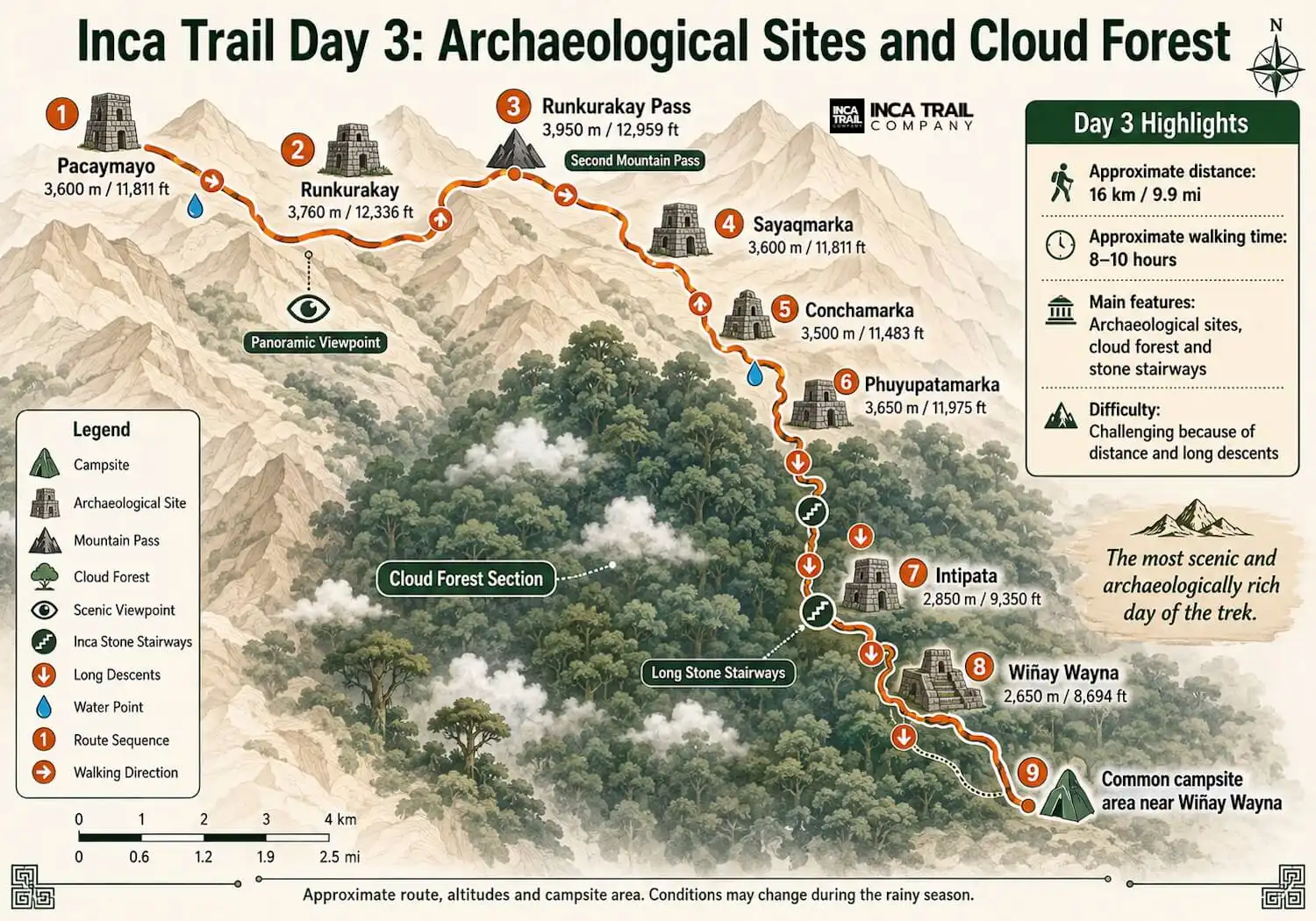
Phuyupatamarka and cloud forest on the Classic Inca Trail
Day 04

Runkurakay → cloud forest

More room for archaeology and landscape

Runkurakay, Sayaqmarca, Phuyupatamarka and the descending cloud-forest road make this one of the richest sections. The additional day is most valuable when the schedule creates genuine time at these sites.

Walking
Depends on the final camp
Highest terrain
High trail into cloud forest
Common overnight
Phuyupatamarka, Wiñay Wayna or assigned area

Request the planned archaeological stops and alternatives if the preferred campsite is not assigned.

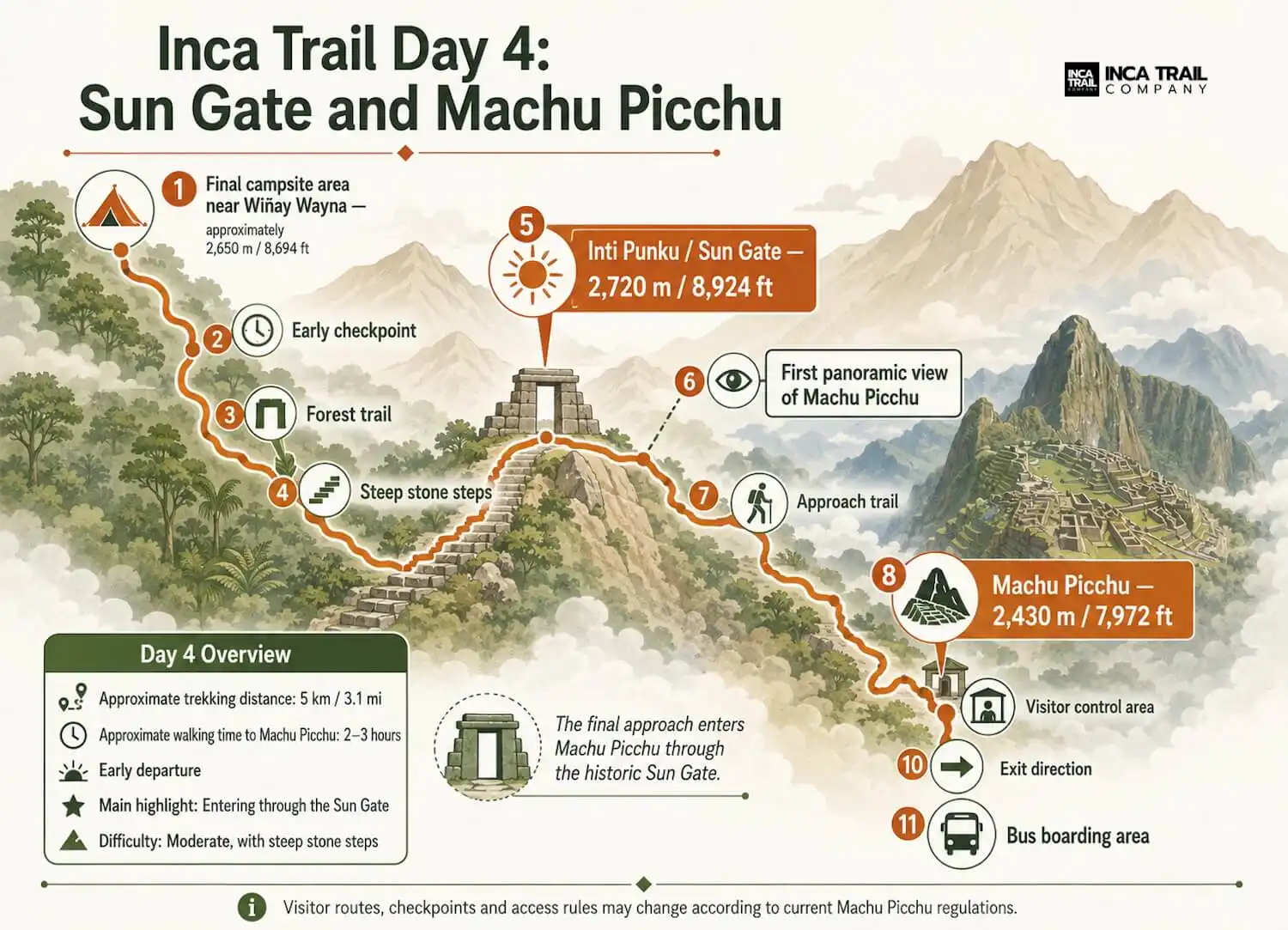
Final Inca Trail approach through Inti Punku toward Machu Picchu
Day 05

Inti Punku → Machu Picchu

The historic approach becomes the finale

The final trail section passes Wiñay Wayna when included in the assigned sequence and continues through Inti Punku toward Machu Picchu. The package must state the associated visitor admission and return transport.

Walking
Final approach varies
Highest terrain
Around 2,720 m near Inti Punku
Common overnight
No fifth trail camp

Five days does not guarantee sunrise, clear weather, a particular campsite or unrestricted movement inside Machu Picchu.

Same corridor, different rhythm

The fifth day does not create another trail

The five-day and standard four-day products normally use the Classic corridor from the Km 82 area. Camps and daily endpoints change how the effort feels.

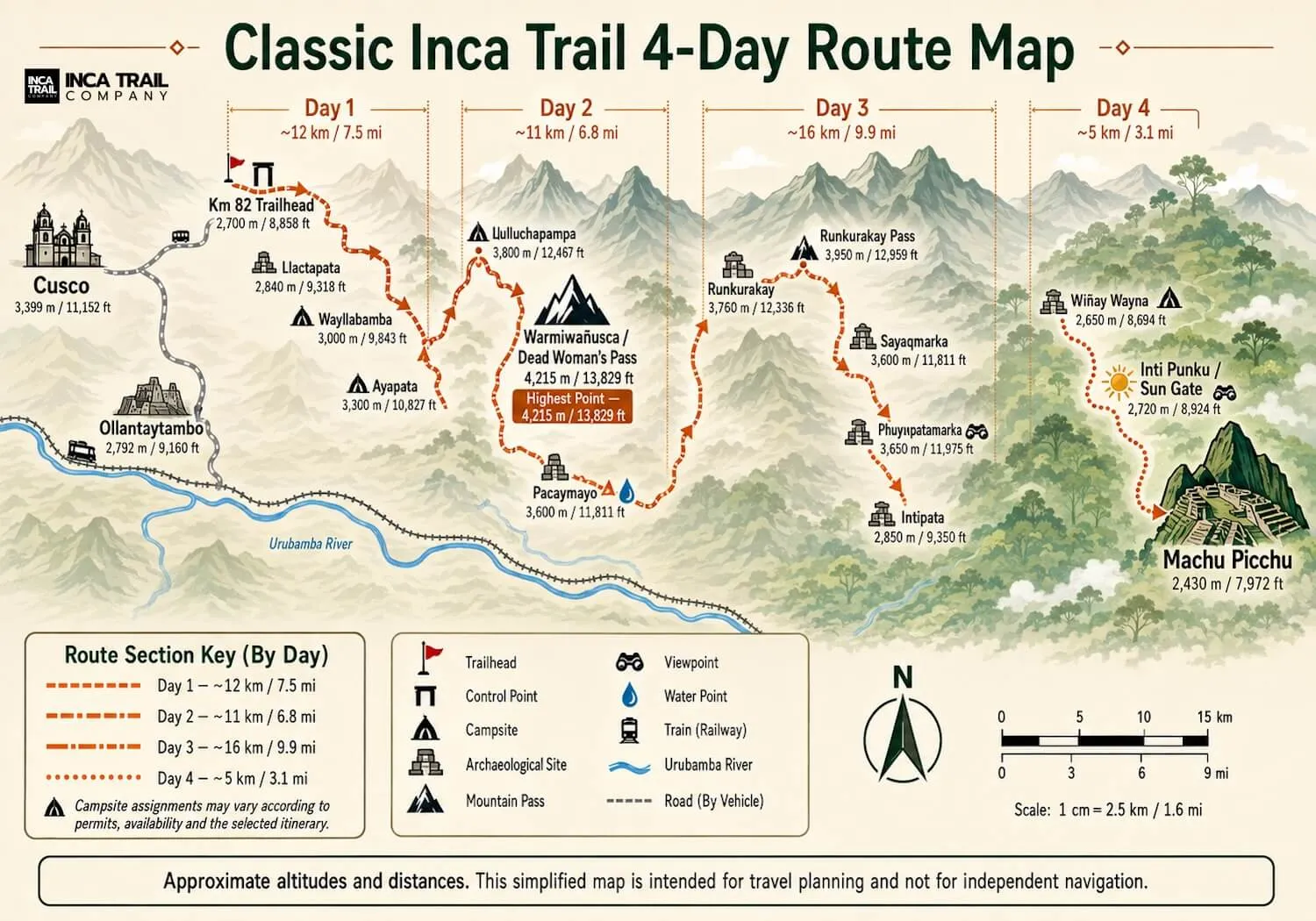
Map of the Classic Inca Trail used by five-day itineraries
Planning map, not an independent-navigation tool. Confirm the specific five-day camp sequence with the operator.

Physical reality

More recovery time does not lower the pass

The value of five days is a less compressed schedule. You still climb at altitude, cross 4,215 meters, descend long stone stairways and wake for another mountain day.

Choose five days for pace and depth—not to avoid preparing.
Highest point
4,215 m
Warmi Wañusqa
Trail nights
4
In a true camping itinerary
Main benefit
Pace
Effort can be distributed
Technical climbing
None
Terrain remains strenuous
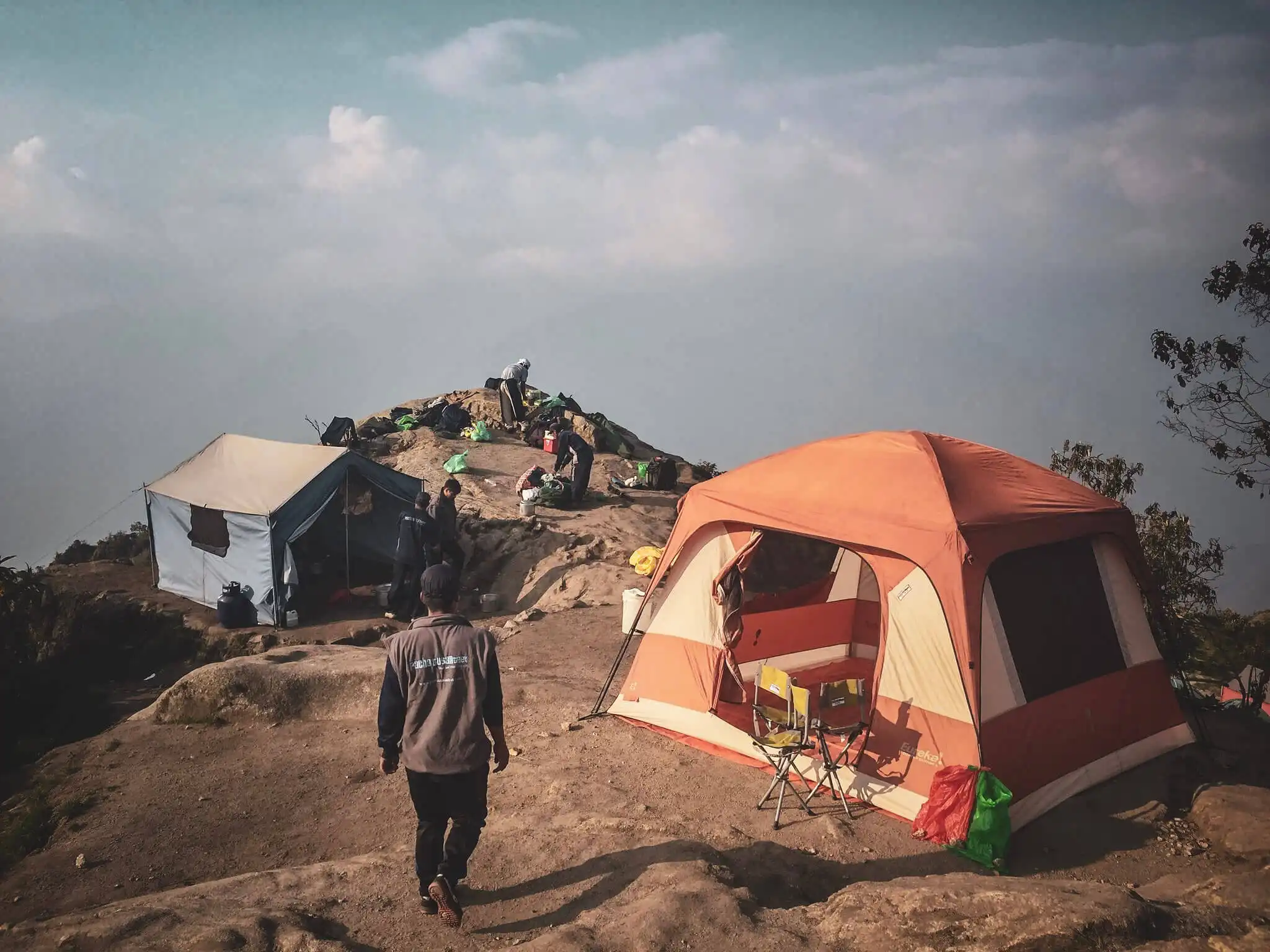
Tents at a designated Classic Inca Trail campsite
Four nights only improve the pace when the campsite sequence genuinely redistributes the walking.

Read the nights, not the label

Verify what the fifth day actually adds

Some operators divide the climb or archaeological section. Others combine the regulated trek with a hotel, Sacred Valley visit or extra Machu Picchu time and still market five days.

  1. Ask for every overnight: camp name or external accommodation.
  2. Compare daily elevation: distance alone hides the hard days.
  3. Confirm alternatives: campsite allocations can change the plan.
  4. Check the final visit: identify the Machu Picchu admission and timing.
Understand campsite allocations

One corridor, two confirmations

Trail access and Machu Picchu admission

The operator must reserve dated Classic Inca Trail access and identify the Machu Picchu admission associated with the itinerary. The trail inventory shown here is not a completed booking.

Current admission rules are date-sensitive. Before paying, confirm the departure date, all traveler details, final entry route, visit time and any optional second ticket.

Read the complete permit guide

Compare complete packages

What is normally included?

The fifth day adds staff, meals and camp logistics, but operators package these differently.

Regulated access

Dated Classic Inca Trail access and the Machu Picchu admission specified in the itinerary.

Trekking team

Licensed guide, cooks and porters for the communal camp operation.

Trail logistics

Four camping nights, stated meals, tents, basic sleeping setup and treated-water plan.

Transport

Transfer toward Km 82 and the specified bus, train and road return after Machu Picchu.

Five days versus four

Choose for experience, not status

Both reach Machu Picchu through the Classic corridor. The decision is whether the extra day creates enough value for your schedule and budget.

Decision5-day Inca Trail4-day Inca Trail
Duration5 days / 4 nights4 days / 3 nights
PacePotentially more distributedMore compressed standard schedule
TerrainFull Classic high-pass corridorFull Classic high-pass corridor
Best forTime at sites, photography, slower rhythmTravelers with less time
Important caveatFive-day products are not standardizedCamp schedules still vary

The itinerary is the product

Eight questions reveal what five days means

Send the same questions to each shortlisted company and compare written answers rather than tour names.

  1. 01Are all five days part of the Classic Inca Trail program, and where does each day begin and end?
  2. 02Which campsite sequence is requested, and what allocation changes are possible?
  3. 03How does this schedule distribute the climb to Warmi Wañusqa and the long stone descents?
  4. 04How much time is planned at Patallacta, Sayaqmarca, Phuyupatamarka and Wiñay Wayna?
  5. 05What is the maximum group size and when is an assistant guide included?
  6. 06Which equipment, meals, water and personal porter allowance are included?
  7. 07Which Machu Picchu admission, train, buses and final transfer are included?
  8. 08What happens if a campsite, route condition or official closure changes the plan?

Commercial disclosure: Inca Trail Company is not a tour operator. We may receive commissions from listings or referrals, but payment does not determine editorial ranking.

Compare tour operators

Quick answers

5-day Inca Trail FAQs

The answers preserve the distinction between a slower commercial itinerary and the regulated route itself.

Is the 5-day Inca Trail easier than the 4-day trek?

It is generally less compressed, not easy. The itinerary can distribute walking differently, but it retains the altitude, high passes, stone stairs and consecutive mountain days of the Classic Inca Trail.

Does it follow a different route?

Normally it uses the same regulated Classic Inca Trail corridor from the Km 82 area. The meaningful difference is how the walking, camps and final visit are scheduled.

How far is the 5-day Inca Trail?

The route does not become longer simply because the product adds a day. SERNANP's official corridor and practical operator totals use different endpoints; practical itineraries are commonly described around 42–46 km. Check the measurement method.

Where do you sleep?

A true five-day trekking version normally has four camping nights, but exact designated camps depend on the operator plan and official allocation. Some five-day products may include accommodation outside the trail, so read the itinerary.

Do you need a separate five-day permit?

The page's checker uses Classic Inca Trail availability. The operator then builds the five-day service around that dated regulated access; visible availability is not a reservation.

Who benefits most from the extra day?

Travelers who value a less compressed schedule, more time for archaeology or photography, and four nights within a multi-day experience may benefit. It is not a substitute for fitness or acclimatization.

What if the date is sold out?

An operator cannot create permits. Check nearby Classic Inca Trail dates, then compare the Short Inca Trail, another trek or a train-based Machu Picchu visit according to your real priority.

Is it worth paying more than for four days?

Only when the extra day creates a schedule, service and pace you actually value. Compare camp sequence, walking hours, staffing, inclusions and total price rather than assuming a longer label guarantees a better trek.

Sources and methodology

Official corridor, access and elevation context come from SERNANP and the Ministry of Culture. Five-day schedules are described as representative because camps, walking distribution and commercial inclusions vary by operator.

Reviewed August 9, 2026 · Corrections: contact our editorial team

Can the slower itinerary fit?

Find the permit date before comparing five-day packages

Then verify that the additional day changes the pace, camps and archaeological time in a way that matters to you.

Check 5-day Inca Trail availabilityCompare the standard 4-day route →