Breakfast
Porridge, pancakes, eggs, bread, fruit and hot drinks are common. The meal and timing usually change for the high-pass day and final early departure.

Meals, water and dietary planning
Expect more than packaged camping food—but compare the operator’s actual inclusions, kitchen procedures and dietary capability before booking.
Travelers are often surprised by the quantity and variety that a portable kitchen can produce several days into the Andes.
The Inca Trail does not prescribe pancakes, quinoa soup, snack packs or private dietary menus. The company decides the cooks, ingredients, equipment, portions, water process and what is included.
Photographs and sample menus show what a company has served—not what every departure or operator guarantees.
A typical day of eating
Exact dishes change with the itinerary, market availability, camp logistics and dietary requirements.
Porridge, pancakes, eggs, bread, fruit and hot drinks are common. The meal and timing usually change for the high-pass day and final early departure.
Often a substantial hot meal with soup, rice, quinoa, potatoes, vegetables and a protein or dietary alternative.
Some operators provide a daily snack pack plus popcorn, fruit, crackers or hot drinks at camp; others provide less.
Usually hot and often structured as soup followed by a carbohydrate, vegetables and protein, sometimes with dessert.
Classic route pattern
This is an inclusion pattern, not a menu. The meals most likely to vary are those before entering the trail and after leaving it.
| Day | Breakfast | Lunch | Dinner | Planning note |
|---|---|---|---|---|
| Day 1 | Often before the trail or excluded | First trail lunch | Hot camp dinner | Confirm the exact starting inclusion |
| Day 2 | Substantial early breakfast | Hot or substantial lunch | Hot camp dinner | Highest-effort day on many itineraries |
| Day 3 | Hot breakfast | Lunch on the route | Final camp dinner | Afternoon tea is common, not universal |
| Day 4 | Very early, often lighter | Usually after the trail | Outside the trek | Post-Machu Picchu meals vary most |
“Meals included” needs boundaries
Main camping meals are commonly included on a full-service Classic trek. That does not automatically include every meal from hotel pickup until returning to Cusco.
See all common inclusions and extras
Familiar food fills the gaps
Long hiking days and fixed meal times will not always match your appetite. A small personal supply is useful even when daily snacks are included.
Check what the company provides first. The goal is enough flexibility—not a daypack full of untouched food.
Notify before booking
A shared remote kitchen has less ingredient choice and separation capacity than a restaurant in Cusco. Precise information is more useful than a broad dietary label.
Quinoa, rice, potatoes, pasta, vegetables, legumes, eggs and cheese can support a varied menu. Ask whether soups and sauces use meat stock.
Do not submit “vegetarian” if you avoid eggs, dairy, honey or other animal products. Request examples for every meal and snack.
A preference, intolerance, wheat allergy and celiac disease require different controls. Ask about ingredients, utensils and cross-contact.
Serious food allergy
Confirm the exact allergen, severity, storage and preparation process, cross-contact risk and who receives the information. If the company cannot describe its limitations clearly, it may not be suitable.
Emergency medication belongs in the daypack—not in luggage moving ahead with the porter team.
Ask when the first refill begins
Many organized operators supply boiled or otherwise treated water after camp operations begin. Some currently tell travelers to carry enough for the first several hours of Day 1.
CDC guidance identifies boiling as the best way to kill germs; when boiling is not possible, filtering followed by disinfection is the next-best approach.
Check bottles and hydration gearA portable kitchen moves every day
Ingredients, utensils, permitted fuel, cooking equipment and dining supplies move between designated camps. The cook then prepares meals in a temporary work area while hikers complete the day.
Judge the system by food storage, handwashing, dietary communication, treated water and waste management—not by one elaborate cake photograph.
Understand the support team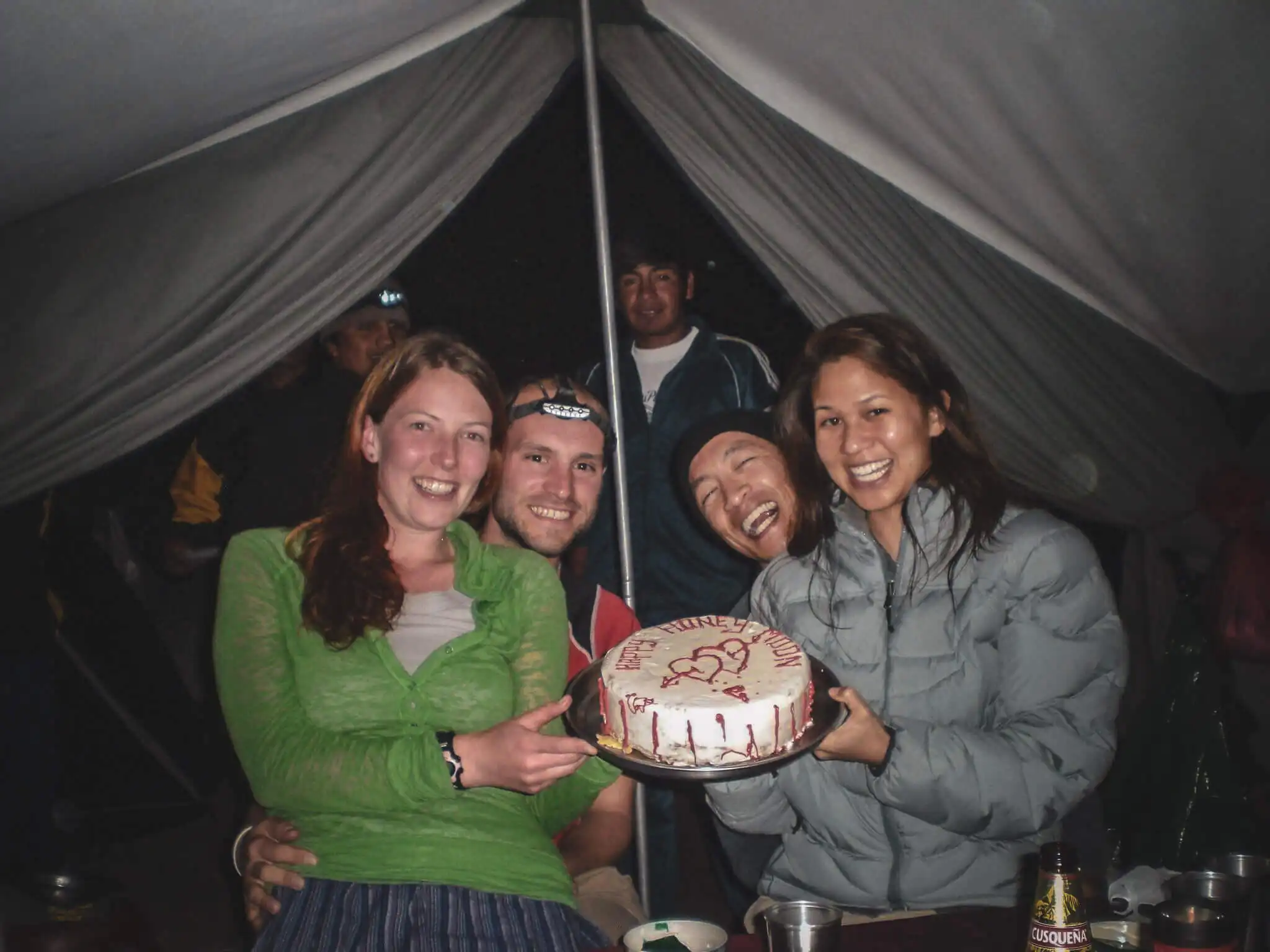
Appetite is also a symptom signal
Some travelers eat normally; others notice reduced appetite or nausea. A new headache after ascent together with appetite loss, nausea, dizziness or unusual fatigue can fit acute mountain sickness.
Do not try to correct a worsening symptom pattern with food or excessive water alone. Tell the guide and follow the altitude response plan.
Read the altitude guideAndean ingredients, practical camp cooking
Used in soups, salads and warm vegetable preparations.
Served in soups, sides, mash and dishes with vegetables or protein.
Appears in soups, salads, drinks and familiar Peruvian preparations.
Muña, chamomile, tea and other hot drinks are common around camp.
Coca tea is culturally significant and may be offered, but it is not a proven prevention or treatment for altitude illness.
Compare procedures, not plating
Send the same questions to every shortlisted company and keep the written answer with your booking documents.
Quick answers
Organized Classic treks commonly serve hot meals with soups, rice, quinoa, potatoes, pasta, vegetables, eggs and different proteins or dietary alternatives. The operator—not the trail—determines the menu.
Main meals during the camping portion are commonly included, but Day 1 breakfast, post-Machu Picchu lunch, extra snacks and some drinks may not be. Check the exact start and end of meal coverage.
Yes. Carry a modest supply of familiar, lightweight food that you know you tolerate, especially if your appetite or meal timing differs from the group.
Many operators offer vegetarian and vegan menus with advance notice. State vegan explicitly and ask for meal examples rather than assuming vegetarian dishes contain no dairy, eggs or animal-based stock.
They may be, but a remote shared kitchen has limited ingredients and cross-contact controls. Explain whether your need is a preference, intolerance, celiac disease or allergy and evaluate the operator’s specific procedure.
Never rely only on a website statement. Discuss the allergen and cross-contact risk before booking, carry prescribed emergency medication on your person and share the emergency plan with the guide and companions.
Many operators provide boiled or otherwise treated refill water after camp operations begin. Some require you to carry water for the first hours of Day 1. Confirm timing and required capacity.
A trek cook uses a portable camp kitchen while porters transport ingredients, fuel, utensils and communal equipment between designated camps.
It can. Reduced appetite or nausea together with a new headache, dizziness or unusual fatigue can indicate altitude illness. Report the complete symptom pattern to the guide.
Sample dishes and inclusions are synthesized from current operator information and are deliberately described as examples. Medical and water-safety guidance comes from the CDC Yellow Book and drinking-water program.
Reviewed August 7, 2026 · Corrections: contact our editorial team
Start with access, then compare inclusions
An excellent food service cannot create a permit. Check availability, then ask the selected operators the same meal and dietary questions.