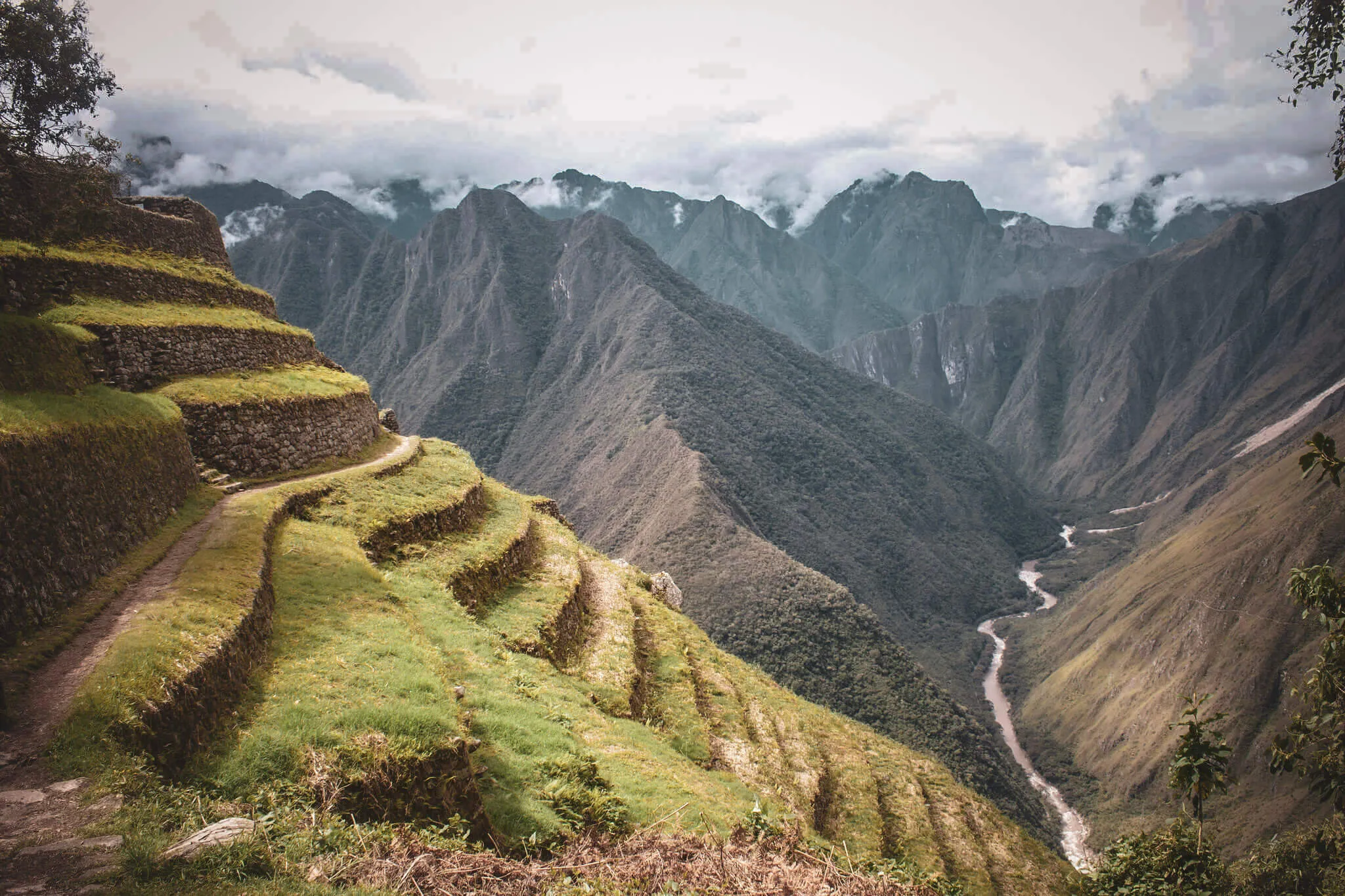
The road is the attraction
Original paving, stairways, passes and waterworks turn the hike into archaeological context rather than transportation between viewpoints.

An honest decision, not a universal recommendation
Yes—when you want the road, not only the destination. If Machu Picchu itself is the priority, four trekking days may be an expensive answer to the wrong question.
The trail earns its reputation through continuity.
Our Cusco-based editorial team includes guides, agency owners and tourism professionals with more than ten years in the sector. Our judgment is that the Classic Trail's value is not exclusivity, luxury or a guaranteed postcard. It is spending several days inside a connected archaeological landscape before reaching Machu Picchu through Inti Punku.
That is a strong value proposition for the right traveler—and poor value for someone who does not enjoy the journey required.
See whether it fits youThe strongest case for it
Other routes can offer bigger mountains, quieter paths or more flexibility. None combines these five elements in the same protected journey.
Original paving, stairways, passes and waterworks turn the hike into archaeological context rather than transportation between viewpoints.
Patallacta, Runkurakay, Sayaqmarka, Phuyupatamarka, Intipata and Wiñay Wayna make Machu Picchu the conclusion of a larger landscape.
High valleys give way to passes, cloud forest and increasingly elaborate sites. The accumulated journey changes the final arrival.
The Sun Gate is not an optional photo stop added to a train visit; it is part of the protected walking approach.
Consecutive days, altitude and stone stairs create genuine achievement—but only for travelers who value that effort.
The editorial distinction
Do not pay four days of money, time and effort for a famous final view. Pay for four days only when the four days are what you want.See what the complete route contains →
The strongest case against it
These are not minor disclaimers. Any one of them can make another route the better decision.
You are funding a regulated multi-day operation, not only destination transport. That has value only if the trek itself matters.
Dated access and operator logistics reduce spontaneity. A permit cannot be moved around like a flexible attraction ticket.
A good operator improves tents, food and organization, but cannot turn designated trail camps into private hotels.
You share a controlled corridor, sites and camps with other hikers and working support teams. History—not isolation—is its strongest advantage.
Cloud, rain or mist can change views and trail conditions. The historical journey must still feel worthwhile without guaranteed clear skies.
Altitude, long ascents, irregular steps and descent can dominate the experience when preparation or acclimatization is inadequate.
Guide quality, porter welfare, equipment, food, safety and employment practices sit behind the price and should influence value.
Is it worth the money?
The price normally supports dated access, guiding, porter and cook teams, meals, camp logistics, equipment and transport. Comparing that total with one train seat makes the trail look irrational because they are different products.
But operational complexity does not force the trek to be valuable to you. If the hiking days have little personal value, a well-delivered operation is still the wrong purchase.
Audit the complete costWho gets the greatest value?
Age, prestige and bucket-list pressure are poor filters. Motivation, comfort preference, preparation and the experience you would choose instead are better.
| Traveler | Verdict | Why |
|---|---|---|
| Archaeology-first traveler | Strong yes | The protected road and trail-only sites are the product, not background scenery. |
| Regular hiker | Usually yes | The physical progression is likely to add meaning rather than feel like a barrier. |
| Prepared first-time trekker | Often yes | Experience is less important than realistic training, acclimatization and willingness to camp. |
| Limited-time traveler | Choose Short | One substantial hiking day can preserve Wiñay Wayna and Inti Punku without three camp nights. |
| Comfort-first traveler | Probably not Classic | If tents, basic bathrooms and early starts reduce enjoyment, fame will not compensate. |
| Machu Picchu-first traveler | Use the train | The destination can be meaningful without paying for or enduring a multi-day approach. |
| Mountain-first trekker | Compare Salkantay | Higher mountain scale and itinerary flexibility may matter more than archaeological continuity. |
| Culture-first trekker | Compare Lares | Living high-Andean communities may be more relevant than a protected archaeological corridor. |
| Solitude seeker | Look elsewhere | Permit control does not make the Classic Trail an empty wilderness route. |
The overlooked answer
It preserves one substantial hiking day, Wiñay Wayna and Inti Punku while removing the Classic route's high pass and three camping nights. For travelers whose hesitation is time or camping—not the hike itself—that is not a lesser choice. It is a better-matched product.
The one-day and two-day formats package the Machu Picchu visit differently, so compare the full itinerary rather than only the hiking distance.
Match the alternative to the objection
A real regulated hike through Wiñay Wayna and Inti Punku, commonly packaged with a hotel instead of trail camping.
Compare this option →Reserve transport and the appropriate Machu Picchu admission, then invest the saved days elsewhere in Peru.
Compare this option →Choose snow-peak scale, a higher pass and more itinerary variation over the Classic route's archaeological sequence.
Compare this option →Choose inhabited highland valleys and community context, while auditing the exact route and local arrangements.
Compare this option →The final self-test
A famous route is not automatically a personal priority.
A yes suggests you value the road, sites and trekking days themselves.
A yes suggests the experience may depend too heavily on one promised view.
Three trail nights are a meaningful part of the Classic experience.
There is no prestige benefit that compensates for four unwanted hiking days.
Compare the complete alternative, not the trek against doing nothing.
Possibility before preference
Availability tells you whether the Classic or Short Trail is possible. It does not tell you whether either experience is right for you. Use both filters before reorganizing flights, hotels or the rest of Peru.
Read the complete permit guidePlease wait while we check the selected date.
Dates in the same month currently showing permits
Availability data may be delayed. It does not guarantee a permit, tour departure or confirmed booking.
Quick answers
These answers evaluate fit. They are not review scores or invented traveler testimonials.
Yes when the historic road, archaeological sequence, multi-day hike and Inti Punku approach are central to the experience you want. It is not automatically worthwhile for someone focused only on Machu Picchu.
It can be when you value the guided trekking operation itself. Compare permits, guides, porters, meals, camps, equipment and transport rather than treating the price as an expensive admission ticket.
Often, provided you want the outdoor experience and prepare realistically. You do not need elite experience, but consecutive hiking days, altitude, stairs and basic camps should not be surprises.
Yes for travelers who value Wiñay Wayna, Inti Punku and a genuine hiking day but do not want the Classic route's time, camping or cumulative physical demand.
Only if the journey matters. Train travel is better when Machu Picchu, comfort, lower physical demand and time elsewhere are your priorities.
Choose the Inca Trail for archaeology and the historic approach. Choose Salkantay for higher mountain scenery, a generally harder pass and more itinerary flexibility.
Many hikers focus on the high pass, but long stone descents and the cumulative effect of consecutive days can be equally important. Fitness, pacing, acclimatization and weather change the experience.
Cost, dated permits, limited flexibility, camping, basic facilities, physical demand, variable weather and a popular rather than solitary trail.
Travelers who dislike multi-day hiking, require hotel comfort, mainly want Machu Picchu, need last-minute flexibility or prioritize solitude and mountain scale over archaeology.
Availability decides whether a date is possible, not whether the experience suits you. Check the date early, then apply the same honest fit test before paying.
SERNANP supports the route format, protected access and archaeological sequence. UNESCO supports the wider significance of the Andean road system. The worth-it conclusion is our editorial judgment, informed by Cusco-based trail and tourism experience—not a synthesis of customer reviews.
Inca Trail Company is not a tour operator. We may earn disclosed referral commissions and sell technology to travel businesses; neither can purchase this conclusion.
Our final verdict
Choose the Short Trail, train or an alternative trek when they preserve more of what you actually value.