Classic Inca Trail travelers resting beside camp tents in the Andes

Three nights change the entire trek

Inca Trail campsites

Where you sleep determines how far you walk, how high you recover and how much trail remains before Machu Picchu.

Classic route · 3 camping nightsAssignments may changeReviewed August 5, 2026

You do not choose an empty place and pitch a tent. Groups sleep in designated areas within a regulated tourism system.

The campsite name is only half the answer

Two four-day groups may use different sequences. Capacity, the operator’s requested itinerary and official conditions can affect the assignment. Comfort then depends largely on the operator’s tents, mats, food, water, toilets and camp management.

Ask for the planned sequence and the alternatives. A published itinerary is not automatically a guaranteed allocation.

Night by night

Common Classic Trail campsite areas

This table explains the itinerary effect of common locations. Elevations are approximate because names can refer to wider sectors and published profiles vary.

NightCommon areasApproximate elevationWhat the location changes
Night 1Wayllabamba or AyapataApprox. 3,000–3,300 mA lower stop makes the opening day easier; moving farther uphill reduces some of Day 2’s climb.
Night 2Paqaymayu or ChaquicochaApprox. 3,500–3,600 mUsually the coldest-feeling night. Continuing to Chaquicocha concentrates more effort into Day 2.
Night 3Wiñay Wayna or PhuyupatamarkaApprox. 2,650–3,680 mThis choice strongly changes the distance and timing of the final approach to Machu Picchu.

Not a guaranteed sequence: other authorized areas and combinations may be used, and authorities can change operations when conservation or safety requires it.

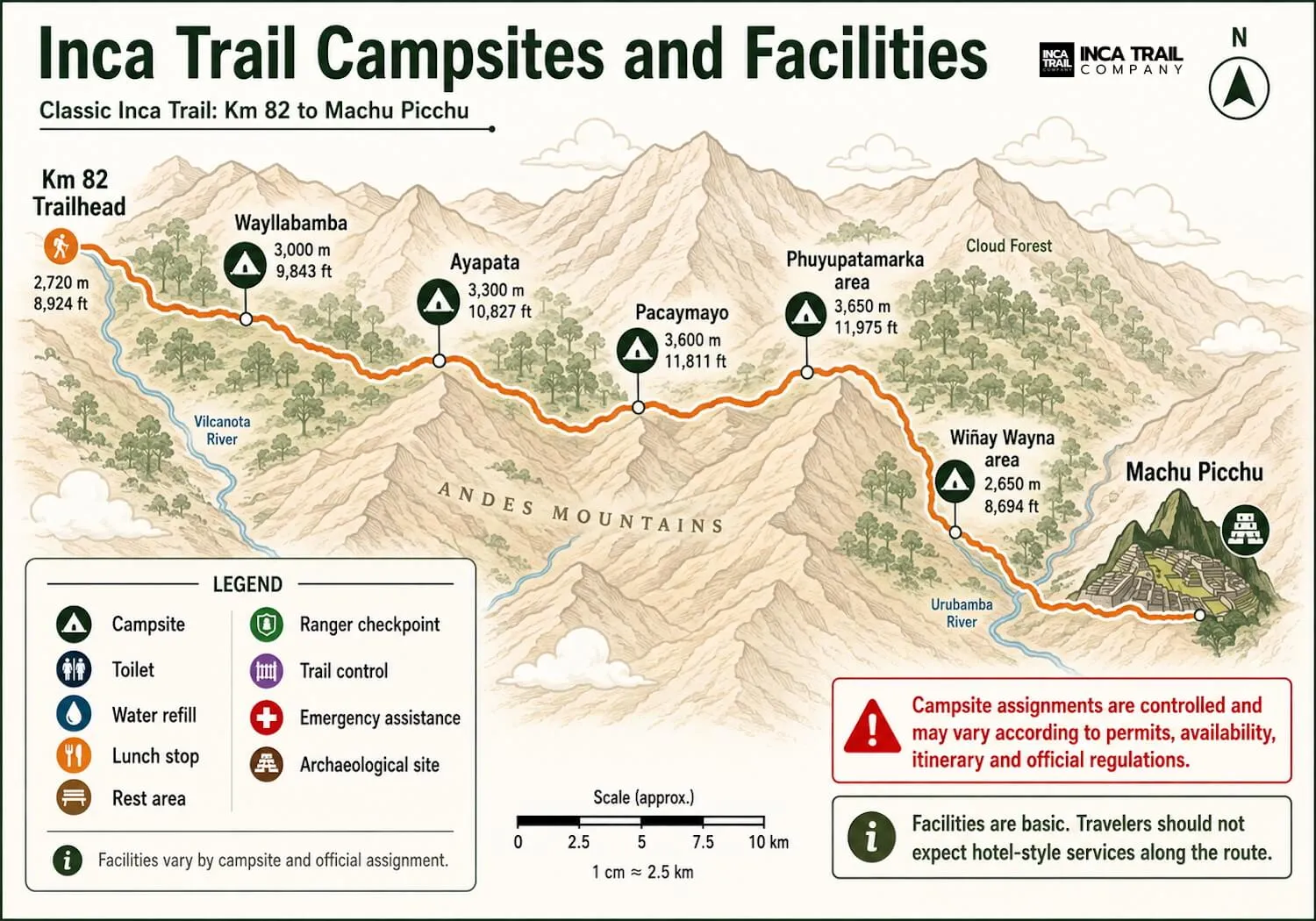
A sequence, not isolated places

Every earlier stop moves work into the next day

Use this visual to understand relative order and elevation—not to navigate or confirm an allocation.

Editorial diagram of common Classic Inca Trail campsite areas and approximate elevations
Editorial planning diagram. Approximate scale and locations; it is not an official route map. Toilet, water and other services must be confirmed for the assigned camp and operator.

How effort is distributed

What each camping night means

Night 01

Wayllabamba vs Ayapata

Wayllabamba is generally the lower, earlier stop, leaving more ascent toward Dead Woman’s Pass for Day 2. Ayapata pushes farther uphill on Day 1 and can reduce part of the following morning’s climb.

Decision effect

A gentler opening day versus a more even distribution of ascent.

Night 02

Paqaymayu vs Chaquicocha

Stopping near Paqaymayu ends the day sooner after the highest pass. Continuing toward Chaquicocha can add another pass and make Day 2 much longer while advancing the group for Day 3.

Decision effect

Earlier recovery versus concentrating more distance and elevation into the hardest day.

Night 03

Wiñay Wayna vs Phuyupatamarka

Wiñay Wayna is lower and closer to the final approach. Phuyupatamarka is high and leaves considerably more walking before Machu Picchu, but can suit a different four- or five-day distribution.

Decision effect

A shorter final morning versus a higher mountain camp and longer finish.

See the complete day-by-day difficulty guide

Know who provides what

A campsite is not a hotel product

The physical area provides a place to operate. Most details that determine comfort and hygiene come from the company running the trek.

Rows of sleeping tents set up at an Inca Trail campsite
Location

The designated area

  • A regulated place for tents
  • Basic shared infrastructure at some locations
  • Space used by multiple organized groups
  • Official access and operating controls
Service

Your operator

  • Tent quality and occupancy
  • Sleeping mat and bag rental
  • Dining and toilet tents
  • Meals, treated water and hygiene
  • Staffing, emergency and waste procedures

Set expectations correctly

Toilets, showers, water and power

Prepare for a supported mountain trek, not a conventional campground. Facilities and company inclusions must not be described as the same thing.

01

Toilets

Shared toilets can be basic and condition varies. Some operators add a sealed portable toilet and handwashing station. Carry toilet paper and sanitizer regardless.

02

Showers

Plan for no conventional shower during the three nights. Limited reports differ by location and itinerary; wash away from natural water sources and pack personal waste out as directed.

03

Drinking water

Many operators provide boiled, filtered or otherwise treated refill water. Confirm the method, when refills start and the capacity you need before the first supply.

04

Electricity and signal

Assume no charging, Wi-Fi or dependable phone service. Carry a power bank, use airplane mode and store permits, insurance and contacts offline.

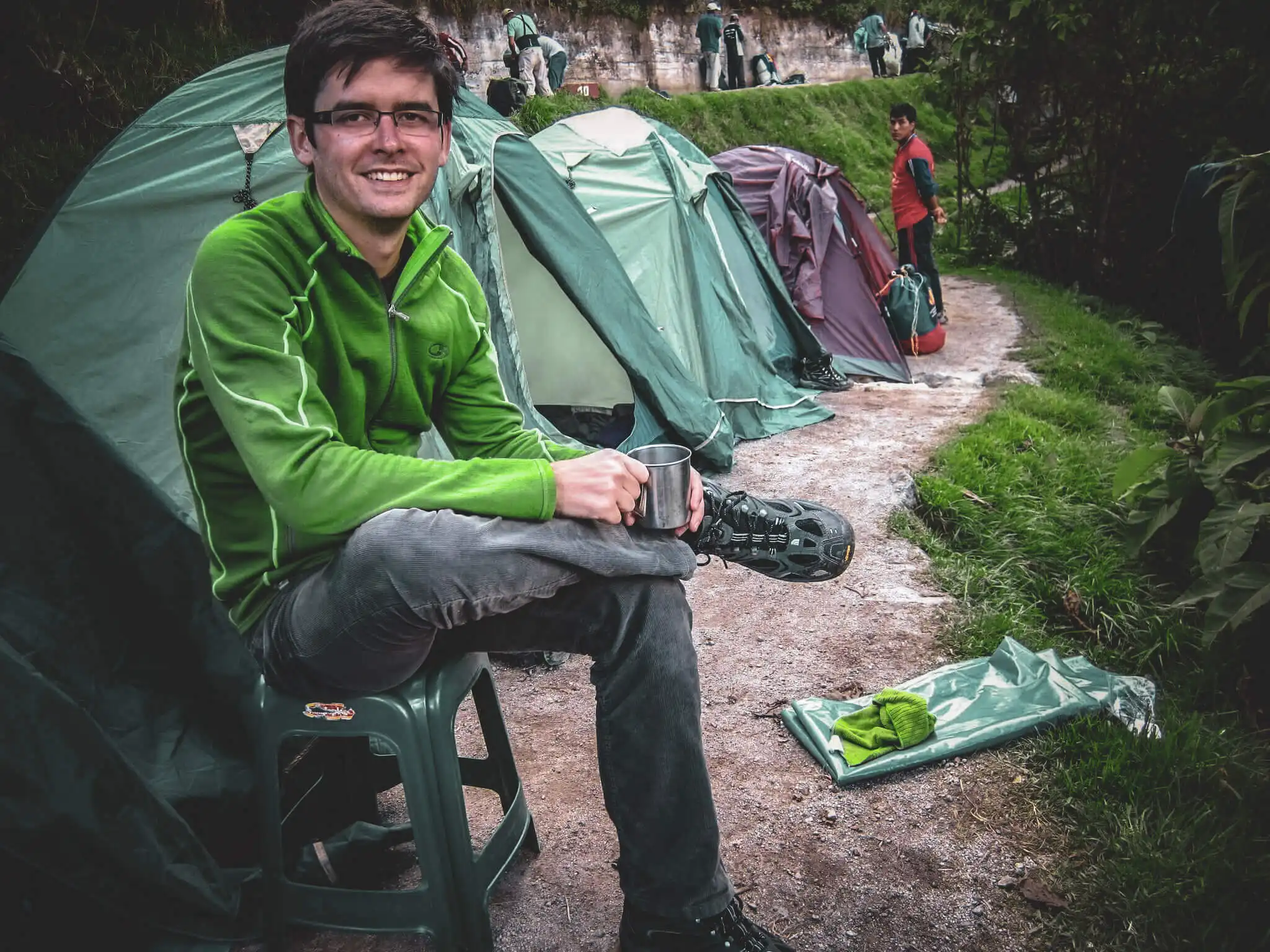
Traveler sitting outside tents at an Inca Trail campsite
Tent occupancy, mat thickness and dining setup vary by operator.

Sleep quality is equipment quality

Ask for specifications, not “premium gear”

Tent
Nominal capacity, actual occupancy, rain fly, footprint, age and replacement procedure.
Sleeping mat
Foam, self-inflating or inflatable; thickness and insulation from the cold ground.
Sleeping bag
Comfort rating—not survival limit—cleaning, liner, insulation and wet-gear backup.
Camp clothing
Dry thermal layers, warm socks, hat and insulation kept inside a waterproof liner.
Open the packing checklist

Season changes camp management

Dry does not mean warm; wet does not mean unmanageable

Clearer high-elevation nights can become sharply cold. In wetter periods, rain-fly coverage, footprints, waterproof equipment storage and a protected cooking and dining area matter more.

In February 2026, official maintenance included reconditioning the campgrounds at Paqaymayu Alto, Chaquicocha, Phuyupatamarka and Wiñaywayna, plus sanitary facilities at control posts. This confirms the named areas—not a permanent promise about their assignment or amenities.

Compare every month

Compare the operational layer

Ten questions expose the real camp service

Send the same questions to every shortlisted company. Specific, written answers are easier to compare than awards or generic promises.

  1. 01Which sequence do you normally request, and is it guaranteed?
  2. 02What alternatives may be assigned?
  3. 03How many travelers sleep in each tent?
  4. 04What type of sleeping mat is included?
  5. 05What is the sleeping bag’s comfort rating?
  6. 06Is a private toilet available every night?
  7. 07How and when is drinking water treated?
  8. 08How are allergies and cross-contamination handled?
  9. 09How are porter loads, meals and sleeping conditions managed?
  10. 10What happens after reassignment, severe weather or damaged equipment?

Quick answers

Inca Trail campsite FAQs

Where do you sleep on the four-day Inca Trail?

Classic Inca Trail groups normally spend three nights in designated camping areas. The precise locations depend on the itinerary requested by the operator, available capacity and any official operational changes.

What are the main Inca Trail campsites?

Common areas include Wayllabamba, Ayapata, Paqaymayu, Chaquicocha, Phuyupatamarka and Wiñay Wayna. Not every group uses the same combination, and spellings vary.

Can I choose my campsites?

You can compare operators by their planned sequence, but travelers do not normally reserve an individual campsite themselves. Ask whether the published itinerary is guaranteed and which alternatives may be assigned.

Do campsites have toilets and showers?

Some areas have basic shared toilets, while some operators provide portable toilets. Shower access is inconsistent; plan to complete the three camping nights without a conventional shower.

Is drinking water provided?

Many full-service operators provide boiled, filtered or otherwise treated refill water, but the timing and method are company services rather than universal campsite facilities. Confirm them before departure.

Is there electricity, Wi-Fi or phone signal?

Plan for no electricity, Wi-Fi or reliable mobile signal. Charge devices in Cusco, carry a power bank and keep tickets, insurance and contacts available offline.

How cold are the campsites?

Conditions depend on elevation, season, wind, cloud and rain. Prepare for cold at the high camps with dry sleep layers and a sleeping bag whose comfort rating matches the planned itinerary.

Who carries and sets up the equipment?

The porter team normally transports and sets up communal tents, kitchen and dining equipment. The traveler carries a daypack, while personal overnight luggage follows the operator’s stated weight allowance.

Is Wiñay Wayna always the best final campsite?

It usually gives a shorter final approach. Phuyupatamarka is higher and farther away but may suit a differently paced itinerary. Neither can be evaluated without considering the preceding days and current assignment.

Sources and update policy

Official sources confirm the regulated route, named campground maintenance and the possibility of operational changes. Approximate elevations and itinerary effects are planning guidance and must be checked against the operator’s final allocation.

Reviewed August 5, 2026 · Corrections: contact our editorial team

Date first, details before deposit

Availability does not guarantee a campsite sequence

Find an open trail date, then request the planned camps, alternatives and exact equipment in writing.

Check permit availabilityUnderstand the complete cost