
Time on your feet
Build from comfortable walks toward several hours of sustainable movement.
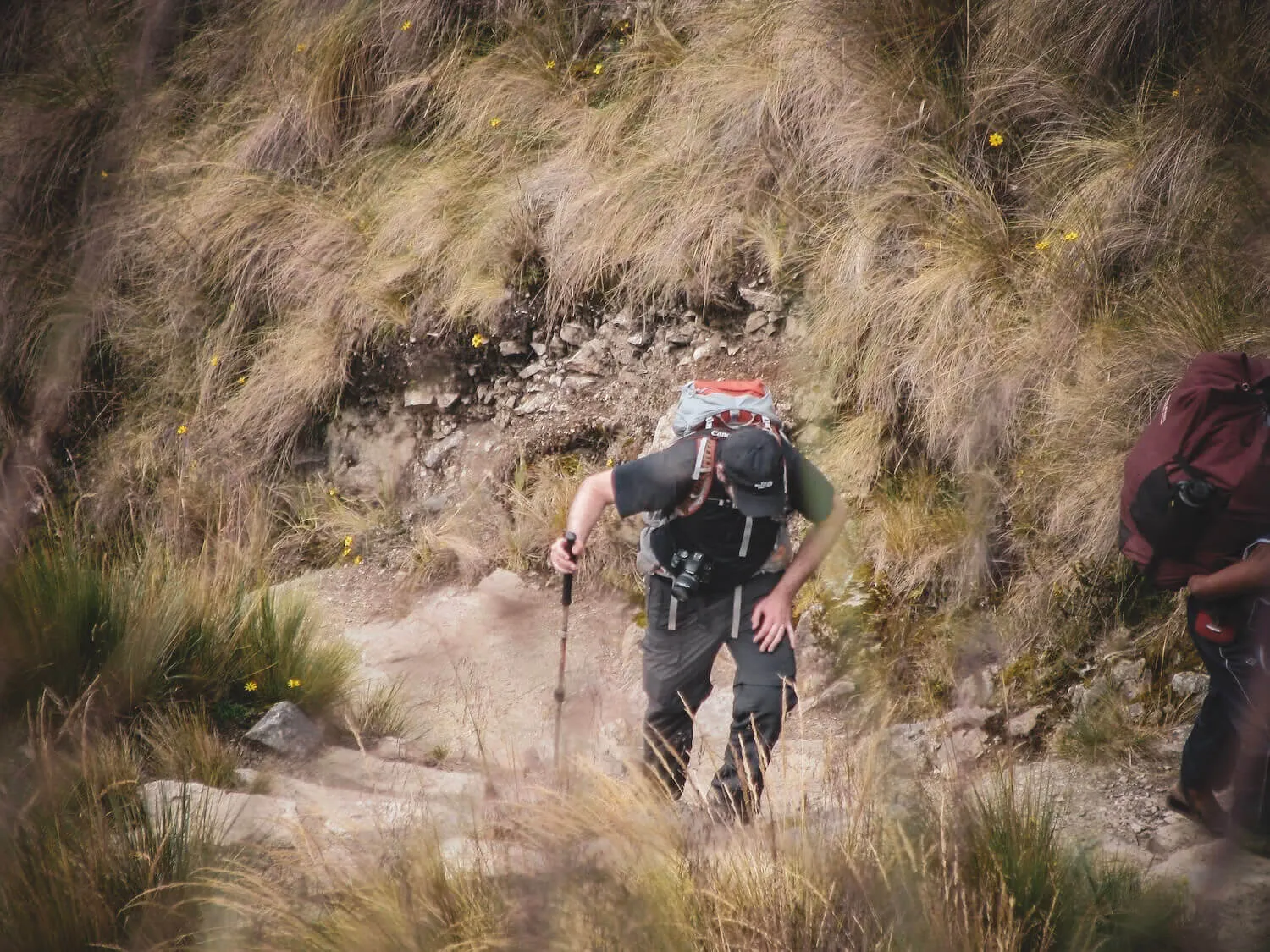
A progressive 12-week framework
Build the endurance to walk for hours, the strength to control thousands of steps and the repeatability to do it again the next morning.
Most moderately active travelers should begin focused preparation about 12 weeks before departure.
The objective is not elite fitness. Combine progressive hiking, aerobic conditioning, leg and core strength, stairs, downhill practice and walks with your real daypack. If you are starting from inactivity, allow 16–24 weeks.
See the 12-week planTraining at a glance
Why distance is misleading
The Classic route’s official 33.7 km corridor includes high altitude, irregular stone, sustained climbing and long descents. A flat 10 km walk is not an equivalent test.
Build from comfortable walks toward several hours of sustainable movement.
Prepare for sustained gradients and repeated high, irregular stone steps.
Train the controlled lowering that tires quadriceps and exposes weak knees.
Develop foot placement, ankle control and balance beyond a treadmill.
Practice moving again before your legs feel completely fresh.
Progressively test the equipment and weight you will actually carry.
Prioritize sustained stairs, uneven surfaces and enough reserve to enjoy Machu Picchu the following day.
Add longer time on your feet, back-to-back days, more descent control and a deliberate acclimatization plan.
Choose the correct starting line
Begin with 20–30 minutes of walking three or four times per week. Establish consistency before long hikes, demanding stairs or a loaded pack.
Keep some regular exercise, then replace generic sessions with hills, real stairs, uneven ground and occasional consecutive walking days.
Emphasize sustained climbs, long descents, technical steps, real equipment, back-to-back hiking and the final reduction in load.
A complete program
Hiking is the closest match, but aerobic work, strength, balance and recovery fill gaps that hiking alone can leave.
| Component | What it prepares | Examples |
|---|---|---|
| Hiking endurance | Long periods on the trail | Progressive outdoor hikes |
| Aerobic conditioning | Sustained controlled effort | Brisk walking, cycling or swimming |
| Stairs and incline | Repeated climbing | Real stairs, hills or a stair machine |
| Strength | Steps, descents and pack stability | Step-ups, split squats and carries |
| Balance and mobility | Irregular stone surfaces | Single-leg work and ankle mobility |
| Recovery | Adaptation and repeatability | Rest, sleep and lighter weeks |
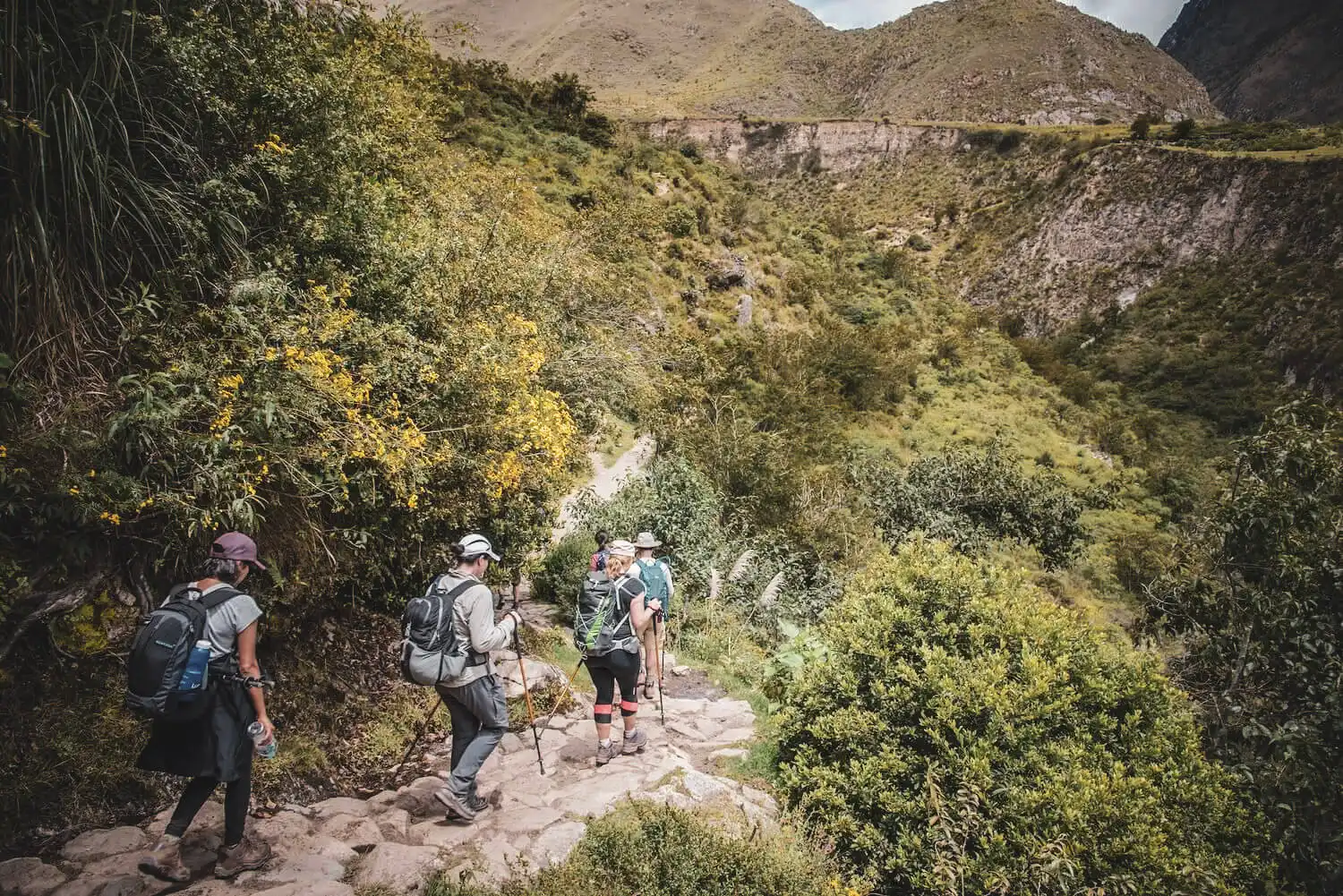
Train both directions
A stair machine builds climbing endurance but does not reproduce the braking work of walking down. Your quadriceps repeatedly control your body as gravity pulls it lower.
Use real stairs, modest step-downs and hills that include the return descent. Begin conservatively: too much downhill volume before adaptation can cause significant soreness.
Two sessions per week
Start with one or two controlled sets and progress only while technique remains consistent. Maximum weight is not the objective.
Step onto a stable stair or box, stand fully and return under control.
Build independent leg strength and reveal differences between sides.
Lower one heel slowly from a modest platform while keeping the supporting knee aligned.
Train single-leg strength and balance with a controlled backward step.
Prepare the lower legs for repeated climbing and irregular surfaces.
Support climbing mechanics and general lower-body control.
Keep the trunk stable while walking with a daypack.
Practice deliberate foot placement for uneven trail terrain.
The complete framework
Designed for a healthy adult who already completes some regular activity. “Aerobic” means controlled walking, cycling, swimming or equivalent work.
| Week | Aerobic work | Stairs / incline | Strength | Long hike / walk | Main objective |
|---|---|---|---|---|---|
| 1 | 3 × 30 min | 10–15 min | 2 | 60–90 min | Establish consistency |
| 2 | 3 × 30–35 min | 15–20 min | 2 | 90 min | Add time gradually |
| 3 | 3 × 35–40 min | 20 min | 2 | 1.5–2 hr | Add hills or a light pack |
| 4 | 2–3 × 30 min | 15 min easy | 1–2 light | 75–90 min | Recovery week |
| 5 | 2–3 × 40–45 min | 25 min | 2 | 2–2.5 hr | Add climbing and descending |
| 6 | 2 × 45 min | 30 min | 2 | 2.5–3 hr | Easy walk the next day |
| 7 | 2 × 45–60 min | 30–35 min | 2 | 3–3.5 hr | Use your daypack |
| 8 | 2 × 30–40 min | 20 min easy | 1–2 light | About 2 hr | Recovery week |
| 9 | 2 × 45 min | 35–40 min | 2 | 3.5–4 hr | Back-to-back walking |
| 10 | 2 × 40–50 min | 40–45 min | 1–2 | 4–5 hr | Most trail-specific week |
| 11 | 2 × 30–40 min | 20–25 min | 1 light | 2.5–3 hr | Reduce total load |
| 12 | 2–3 × 20–30 min easy | Optional, easy | Mobility | Short walks | Arrive rested |
Recovery rule: preserve at least one complete rest day each week. Add another when soreness, poor sleep or unusual fatigue accumulates.
Create a repeatable schedule, learn strength movements, introduce gentle hills and test footwear. Week 4 deliberately reduces load.
Extend the long hike, add real descents, use your normal daypack and practice eating and drinking. Week 8 is another recovery week.
Complete the longest hikes, sustained elevation change and at least one back-to-back weekend while remaining controlled.
Shorten sessions, maintain easy movement, prioritize sleep and arrive rested. Missed months cannot be recovered in the final week.
Put the pieces on a calendar
Avoid placing a demanding strength session immediately before your most important hike when possible. Repeat early weeks when the schedule does not yet feel sustainable.
No mountains nearby?
Combine sustained aerobic effort, repeated upward steps, controlled downward movement and long periods on your feet.
Use the readiness testUse real stairs, a stair machine or an inclined treadmill without pulling yourself upward on the rails.
Add real staircase descents, modest step-downs, reverse lunges and slow lowering.
Extend walks through parks, nature paths or varied urban routes and surfaces.
Follow a long walk with a shorter, easy walk the next day—not another maximum effort.
Two separate preparations
Training improves endurance, strength and hiking comfort. It does not make you immune to altitude illness. The CDC states that training and physical fitness do not affect altitude-illness risk.
Plan time to adjust after arrival. CDC guidance recommends only mild exercise during the first 48 hours at high altitude; a demanding first day in Cusco is not a useful final fitness test.
Read the altitude guideNothing important should be new
Pack weight, footwear and hydration become more revealing after three hours than after twenty minutes.
Use the exact boots or trail shoes—and the same sock system—you plan to take, especially for long hikes and descents. A useful practical target is to wear them for at least half of your later trail-specific sessions; this is a familiarization target, not a medical threshold. Build duration gradually, respond early to hot spots and never save new footwear for the trek itself.
Confirm strap comfort, stable weight, quick rain-layer access and a water system you can use without unpacking.
Practice adjusting, placing and storing them without interfering with other hikers. Use rubber protectors on sensitive trail surfaces.
A practical benchmark
Speed and distance are incomplete measurements. Control, repeatability and familiar equipment are more useful.
You can hike for several hours at a sustainable pace without repeatedly reaching maximum effort.
Your foot placement, balance and knee control remain deliberate as your legs become tired.
After a demanding hike, you can still complete an easy walk the following day.
You know which socks work, where the pack rubs and how every important layer performs.
Persistent joint pain is not a readiness milestone. Reduce the workload and seek appropriate professional advice instead of trying to train through it.
Common mistakes
Add stairs, incline walking, step-ups and controlled step-downs.
Use real stair descents, downhill hiking and slow lowering exercises.
Change one variable at a time: duration, elevation, surface or pack weight.
Include two focused strength sessions when your schedule and recovery allow.
Test footwear, socks, layers, hydration and daypack on long training walks.
Keep at least one complete rest day and preserve the easier weeks.
Week 12
Keep moving, but reduce duration and intensity. Prioritize short walks, gentle mobility, consistent sleep, travel organization and the acclimatization schedule.
It cannot create meaningful new fitness and may leave you sore or fatigued. Trust the work completed during the previous months.
Quick answers
Adapt every schedule to your current capacity, recovery and professional medical advice.
Most moderately active travelers can use a focused 12-week plan. If you exercise rarely or have little walking experience, allow 16–24 weeks and use the first month to establish a consistent walking habit.
Many beginners can complete it with gradual, consistent preparation. You should become comfortable walking for several hours, using stairs and moving on consecutive days; no technical climbing experience is required.
Hiking on uneven terrain with both uphill and downhill sections is the most specific activity. Combine it with aerobic exercise, stairs, lower-body strength and recovery.
No. Brisk walking, hiking, cycling, swimming, rowing and incline treadmill walking can all develop useful aerobic endurance.
Combine a stair machine or inclined treadmill with real staircase descents, controlled step-downs and long walks on consecutive days.
Yes, but introduce it gradually. Carry the equipment you expect to use rather than arbitrary extra weight, and confirm your porter arrangements before setting a final training load.
No. Fitness can make the physical work more manageable, but the CDC states that training and physical fitness do not affect altitude-illness risk. Acclimatization requires a separate itinerary plan.
A practical benchmark is completing a several-hour hike with climbing and descending at a controlled pace, then completing an easy walk the following day without persistent joint pain.
The program translates the route’s practical demands into a progressive framework. It is not a clinical rehabilitation plan or a guarantee of trek completion.
Public-health guidance supports combining aerobic activity with muscle-strengthening work. Route distance comes from the protected-area authority; altitude guidance comes from the CDC Yellow Book. Footwear guidance reflects evidence on fit, progressive break-in and blister prevention; the “half of later sessions” target is our practical recommendation, not a studied cutoff.
Connect preparation with the real trip
Permit availability, itinerary, porter arrangements and acclimatization all affect the plan.