
4 days / 3 nights
Classic Inca Trail
The complete, best-known journey from Km 82 across high passes, archaeological sites and cloud forest, with three nights of camping.
- Best suited to
- The fullest route experience

The historic route to Machu Picchu
The Inca Trail is a regulated trekking route through ancient roads, high Andean passes, archaeological sites and cloud forest before reaching Machu Picchu through Inti Punku, the Sun Gate.
When travelers say “the Inca Trail,” they usually mean the protected route to Machu Picchu—not every surviving Inca road in Peru.
See the route and elevationThe route uses sections of sophisticated Andean road engineering: fitted stone, steps, drainage, retaining walls and paths adapted to steep terrain. It belongs to the history of the Qhapaq Ñan, the immense road system that connected production, administrative and ceremonial centers across the Andes.
The exact function of every site and road section near Machu Picchu is not known with certainty. We separate archaeological evidence from attractive modern stories that cannot be verified.
Explore the evidence-led history →The essentials
Figures are approximate because itinerary measurements and allocated camps can change the walked total.
One name, several itineraries
The four-day Classic and Km 104 Short routes are distinct experiences. A shorter itinerary is not simply the same trek completed faster.
4 days / 3 nights
The complete, best-known journey from Km 82 across high passes, archaeological sites and cloud forest, with three nights of camping.
2 days / 1 night
A Km 104 hike through Wiñay Wayna and the Sun Gate, normally followed by a hotel night rather than camping on the protected trail.
1 structured day
The short route compressed into a long day of transport, controls, hiking and tightly timed Machu Picchu arrangements.
5 days / 4 nights
A slower interpretation of the Classic route. Exact camps and pacing depend on the operator and official allocations.
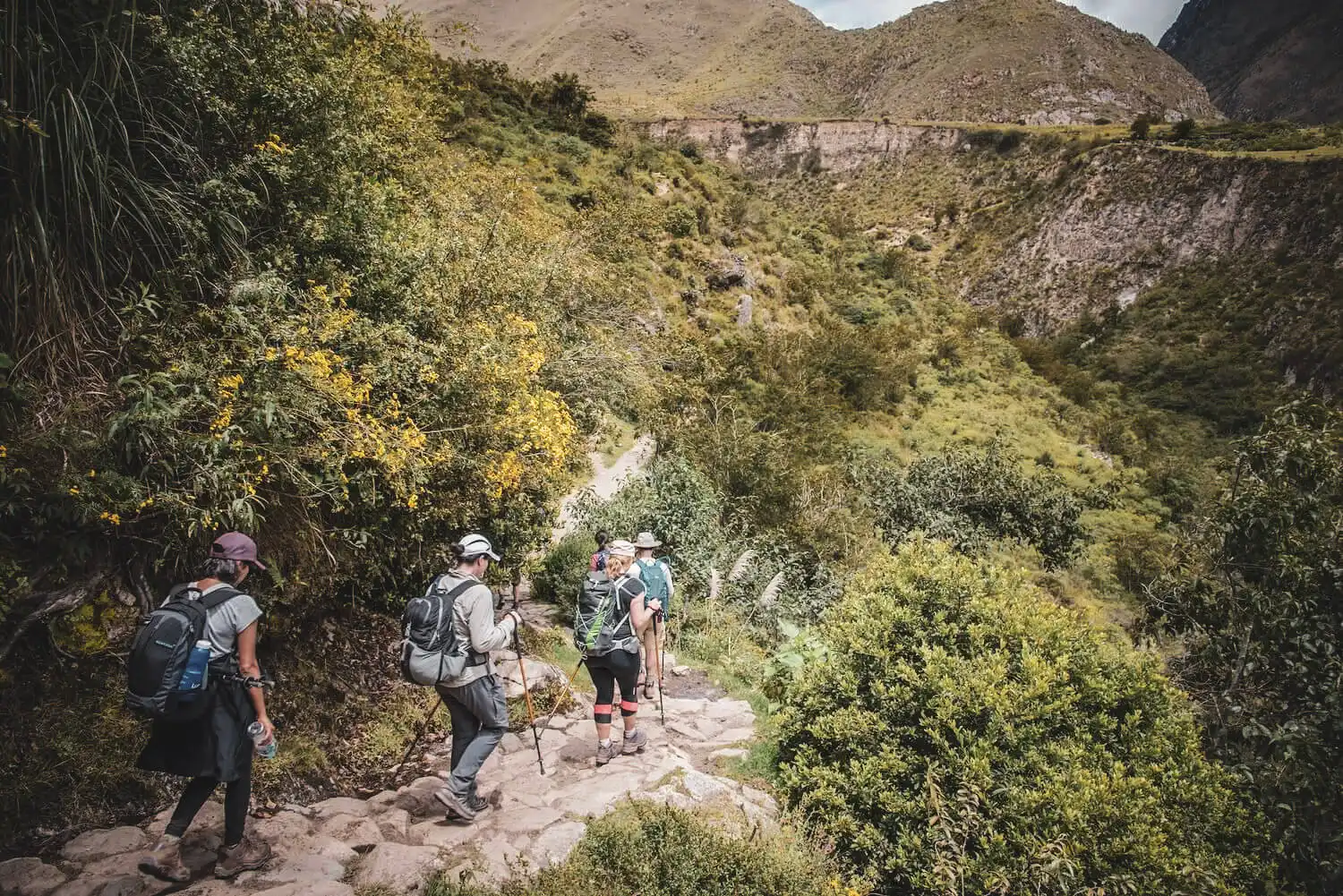
The Classic route in sequence
Classic departures enter near Piscacucho at Km 82; Short Trail departures use the rail-accessed Km 104 control.
The Classic route climbs from inhabited valleys to exposed passes, including Warmi Wañusqa, before descending east.
Patallacta, Runkurakay, Sayacmarca, Phuyupatamarca, Intipata and Wiñay Wayna reveal how roads, water and buildings fit the terrain.
Warmer, more humid forest replaces the open high Andes as the protected path approaches Machu Picchu.
The route reaches the Sun Gate on foot, then descends toward Machu Picchu under the access conditions assigned to the itinerary.
More than a way to arrive
The archaeological sites, historic paving, camps and changing landscapes are part of the experience rather than scenery passed on the way to one attraction.
Travelers cannot arrive at the trailhead and start independently. Entry depends on a dated permit and the current rules for authorized operations.
Salkantay and Lares are valuable Cusco treks, but they are not versions of the protected Inca Trail and do not follow the same archaeological corridor.
Inca Trail itineraries approach through Inti Punku. Most train visitors reach the area from Machupicchu Pueblo and continue by bus or on foot.
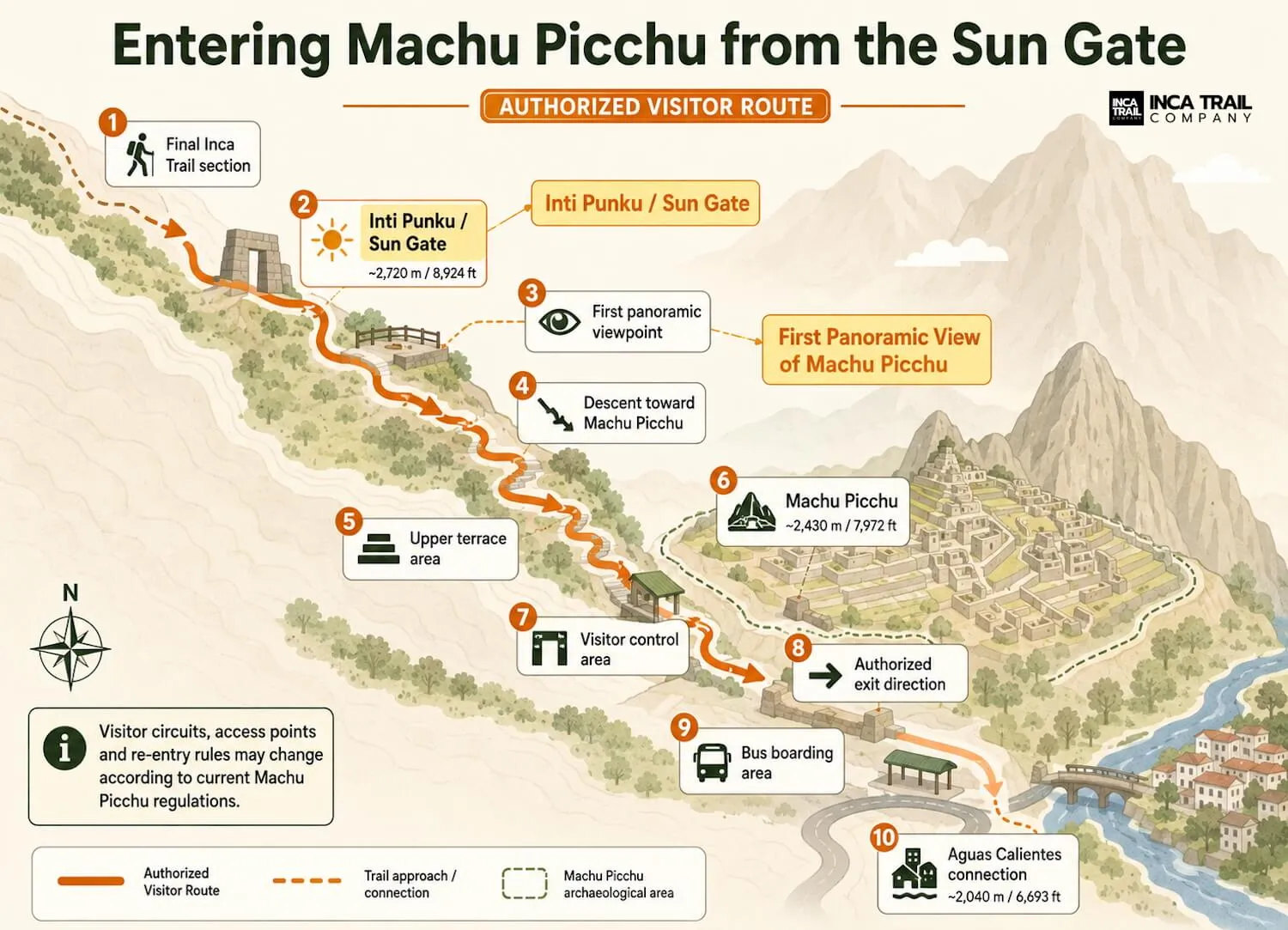
Inti Punku
Approaching Machu Picchu on foot is the route’s defining finish. Weather, time, visitor circulation and ticket conditions affect the exact view and visit, so no responsible operator can promise an empty postcard scene.
Explore the archaeological sitesIs it the right trek?
The Classic route suits travelers who value several days of hiking, camping, trail-only sites and the experience of reaching Machu Picchu on foot.
Regulated access
Protected Inca Trail entry is tied to a specific route and date. Travelers do not simply arrive and walk independently. The current permit, guide and operating requirements must be handled through the authorized process.
Live availability helps you plan, but only the provider you select can confirm its own service space and complete a reservation.
A practical order
Look at live availability before fixing non-refundable dates. Visible spaces are a planning signal, not a reservation.
Compare trail time, camping, hotel use, altitude, steps and the pace required—not duration alone.
Review permits, tickets, transport, group size, guide support, porter policies, equipment, meals and written cancellation terms.
Allow time to acclimatize and train for sustained climbing, uneven steps and controlled descents.
Quick answers
Use the linked specialist guides when a short answer is not enough for a booking or safety decision.
The Inca Trail is a regulated historic trekking route through the Cusco Andes to Machu Picchu. The name most often means the four-day Classic route or the shorter Km 104 route.
No. The Qhapaq Ñan is a road system of more than 30,000 km across six Andean countries. The tourist route to Machu Picchu is one small corridor within the much broader Inca road tradition.
The Classic route is commonly described as about 42 km or 26 miles and normally takes four days. The Short Inca Trail starts at Km 104 and is commonly offered as a one- or two-day itinerary.
The Classic route traditionally starts near Piscacucho at Km 82 and reaches Machu Picchu through Inti Punku. The Short route enters at Km 104 and joins the final archaeological corridor.
The Classic route is a challenging non-technical trek. Altitude, sustained ascent, stone stairs, long descents and consecutive hiking days matter more than distance alone.
Yes. Entry is regulated and tied to a date and route. Travelers must use the authorized booking and operating process rather than hiking the protected route independently.
No. They are separate trekking routes in the Cusco region. They can be strong alternatives, but their landscapes, logistics, archaeology and arrival experience are different.
It combines surviving road engineering, high Andean landscapes, trail-only archaeological sites, cloud forest and an approach to Machu Picchu through the Sun Gate.
We use official heritage and regional planning sources for the historical network and route context. Approximate trail metrics are labeled as such, and detailed permit rules remain in the dedicated, updateable permit guide.
Reviewed August 9, 2026 · Corrections: contact our editorial team
Your next decision
Compare the Classic and Short experiences, then check whether your preferred dates are possible.