
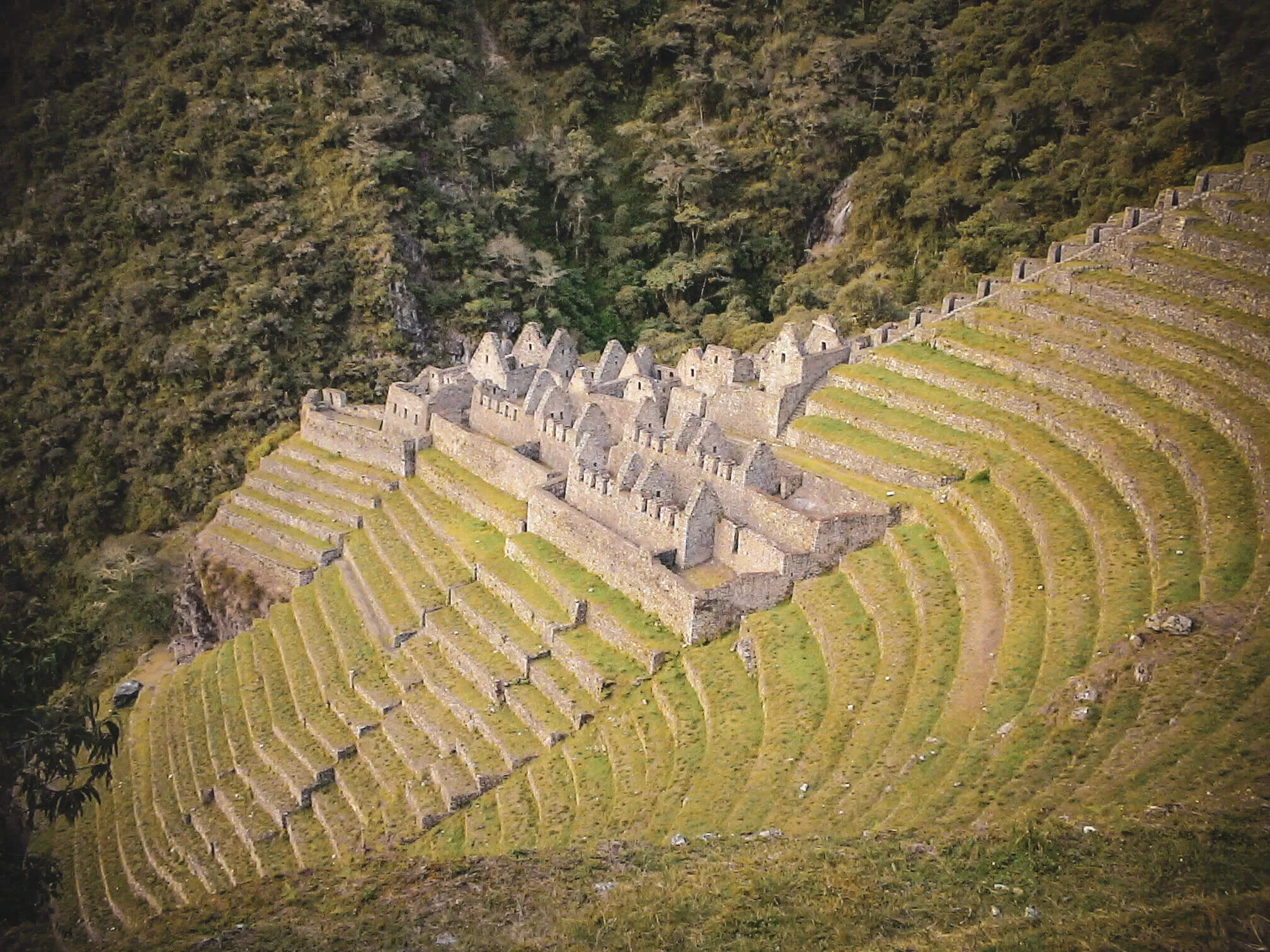
Terraces and stone buildings of Wiñay Wayna on a steep forested mountainside

The final corridor’s great mountainside complex

Wiñay Wayna

Terraces, buildings, stairs and water descend together across one steep slope. On both the Classic and Short Inca Trail, this is where architecture and approach become inseparable.

Classic + Short TrailApprox. 2,650 mReviewed August 9, 2026

Not a rest stop with ruins attached.

A substantial Inca complex shaped around water and slope

Wiñay Wayna is commonly translated as “forever young.” Its importance does not depend on a romantic name: the visible architecture shows terraces, occupation, water management and movement organized as one mountainside system.

Official tourism material describes the complex as agricultural and ceremonial. Beyond that boundary, precise room-by-room stories should remain interpretations.

Read the visible evidence

Quick reference

Wiñay Wayna at a glance

Names, elevation and access are often copied without context. These labels preserve the route and measurement boundaries.

What it is
Inca archaeological complex
Common translation
Forever young
Approximate elevation
2,650 m / 8,694 ft
Protected area
Historic Sanctuary of Machupicchu
Classic Trail
Near the final section
Short Trail
Principal archaeological site
Next major landmark
Intipunku · Sun Gate
Independent access
Not permitted

Site anatomy

Four systems to observe together

“What can I see?” and “what did it mean?” are different questions. Each feature below keeps those layers separate.

01

Terraces

Observable
Broad agricultural terraces wrap the steep slope in repeated stone-supported levels.
Responsible reading
They visibly stabilize and reshape difficult terrain. Cultivation is supported by official classification; assigning one exclusive crop is not.
02

Buildings

Observable
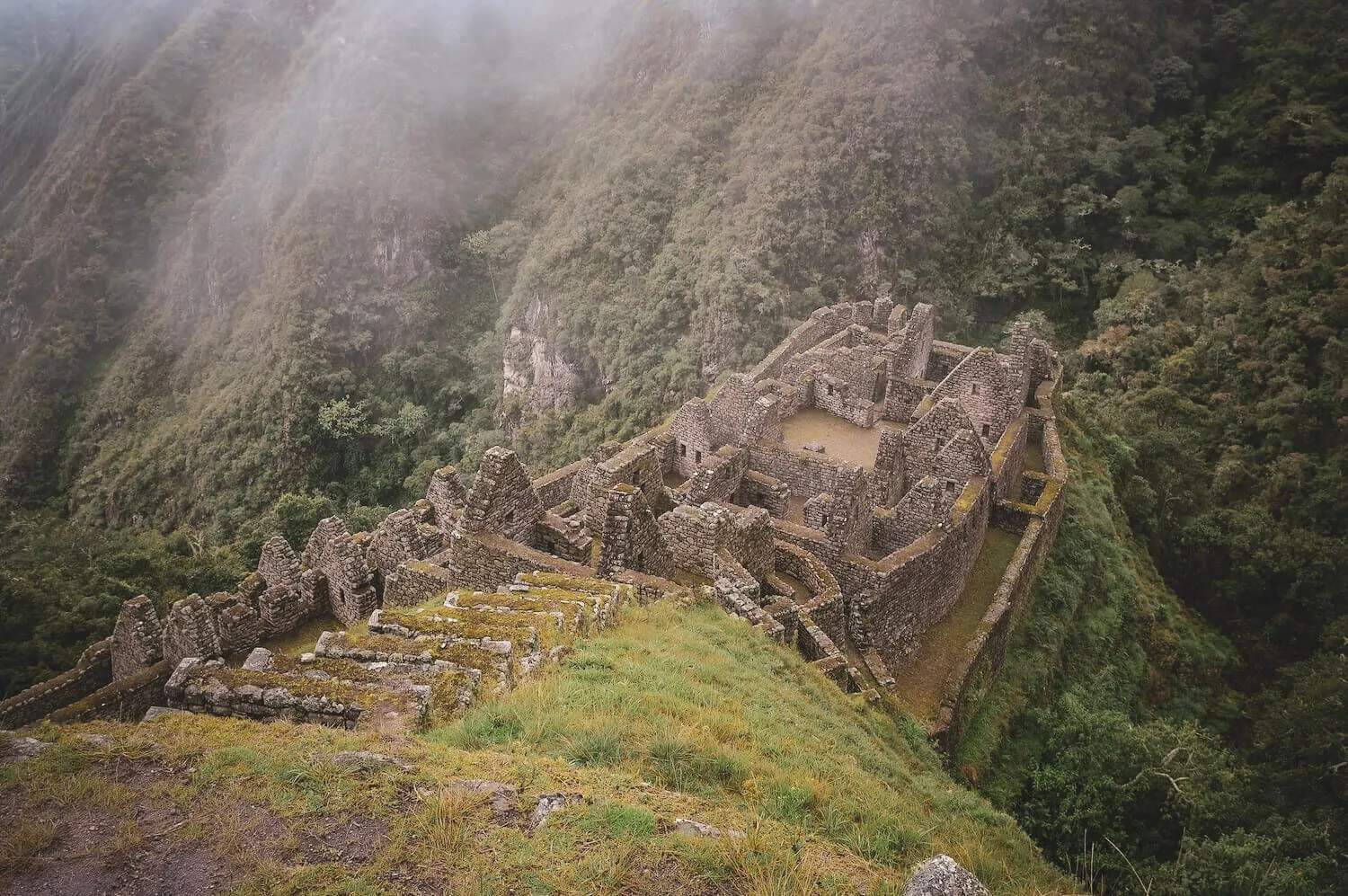
Groups of stone enclosures occupy upper and lower sectors rather than one flat plaza.
Responsible reading
The complex accommodated organized activity and occupation. Every room cannot be confidently assigned one residential, administrative or ritual role.
03

Water

Observable
A connected sequence of channels and fountain-like features moves water down through the site.
Responsible reading
Hydraulic planning is observable. Ceremonial significance is plausible and officially recognized at site level, but highly specific ritual stories require evidence.
04

Stairs and road

Observable
Stone steps connect terraces, buildings and the wider Inca road toward Intipunku.
Responsible reading
Movement was designed as part of the architecture. The road is archaeological fabric—not empty space between monuments.
Upper stone enclosures at Wiñay Wayna surrounded by humid mountain forest
The closer view reveals how rooms, retaining walls and stairs occupy different levels.

Architecture in section

You understand it by moving vertically

Photographs often flatten Wiñay Wayna into a wide terrace panorama. On site, the relationship between upper buildings, lower enclosures, water features and the road becomes clearer as the visitor changes level.

The builders did not erase the mountain to create a platform. They repeatedly negotiated its grade with retaining walls, narrow connections and controlled water movement.

Place in the road system

Wiñay Wayna → Intipunku → Machu Picchu

Its power comes partly from sequence. The site is one of the last major constructed places before the Sun Gate approach.

Archaeological complexWiñay WaynaTerraces · water · buildings
Historic gatewayIntipunkuWeather-dependent first view
Protected llaqtaMachu PicchuAssigned visitor arrangement
See the complete route context

Same site, different journey

Classic versus Short Trail

Both reach Wiñay Wayna. They do not create equivalent effort, context or time on the road.

01

After the high passes and broad archaeological sequence

Classic Inca Trail

Physical context
Cumulative multi-day effort
Meaning in the journey
Wiñay Wayna feels like the final major complex after days of changing elevation, ecology and sites.
Open the four-day route →
02

After climbing from the Chachabamba / Km 104 corridor

Short Inca Trail

Physical context
One concentrated hiking day
Meaning in the journey
Wiñay Wayna is the central archaeological reward before the trail continues to Intipunku and Machu Picchu.
Open the Short Trail →

Current access · dated

The traditional Short Trail entrance reopened August 1, 2026

Peru’s Ministry of Culture announced the reopening of the Chachabamba–Wiñay Wayna corridor after specialized conservation and safety work. The decision followed inspection of the trail after geological and rain-related impacts.

This is a status recorded on August 9, 2026—not a guarantee for a future departure. Weather, landslides and conservation can change the access point or suspend a section.

Read the complete Short Trail update

Approx. 2,650 m / 8,694 ft

Lower than the high passes; greener and more humid

PROMPERÚ route material places Wiñay Wayna at approximately 2,650 meters. That is well below Warmi Wañusqa, but the site remains part of a mountain trail with steep stairs and changing weather.

SERNANP describes the sanctuary as an exceptionally diverse protected area with humid montane environments, orchids and pronounced ecological change across elevation.

Compare seasonal conditions
Recommended sanctuary season
April–October
SERNANP guidance
Rainier period
November–March
Not rain every hour
Classic experience
Accumulated fatigue
After high passes and descents
Short experience
Sustained climb
One concentrated trail day

Visit what is open—not everything visible

Conservation determines the path through the site

A clear photograph of a terrace does not imply visitor access to it. Routing can respond to masonry condition, erosion, group flow and active maintenance.

Return to the archaeological hub
  1. 01Stay on the designated route even when another terrace looks accessible.
  2. 02Do not sit, climb or place packs and poles on ancient masonry.
  3. 03Keep food, waste and liquids away from structures and water features.
  4. 04Follow temporary closures and guide instructions without expecting entry to every sector.
  5. 05Photograph without blocking narrow stairs or pressuring another group to rush.
  6. 06Treat walls, drains, stairs and road surfaces as protected archaeology.

Why it matters

One site explains the larger trail

Landscape engineering

Terraces, water and circulation demonstrate adaptation rather than separation between architecture and mountain.

Route progression

The site gives material context to the final approach instead of leaving Machu Picchu as an isolated destination.

Route choice

It remains available to both a multi-day trekker and a traveler choosing one concentrated hiking day.

Both routes include the site

Check the journey that fits you

Classic and Short Trail availability is separate. A live result indicates regulated inventory; it does not confirm an operator reservation, access conditions or every Machu Picchu admission described in a package.

Understand permit availability
Permit checker

Find a departure

Availability data may be delayed. It does not guarantee a permit, tour departure or confirmed booking.

Direct answers

Wiñay Wayna FAQs

Access status is dated because protected mountain routes can change.

What is Wiñay Wayna?

Wiñay Wayna is an Inca archaeological complex inside the Historic Sanctuary of Machupicchu. Its terraces, stone buildings, stairs and water system occupy a steep cloud-forest mountainside on the final Inca Trail corridor.

What does Wiñay Wayna mean?

The Quechua name is commonly translated as “forever young” or “eternally young.” Spellings such as Wiñaywayna, Winay Wayna and Wiñay Huayna refer to the same site.

How high is Wiñay Wayna?

PROMPERÚ route material places it at approximately 2,650 meters, or 8,694 feet. Treat that as a practical route elevation rather than a survey-grade measurement.

Is Wiñay Wayna on both main Inca Trail options?

Yes. It appears near the end of the Classic multi-day corridor and is the principal archaeological complex on the Short Trail from the Chachabamba area.

Can I visit Wiñay Wayna from Machupicchu Pueblo without an Inca Trail permit?

Not under the current visitor framework. Wiñay Wayna belongs to the regulated Inca Trail network and is not managed as a standalone independent day attraction from town.

Is the Short Trail an easy way to reach it?

It removes the Classic route’s high passes and camping, but it still concentrates sustained ascent, stone steps and a full active journey into one day.

What comes after Wiñay Wayna?

The historic trail continues toward Intipunku, the Sun Gate, and then toward Machu Picchu. Actual access, timing and the applicable Machu Picchu visit arrangement must be confirmed for the booking.

Is the traditional Short Trail access open in August 2026?

The Cusco office of Peru’s Ministry of Culture announced that the Chachabamba–Wiñay Wayna route reopened on August 1, 2026 after conservation and safety work. Conditions can change, so verify again close to travel.

When is the best time to visit?

SERNANP identifies April through October as the recommended sanctuary visiting season and November through March as the rainy season. Weather and visibility still vary within every month.

Sources and interpretation boundary

Official sources establish route order, access, conservation status, site classification and approximate elevation. Observable architecture is separated from interpretations of original purpose.

Reviewed August 9, 2026 · Corrections: contact our editorial team

Choose the journey, not only the photograph

Wiñay Wayna belongs to the approach

Compare how much trail context, time and physical commitment you want before selecting a route.

Compare both routesExplore every principal site →