Uphill endurance
Complete several hours of sustained climbing without an unsustainable pace.
Route choice before reassurance
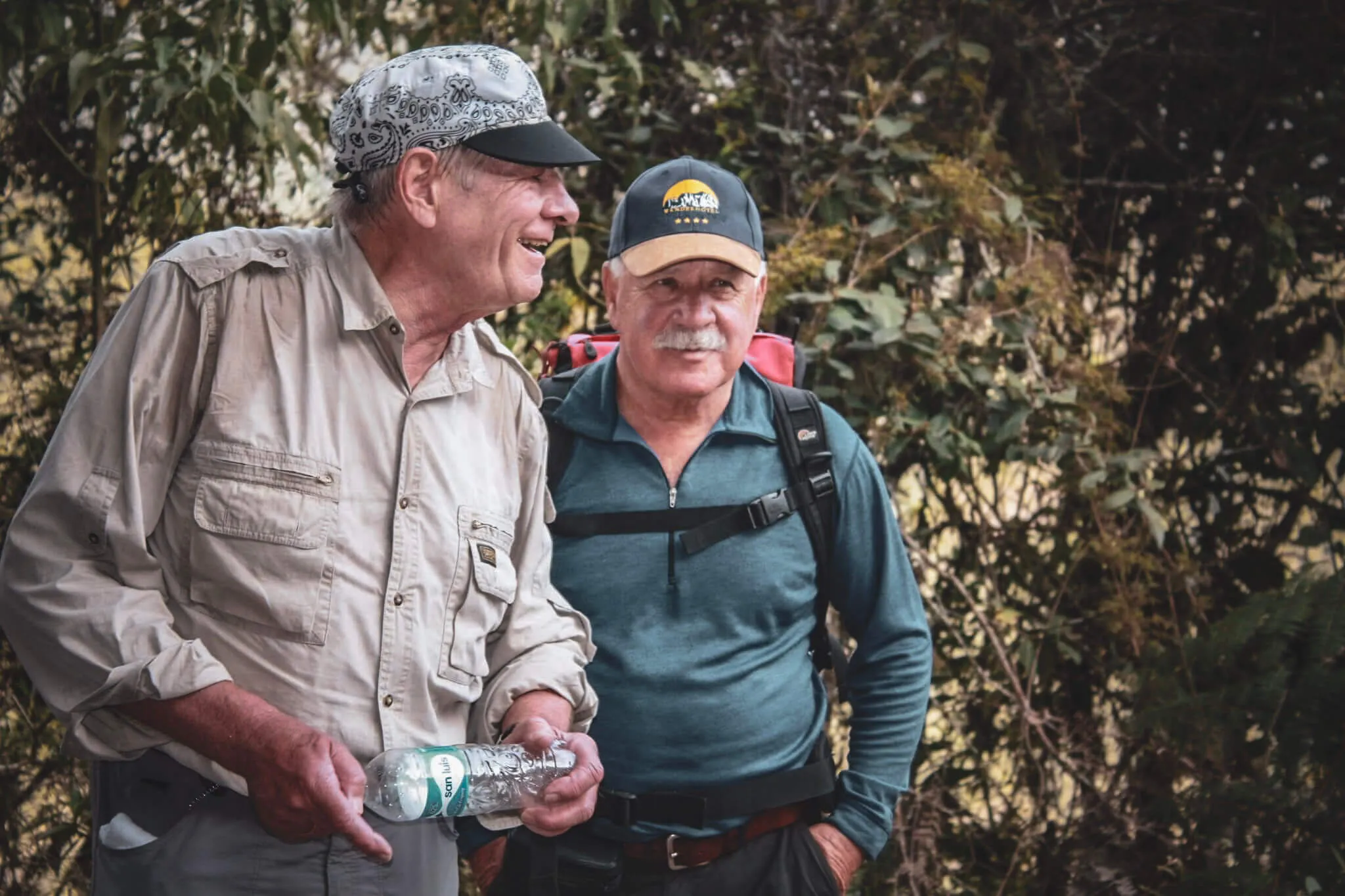
Many older travelers can hike it. Your birthday cannot choose the route; current endurance, balance, recovery, health and the service around you can.
Do not ask only, “Am I too old?”
A hiker in their 60s or 70s may arrive with excellent mountain experience. Another traveler may need the Short Trail or a train-based visit. The honest decision comes from matching the itinerary to present capacity—not past achievements or a generic “senior-friendly” label.
This is a planning guide, not medical clearance. A clinician who knows your history and the exact itinerary makes individual medical recommendations.
Assess current readinessSix useful signals
Test these on real hills and uneven trails. Flat walking alone does not reproduce the climbing, steps or next-day recovery required on the Classic route.
Complete several hours of sustained climbing without an unsustainable pace.
Descend long, irregular stairs while maintaining balance, even when tired.
Remain functional for another active day after a demanding hike.
Move confidently over stone, changing step heights and wet or loose surfaces.
Carry water, layers and personal essentials without changing your gait.
Report pain, fatigue, dizziness, nausea or unusual breathlessness promptly.
Choose the structure
“Shorter” and “slower” describe different changes. One reduces cumulative trail days; the other may redistribute the same broad Classic corridor.
33.7 km official corridor · 4 days / 3 nights
Commercial itinerary · usually 5 days / 4 nights
10.5 km official route · one principal hiking day
Rail + bus/site arrangements
The descent deserves its own plan
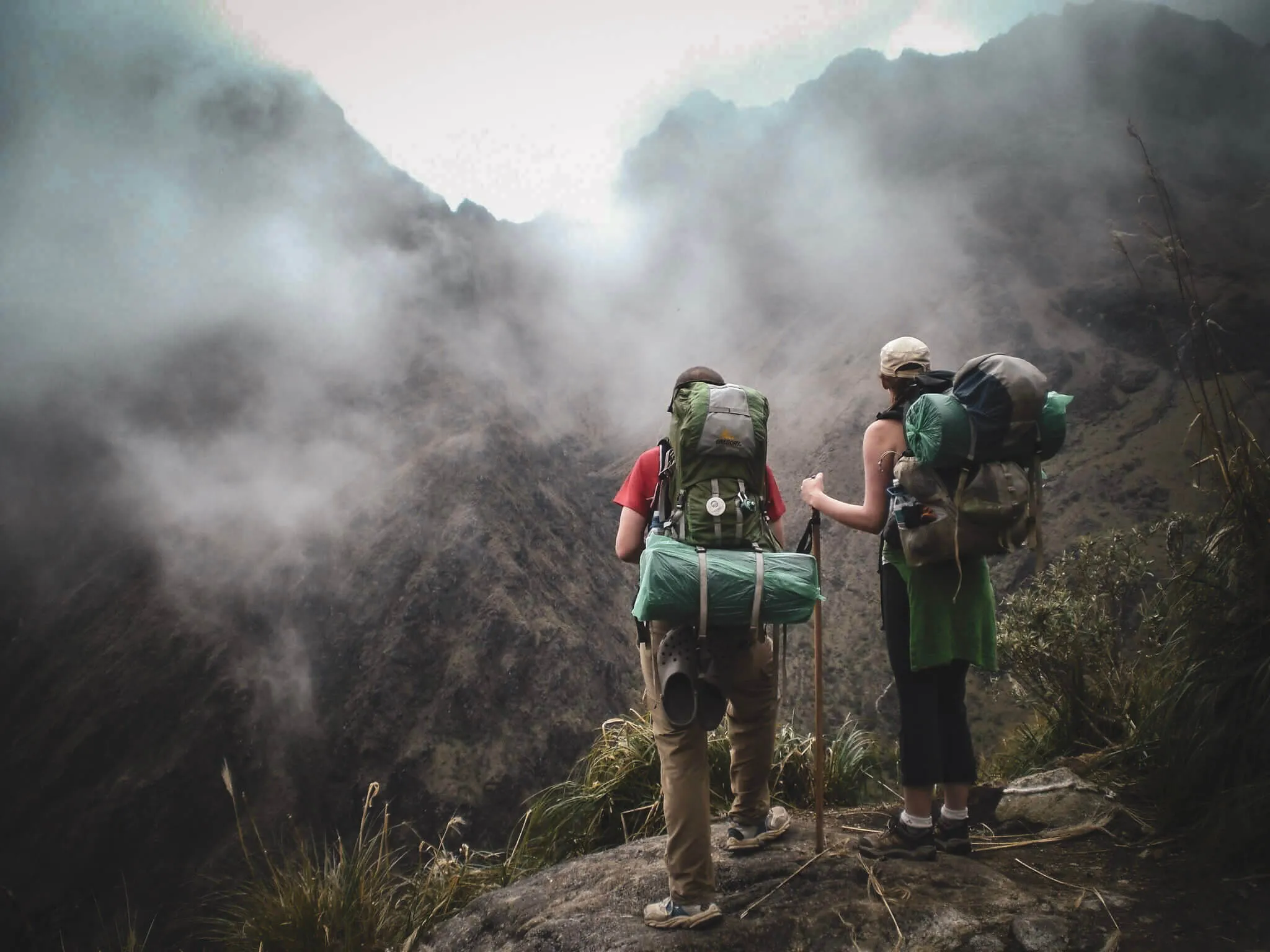
Warmiwañusca reaches approximately 4,215 m, but the Classic route's difficulty is cumulative: sustained climbing, irregular stairs, long descents, camping and another walking day after incomplete recovery.
Downhill movement loads the legs differently from climbing. Train on stairs and trails at a controlled speed, use the footwear and daypack you plan to bring, and test consecutive active days.
Two separate questions
CDC's 2026 Yellow Book states that training and physical fitness do not affect susceptibility to altitude illness. It lists Cusco at approximately 3,350 m and describes the first three to five days after ascent as crucial to acute acclimatization.
CDC lists “elderly” among conditions likely to add no extra altitude risk by itself, while still recommending specialist consultation for relevant underlying conditions. That distinction matters: age alone is not an automatic contraindication, and it is not medical clearance.
Read the altitude guideSupport is measurable
A shared group can be social and economical. A dedicated guide arrangement may provide clearer pace management. Neither changes protected-area schedules, terrain or permit rules. Our private-tour guide explains which parts of that service can—and cannot—be adapted.
Ask what happens when one traveler is slower, needs more breaks or cannot continue. The operator's answer should name people, equipment, communication and decisions—not just promise that everything will be fine.
Compare operator standardsRead the policy wording
“Travel insurance included” is not enough. Coverage, exclusions, authorization and reimbursement rules vary. Verify the policy directly rather than relying on an operator summary.
Confirm that organized high-altitude trekking—not only ordinary sightseeing—is covered.
Look for an altitude limit and verify it exceeds the itinerary's actual high point.
Check who authorizes transport, what forms are included and whether payment is upfront.
Read pre-existing-condition definitions, exclusions and any waiver deadline.
Check unused trekking services, accommodation and transport after a medically required exit.
Save the 24-hour contact method and understand the procedure before an emergency.
The U.S. Department of State recommends medical evacuation insurance for adventure travel and checking that the purchased policy covers the planned activities and anticipated medical needs. Travelers from other countries should consult their own government guidance and insurer.
A decision you can defend
Suitability before inventory
The calendar compares the 4-Day Classic Inca Trail and Short Inca Trail. Availability does not mean medical suitability, operator acceptance or a confirmed booking.
Understand the permit systemPlease wait while we check the selected date.
Dates in the same month currently showing permits
Availability data may be delayed. It does not guarantee a permit, tour departure or confirmed booking.
Direct answers
These answers separate age, capability, route structure and medical advice.
Yes, potentially. Sixty is not a useful pass-or-fail threshold. Current endurance, downhill control, balance, recovery, health, acclimatization and the selected route are more informative.
Potentially. An experienced and currently active traveler over 70 may be well prepared, while a younger sedentary traveler may not be. The decision still needs route-specific physical, medical and operator screening.
We found no universal maximum visitor age in the current official material reviewed. An operator can still apply its own acceptance policy, and absence of a cutoff is not medical clearance.
There is no route selected by age alone. Consider the Classic Trail for tested multi-day readiness, a five-day format for a potentially less compressed schedule, the Short Trail for one substantial hiking day, or the train when Machu Picchu matters more than trekking.
It can reduce schedule pressure if the actual daily stages are shorter, but the name alone proves nothing. It still uses the broad Classic corridor and does not remove altitude, stone terrain or camping.
No. It removes repeated trekking days and camping, but the official route is still 10.5 km with sustained ascent and irregular stone stairs.
No. Fitness helps with the physical work, but CDC states that training and physical fitness do not determine susceptibility to altitude illness.
A dedicated guide arrangement can offer clearer pace management, but it cannot change permit rules, fixed control schedules or the terrain. Ask what service actually changes before paying more.
Many hikers find poles useful for stability and controlled descents. Confirm the current protective-tip requirements and equipment policy with the operator.
Verify the exact trekking activity, maximum altitude, emergency medical care, evacuation, pre-existing-condition rules and interruption terms. Coverage varies by policy and country.
Official SERNANP material supports route distances and regulated access. CDC supplies the altitude and medical-planning context. Insurance terms remain policy-specific.
We do not infer individual fitness, diagnose illness or guarantee that an operator will accept a booking.
The goal is not to prove your age wrong
The Classic, five-day, Short and train options are all valid. The right one matches the traveler you are now.