Rainy-season endpoint
Recommended season begins · transition remains
Inca Trail
in April
April trades much of March’s rain for a drier regional pattern while keeping the Andes green. Bring rain protection, prepare for cooler nights and check permits before calling it the perfect compromise.

APR
Greener
Drier trend
Still variable
The honest verdict
April is a strong compromise—not dry-season certainty
SERNANP’s recommended visiting period begins in April, immediately after its November–March rainy-season label. The boundary supports a directional choice, but weather, elevation and exact dates still determine the lived trek.
April at a glance
Less rain does not mean one type of day
The route crosses valleys, passes and cloud forest. A city station and a monthly label cannot describe every elevation.
- Official season
- Recommended period begins
- Rain
- Declining pattern · still possible
- Landscape
- Green after rainy season
- Trail
- Mixed dry and wet sections
- Days
- Sun, cloud and showers
- Nights
- Cooler trend at elevation
- Demand
- Building toward dry season
- Permits
- Exact date + route only
Regional climate signal
March → April → May is a steep drying sequence
SENAMHI’s Cusco station normal provides context for the regional direction. It is not precipitation measured on your four trail days.
Early versus late April
The trade-off moves gradually
Later dates move seasonally toward May. They do not carry a guarantee, and permit inventory can outweigh a small weather preference.
Closer to March
- Potentially stronger wet-season influence
- Very green landscape context
- Wet stone remains plausible
- Cool high-elevation nights
- Exact-date availability required
Closer to May
- Further into the drying pattern
- Greenery can remain
- Rain still possible
- Colder nights increasingly relevant
- Demand may build by date
How an April day can change
Warm climbing, cloud and cold rest can coexist
These are possible transitions, not a timed forecast. Carry each layer where it can be reached.
Possible state
Bright ascent
Direct sun can feel warm and high-altitude ultraviolet remains relevant.
Possible state
Shower resets stone
Short rain can change traction even when the overall month is drier.
Possible state
Cold after movement
Wind, cloud, altitude and sunset can make stops and camps feel sharply colder.
SENAMHI says high-Andean frost generally begins in April and is most frequent in June and July. That regional hazard context does not mean every April campsite reaches 0°C.
What April changes
The balance shifts from drying to warmth management
Rain protection stays; cold-night and sun strategy become more prominent.
Post-rain landscape
Green remains while rainfall retreats
April can preserve dense vegetation and active water without belonging to SERNANP’s November–March rainy-season label.
Original stone
One shower can reset the footing
A generally drier pattern does not keep every staircase dry. Retain wet-trail pacing and tested grip.
High camps and passes
Clearer air can mean colder nights
SENAMHI says high-Andean meteorological frost generally begins in April. The route spans elevations, so layers remain more useful than one city average.
Intipunku
Visibility odds improve—not certainty
Cloud and mist can still hide the first view. April is a transition, not a contract for a clear Machu Picchu arrival.
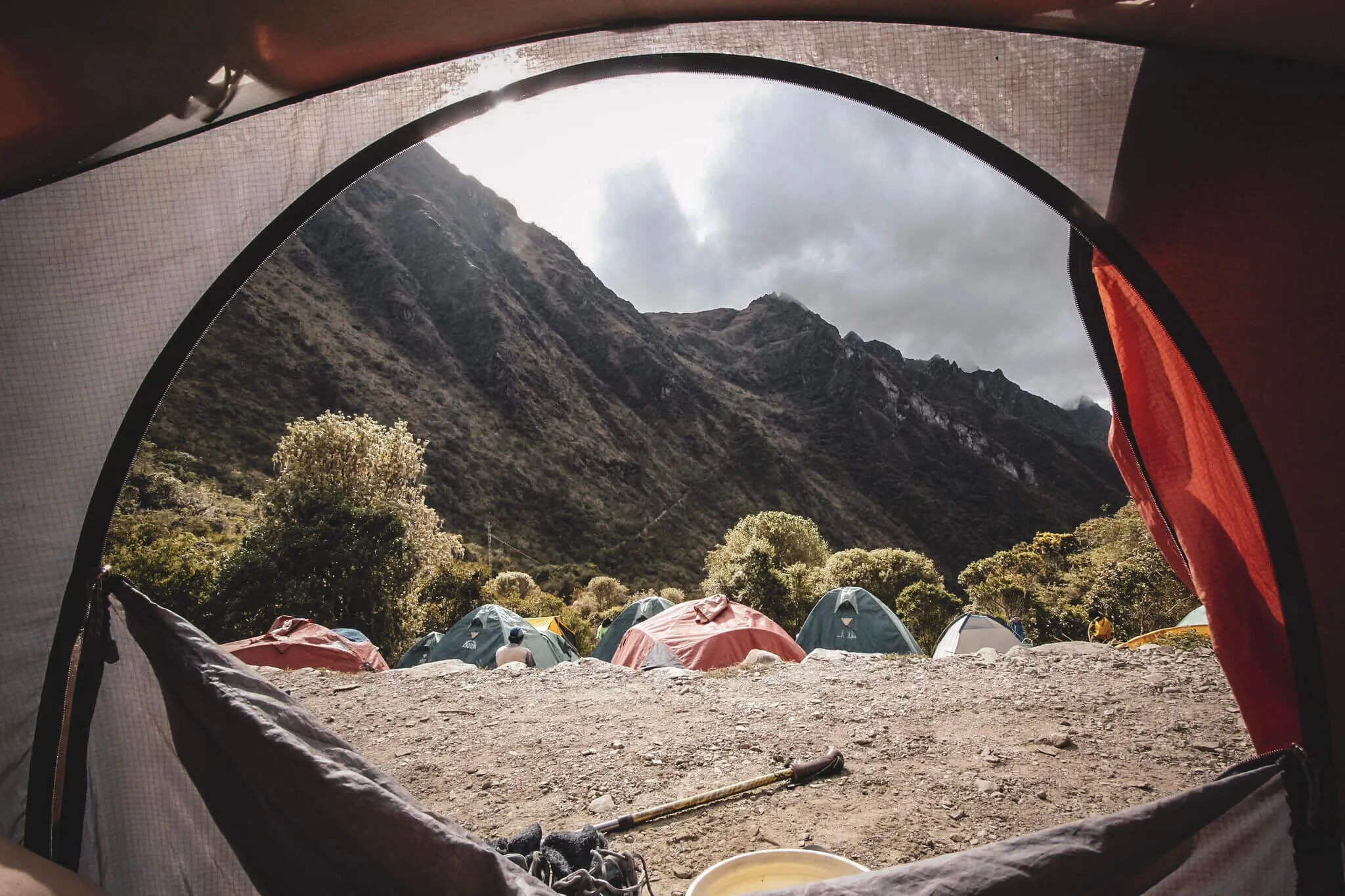
The April camp shift
Drier does not always feel warmer
As cloud and rain retreat, high-Andean nights can become cooler. Preserve dry sleeping layers and separate active warmth from the insulation reserved for camp.
Understand campsites and equipmentSuitability check
Choose April for balance—not perfection
You want green and increasingly dry
- You accept occasional rain and cloud.
- Cool nights are manageable with layers.
- You value post-rain vegetation.
- Your footwear works on wet and dry stone.
- You can adapt dates to real permits.
Rain reduction dominates the decision
- Any meaningful rain would disappoint you.
- You prefer a more established dry pattern.
- Your dates can move without major cost.
- Green transition scenery is secondary.
- April inventory no longer fits the trip.
Holiday dates move
“April means Semana Santa” is not an evergreen rule
Peru set higher Machu Picchu capacity for April 2–5 in 2026, around that year’s Easter period. In 2027, Easter Sunday falls on March 28, placing Holy Week in late March instead.
Always check the actual year before predicting transport, hotel or destination demand. Holiday pressure and Inca Trail permit inventory are related planning inputs—not the same dataset.
- 2026
- Easter period in early April
- 2027
- Easter Sunday · March 28
- Never infer
- Every April is a holiday peak
- Always check
- Permit + hotel + train separately
Choose exposure and depth
Classic, Short and one-day are different April trips
Do not choose by product title alone. Compare hiking time, camps, archaeology, physical demand and Machu Picchu arrangement.
Classic Inca Trail
Full pass, camp and archaeological progression. Best when the multi-day journey is central.
Classic route →Short Inca Trail
One active hiking day and hotel accommodation, without the high-pass camp sequence.
Short route →One-Day Inca Trail
Concentrated logistics and hiking. Not the same Machu Picchu visit depth as every two-day package.
One-day route →Availability is the second April variable
Check before fixing non-refundable logistics
A future date can be unavailable because inventory is unreleased or because permits are exhausted. A live result is a planning signal, not an operator reservation.
Confirm route, departure date and authorized operation before flights and hotels depend on the trek.
How permits work Permit checker
Find a departure
Checking availability
Please wait while we check the selected date.
Nearby options
Dates in the same month currently showing permits
Availability data may be delayed. It does not guarantee a permit, tour departure or confirmed booking.
If the exact date is gone
Change one variable at a time
Avoid jumping from a sold-out Classic date to an unnamed “Inca Trail alternative.” Preserve the part of the trip that matters most.
- 01
Move a few daysCheck nearby April dates before changing the route.
- 02
Change regulated formatCompare Classic and Short inventory separately.
- 03
Reorder CuscoMove Sacred Valley or city days around an available departure.
- 04
Choose a true alternativeCompare Salkantay or Lares on their own route identity.
April packing changes
Retain rain protection; strengthen the cold layer
This is the month adjustment, not a duplicate complete packing list.
Waterproof shell
Keep full rain protection even after the official rainy-season label ends.
Internal dry storage
Protect sleeping layers, medication, documents and electronics independently.
Warm camp layer
April begins a colder high-Andean night pattern; pack beyond daytime comfort.
Tested footwear
Useful tread and downhill fit remain necessary after a shower.
Spare dry socks
Separate the walking rotation from a protected camp pair.
Sun protection
Clear intervals and altitude can create strong exposure after cloud.
Trekking poles
Helpful for controlled descents when used correctly and where permitted.
Layered clothing
Adjust for warm climbing, wind, shade, rain and stationary camp time.
Operator questions for April
Compare the complete trip—not headline weather
After confirming inventory, judge route clarity, camp equipment, porter policy, emergency planning and Machu Picchu access.
How to compare operators- 01Which April route and departure date is actually permitted?
- 02What rain and cold-weather equipment does the team supply at camp?
- 03How are itinerary changes handled if residual weather affects access or transport?
- 04Which Machu Picchu entry arrangement is included after the trail?
- 05If nearby dates are sold out, what genuinely different route is being proposed?
Around April
Adjacent months clarify the compromise
Previous · March
Reopening and lingering rain
Choose March when the wet-season landscape outweighs access and rain uncertainty.
March guide →Next · MayDeeper into the dry pattern
Choose May when reducing rain probability matters more than April’s transition.
May guide →Full calendarCompare all twelve months
Balance weather pattern, permit pressure and fixed travel dates.
Best-time guide →April questions
Direct answers before booking
Regional normals explain direction. Exact inventory and a current forecast decide the final plan.
Is April a good month for the Inca Trail?
Yes. April begins SERNANP’s recommended April–October visiting period and often offers a useful balance of green scenery and a drier regional pattern. Rain and cloud remain possible.
How rainy is April?
SENAMHI’s Cusco station normals show a substantial regional drop from March to April, but those city figures are not a trail forecast. Carry full rain protection for the actual mountain itinerary.
Is early or late April better?
Late April sits further toward the dry-season pattern; early April is closer to March’s wetter influence. Neither timing guarantees weather, and exact permit availability may be the deciding factor.
Is the Inca Trail cold in April?
It can be cold at high passes, camps, dawn and after sunset. SENAMHI says high-Andean frost generally begins in April, while the most frequent period is June and July.
Do April permits sell out?
Individual April dates can sell out. Check the exact route and date rather than treating the whole month as open or closed. Future-year inventory may also not have been released yet.
Is April crowded?
Demand can build as conditions move drier, but permit pressure and perceived trail crowding are different. Machu Picchu also receives visitors arriving through other routes.
Does Semana Santa affect April?
It depends on the year. Easter fell in April in 2026, while Easter Sunday is March 28 in 2027. Check the actual calendar before assigning holiday pressure to all April departures.
What should I pack?
Use a waterproof shell, internal dry storage, warm camp layers, tested footwear, spare socks and sun protection. April requires an adaptable system rather than a dry-only packing list.
Can I hike independently in April?
No. SERNANP states that access to the regulated network is through authorized travel and tourism agencies.
What if my April date is sold out?
Check nearby dates, compare the Classic and Short routes, reorder Cusco plans or evaluate a genuinely different alternative trek. Do not assume a similarly named product is the same experience.
Sources and scale policy
SERNANP establishes the recommended season and access framework. SENAMHI provides Cusco station normals and regional high-Andean frost context. Neither is presented as a day-specific trail forecast.
- SERNANP — April–October recommendation, rainy season and authorized access
- SENAMHI — Cusco station monthly climate normals
- SENAMHI Cusco — high-Andean frost season
- Ministry of Culture — April 2–5, 2026 Machu Picchu capacity dates
- 2027 liturgical calendar — Easter Sunday on March 28
Reviewed August 10, 2026 · Corrections: contact our editorial team
April fits the balance?
Check the date before choosing the company
Weather selects the month. Permit inventory determines whether the regulated route is possible.