
Early May
Closer to the wet-season transitionResidual moisture and cloud remain possible. Choose it for the landscape balance—not because the first week is predictably quieter.
Dry-season transition
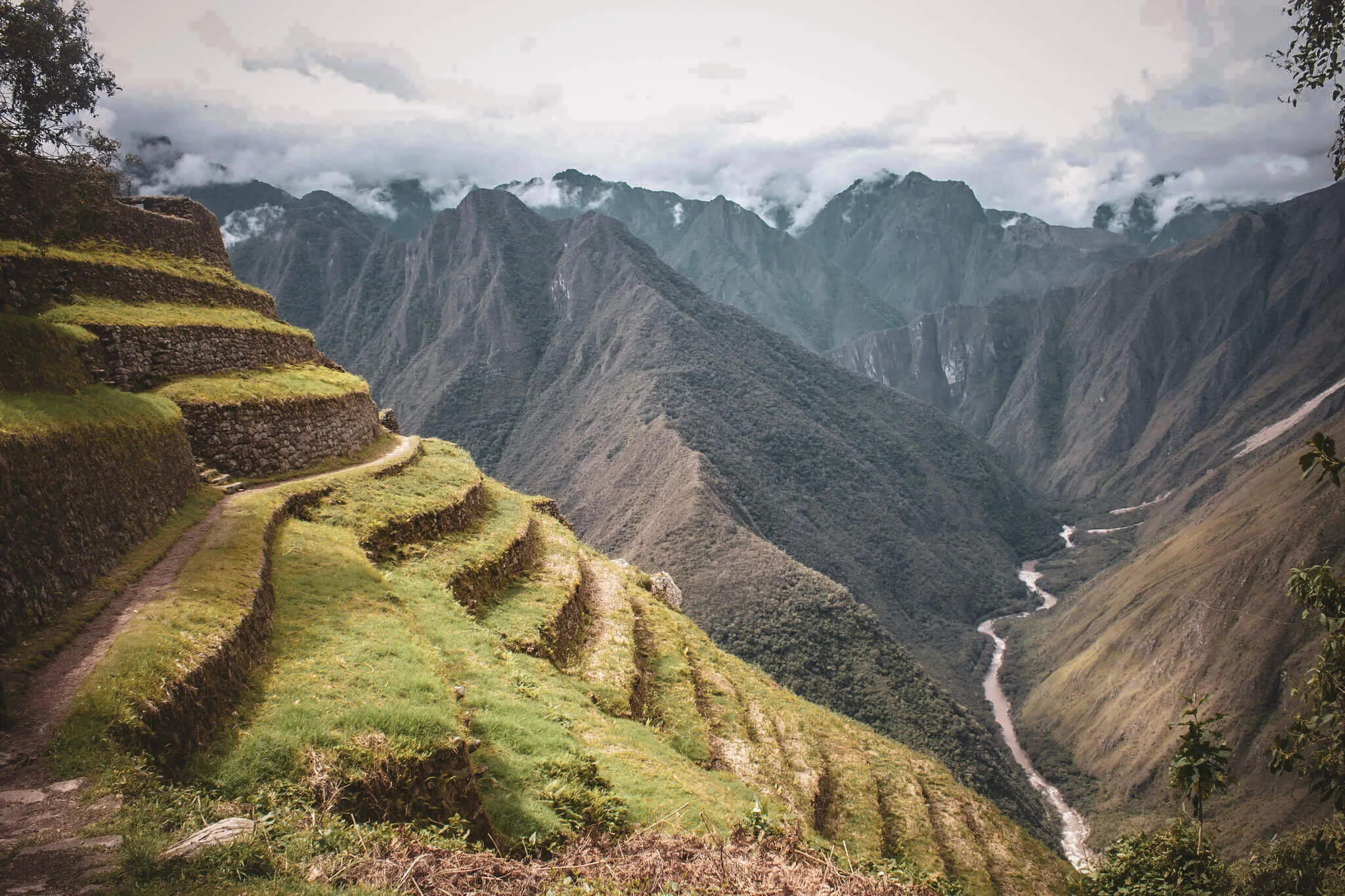
May offers one of the trail's strongest balances: less seasonal rain, landscape color carried from the wet months and a better chance of clear periods. The price of that balance is cold camping and popular dates.
Strong balance
limited inventory
The short answer
SERNANP places the sanctuary's rainy season from November through March. By May, the seasonal pattern is drier, but the route still crosses cloud forest, exposed passes and cold camps. Check the date first; then prepare for variability.
May at a glance
These are planning tendencies across a route with large changes in elevation and ecology—not a date-specific forecast.
Early vs late May
May gradually moves toward drier Andean-winter conditions. A storm or cold night can occur anywhere in the month.
Residual moisture and cloud remain possible. Choose it for the landscape balance—not because the first week is predictably quieter.
Seasonal drying is more established, while vegetation can still carry the color of the preceding rains. Actual inventory should decide between nearby dates.
Rain probability generally moves lower, but colder nights and stronger sun exposure become more important. Late May is not guaranteed cloud-free.
Weather across one trail day
Cusco city averages do not describe every campsite. Elevation, wind, shade and cloud-forest moisture change how the same day feels.
Keep warm layers accessible for camp departure and shaded valleys.
Direct exposure can feel warm even when air temperatures remain moderate.
Wind and stopping after a climb can change comfort within minutes.
Mist, damp steps or a short shower remain possible outside rainy season.
Dry sleep layers and an adequate sleeping system matter more after sunset.
No page can guarantee May visibility at Intipunku or Machu Picchu. Seasonal probability is useful for choosing a month; current conditions govern the actual day.
What May changes on the ground
May improves the odds of favorable walking periods without turning an ancient mountain route into a uniform dry path.
Shaded and cloud-forest stone can retain moisture. Keep deliberate downhill technique and footwear with useful wet-rock grip.
A climb can feel warm in direct sun; the same clothing can feel inadequate when you stop in wind near an exposed pass.
May can preserve post-rainy-season vegetation while offering a better chance of dry walking periods. Mist remains part of this ecosystem.
Visibility can improve seasonally, but cloud can still hide or reveal Machu Picchu within minutes. Do not define the trek by one guaranteed view.
The underplanned May condition
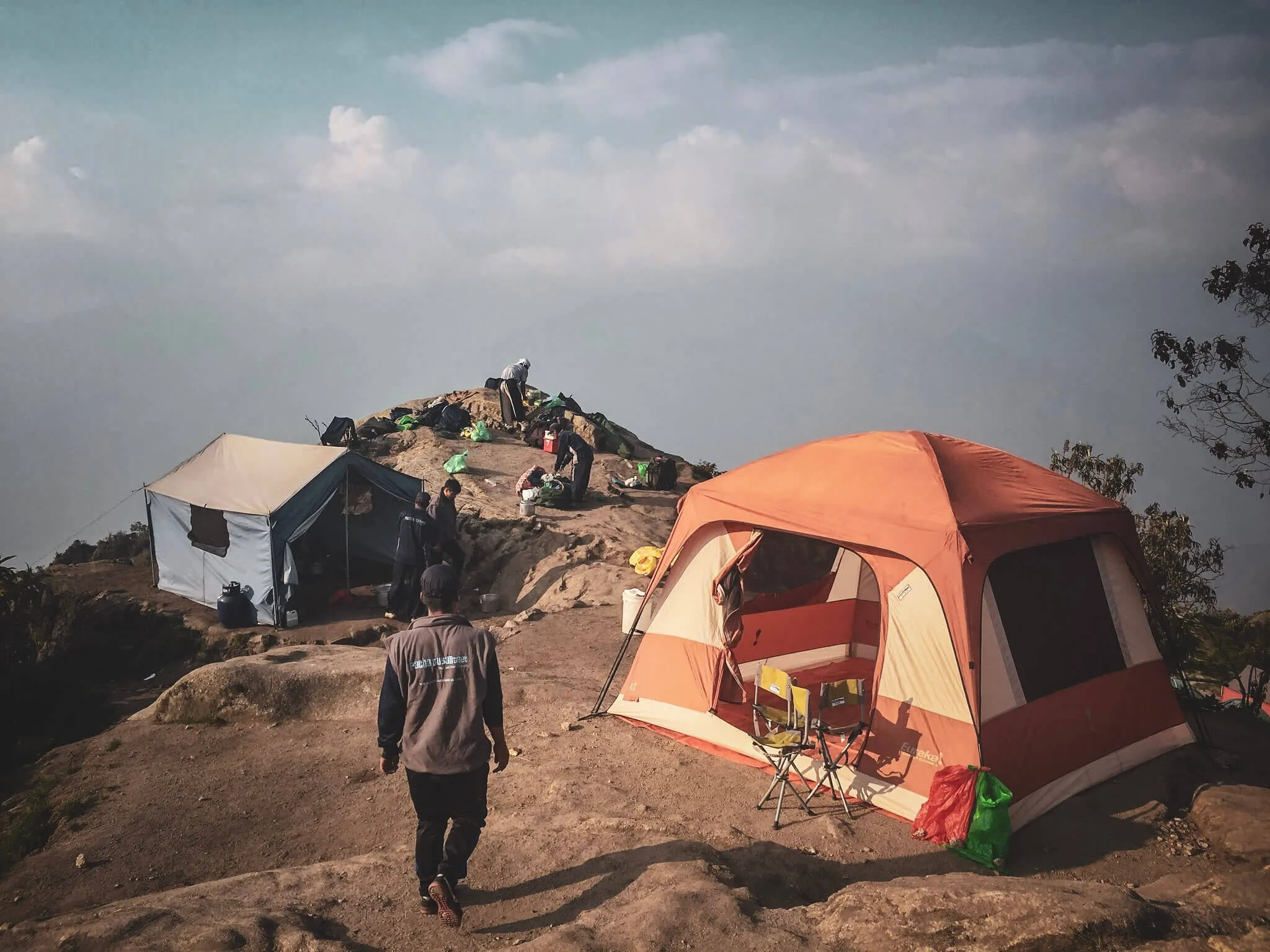
Movement and direct sun can make the day comfortable. After sunset, exposed or higher camps can feel sharply colder. Pack for the inactive hours, not only the climb.
Understand the campsitesWhy May demand matters
The November 2025 regulation defines daily user capacity by route. Those totals include the controlled trail system and must not be presented as a count of tourist spaces still for sale.
Guides and support personnel also use the network. The only useful answer for a traveler is the actual route-and-date inventory—not a capacity number, an operator's generic calendar or a fixed “book X months ahead” slogan.
How availability worksMay planning order
Confirm that inventory has been released and that the exact route and date are available. Then align an authorized operator, acclimatization, hotels and transport.
A checker result is a planning signal—not a reservation, operator contract or weather guarantee.
Read the permit guidePlease wait while we check the selected date.
Dates in the same month currently showing permits
Availability data may be delayed. It does not guarantee a permit, tour departure or confirmed booking.
Does May fit you?
Classic or Short in May?
Route 5 reduces nights and total trail time. It does not eliminate May rain, sun, regulated access or steep stone.
Choose it for high passes, camps and the full ecological progression when May's weather balance makes longer exposure attractive.
Choose it when reducing camping and total exposure matters more than completing the multi-day journey.
May packing changes
This is a May adjustment, not a replacement for the full packing list. Confirm porter-load rules and supplied equipment with the operator.
Pack for the hours after movement stops, especially at exposed multi-day camps.
May is seasonally drier, not rain-proof. Keep the shell reachable rather than buried.
Protect sleep layers, medication, documents and electronics independently.
Hat, sunglasses, sunscreen and coverage matter even when mountain air feels cool.
Choose tested downhill stability and wet-stone traction over a dry-trail assumption.
Build a system that can change between sun, shade, wind, cloud and camp.
Operator questions for May
Inca Trail Company is an independent information and availability platform, not a tour operator. SERNANP requires visitors to use authorized operators.
Compare operatorsAround May
Move toward April when post-rainy-season atmosphere matters more than May's stronger dry-season signal.
April guide →Next · JuneMove toward June when dry-season probability matters more than colder nights and peak-period logistics.
June guide →Full calendarBalance weather probability, permit pressure, scenery and fixed travel dates across the year.
Best-time guide →May questions
May is favorable because of its balance. It is not a promise of an empty, warm or cloud-free trail.
Yes. May is one of the strongest all-round choices for hikers who want a lower seasonal chance of rain while the landscape can still retain post-rainy-season greenery. Cold nights and strong demand are the main trade-offs.
SERNANP identifies November through March as the sanctuary's rainy season, placing May outside that official window. That is a regional seasonal pattern—not a dry forecast for every trail day.
It can. The route crosses high-Andean and cloud-forest environments, so localized cloud, showers and damp stone remain possible. Carry a shell and protect essential gear.
There is no single useful temperature for the whole route. Elevation, wind, exposure and campsite location matter. Days can feel warm in sun while higher camps and pre-dawn starts feel cold.
Early May generally favors the greener side of the transition; late May moves further toward drier, colder Andean-winter conditions. These are tendencies, so choose actual permit availability over a promise of perfect weather.
May is attractive and access is capacity-controlled, so fixed dates deserve early checking. Availability is specific to the route and departure date; a generic booking deadline cannot tell you whether your date is open.
Expect other permitted groups. The trail's regulated flow is different from the broader Machu Picchu visitor system, where train arrivals and multiple circuits add visitors.
Choose the Classic route for the full high-pass and camping progression. Choose Route 5/Km 104 when reducing nights and total exposure matters more. Both remain regulated and date-specific.
Prioritize cold-camp layers and sun protection without removing waterproofing. May changes the balance of the kit; it does not eliminate rain gear or dry storage.
Official sources establish the rainy-season window, route context, authorized-operator requirement, 2026 reopening, regulated capacity and reservation process. Seasonal interpretation is deliberately qualitative because Cusco city averages are not campsite forecasts.
Early–late May comparisons describe broad tendencies, never conditions for a particular departure.
Reviewed August 10, 2026 · Corrections: contact our editorial team
May is the right balance?
Weather makes May attractive. Regulated, date-specific inventory determines whether it is possible.