
Conservation closure
Authorities work on stone paths, drainage, bridges, campsites and archaeological infrastructure.
Reopening month · rain still belongs
Choose March for a green, newly maintained trail—not for guaranteed reopening or dry weather. Official confirmation, rain tolerance and a flexible plan matter more than the date on the calendar.

Reopening
Still wet
High reward
The honest verdict
SERNANP places March inside the rainy season. The month restores the possibility of hiking after scheduled February maintenance, but official confirmation and current conditions decide whether a particular route actually operates.
March at a glance
March sits between a fixed maintenance month and the April–October period SERNANP recommends. Neither boundary changes weather overnight.
Two years prove the boundary
Scheduled maintenance and weather disruption are different. A route can complete February conservation work and still require a safety decision after heavy rain.
Authorities work on stone paths, drainage, bridges, campsites and archaeological infrastructure.
Intense rain, landslides and unstable sections extended suspension into March; an evaluation was still being organized late in the month.
Culture and SERNANP announced reopening after maintenance and safety assessment.
Do not convert the successful 2026 date into a guarantee for 2027 or a later departure.
How a March day can change
These are plausible states rather than an hourly forecast. Pack so each can happen on the same walking day.
Sun at altitude can feel strong between clouds. Rain gear does not replace sun protection.
A late-season shower can still be sustained. Shell and pack protection must remain accessible.
Visibility can disappear and return, changing a wide panorama into a close study of stone and forest.
SERNANP identifies November–March as rainy season and April–October as the recommended visiting period. That seasonal label cannot forecast four individual trail days.
What March changes
The archaeological route, altitude and stairs remain. March adds access verification, traction and drying to the baseline challenge.
February work addresses paths, drainage, bridges, camps and heritage. New or continuing rain can still trigger inspection, rerouting or temporary suspension.
Wet steps reward short, controlled movement. Useful tread, space between hikers and a pace below dry-trail speed matter.
Vegetation, streams, waterfalls and mist can be especially expressive after the wettest months. That visual reward comes with moisture management.
Machu Picchu can be clear, partly hidden or invisible at the first look. March is a poor choice if one cloud-free arrival defines the trip.
The Classic-route decision
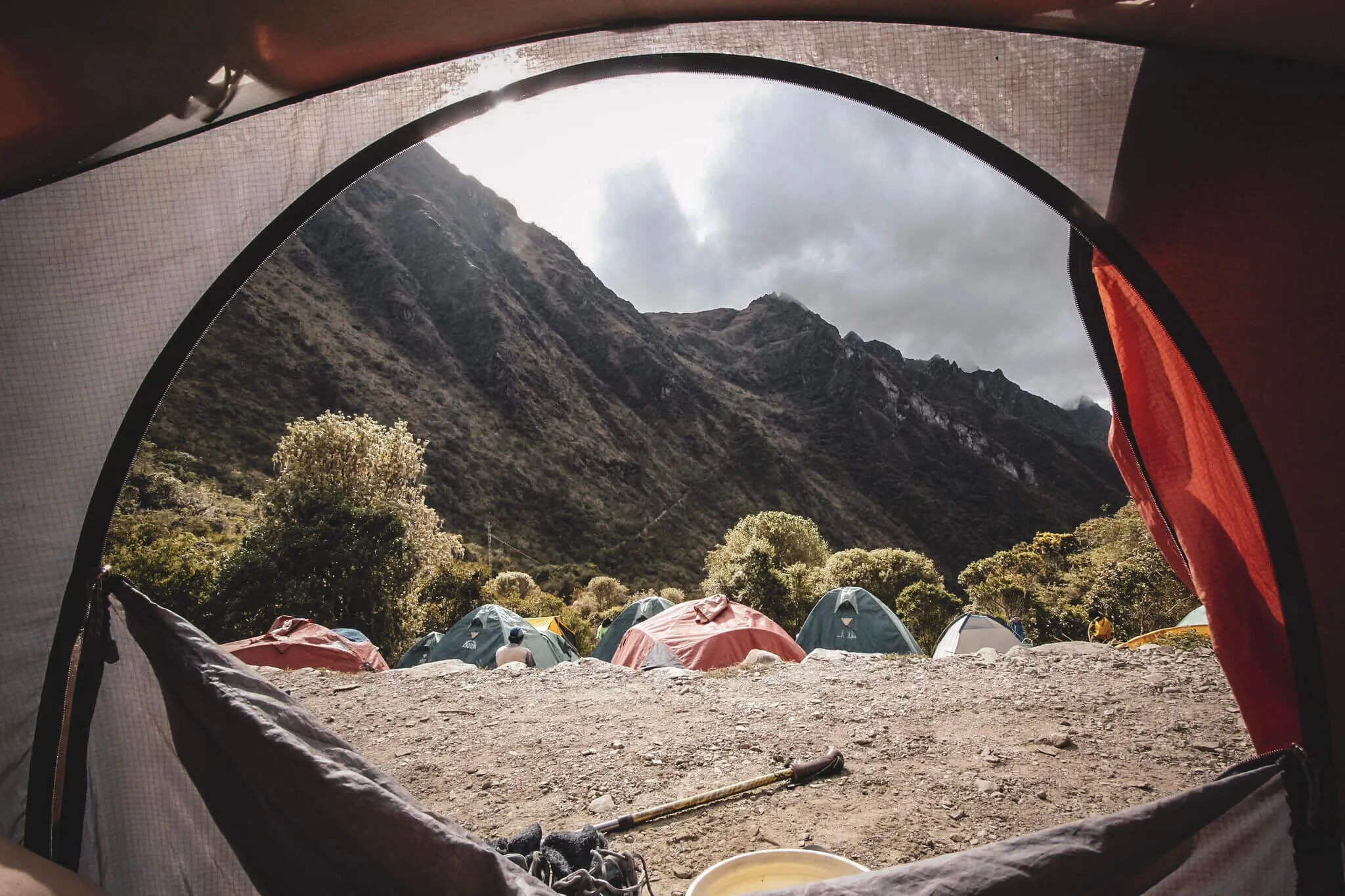
March camping is not defined by one shower. Comfort comes from isolating wet walking layers, preserving sleeping clothes and repacking without contaminating the dry system.
Understand campsites and facilitiesSuitability check
Late March 2027
Easter Sunday falls on March 28, 2027, placing Holy Week in the final part of March. Cusco-region hotels, trains, flights and tours may face different demand around those dates.
This calendar fact does not prove that an Inca Trail permit is unavailable. It means travelers should verify the complete chain earlier and avoid relying on last-minute transport.
Build the complete trip budgetClassic or Short?
Both routes require official access. The Short Trail changes duration and camping; it does not override a suspension or remove rain.
Choose the complete multi-day progression when camps, high passes and broader archaeology remain worth the wet-weather logistics.
Useful when the main concern is camping exposure. It still includes sustained ascent, stone, cloud and route-specific access.
Availability needs three labels
A future March date may be unavailable because inventory has not opened, because permits are exhausted, or because access status changed. A checker result is not an operator booking or safety notice.
For March 2027, verify the official sales release and current route status in addition to inventory.
How permits workPlease wait while we check the selected date.
Dates in the same month currently showing permits
Availability data may be delayed. It does not guarantee a permit, tour departure or confirmed booking.
March packing changes
This is the March adjustment, not a duplicate packing list. Supplied equipment and porter-load rules depend on the operator.
Keep it reachable; a buried jacket is not useful when rain arrives quickly.
Useful for sustained rain and cold exposed sections, not only camp.
Isolate sleeping layers, medication, documents and electronics.
Prioritize wet-stone grip and downhill toe room over appearance.
Reserve at least one dry system for camp and recovery.
Rain and wind can make rest stops and camps feel colder.
Use controlled technique and follow protected-site instructions.
Cloud and rain do not remove high-altitude ultraviolet exposure.
Operator questions for March
No agency controls rain or an authority’s access decision. A good answer identifies monitoring, alternatives and written terms.
How to compare operatorsAround March
The regulated Inca Trail closes for annual conservation rather than operating as a wetter trek.
February alternatives →Next · AprilConditions generally move drier, but the first day of April is not a weather switch.
April guide →Drier comparison · MayConsider May when reduced rainy-season uncertainty matters more than March’s lush transition.
May guide →March questions
A seasonal pattern helps choose the month. Official notices decide access.
March is the planned return month after February maintenance, but the actual status must be officially confirmed. The network reopened on March 1 in 2026; severe rain delayed the 2025 return well into March.
Yes for flexible hikers who accept rain, wet stone and uncertain views in exchange for green scenery, active water and a transition-season atmosphere. Travelers prioritizing drier conditions may prefer April or May.
SERNANP classifies November through March as rainy season. That does not mean continuous rain, but waterproofing and internal dry storage should be treated as normal equipment.
Early March sits closest to the February closure, but a later date is not automatically dry or open. In 2025 severe weather disrupted much of March. Check current official notices instead of relying on the calendar alone.
Easter Sunday is March 28, 2027, placing Holy Week in late March. That can increase pressure on Cusco-region transport and accommodation; this is a planning signal, not proof that a specific permit date is sold out.
Sometimes demand differs from peak dry-season dates, but every permit remains route- and date-specific. Inventory may also be unreleased when you first research the following year.
It can add slower footing, wet clothing, colder stops and repeated gear management. Distance and altitude remain the baseline challenge.
It reduces total exposure and removes multi-night camping. It does not remove rain, slippery stone, cloud or the need for officially confirmed access.
Use broken-in hiking footwear with dependable wet-trail grip and enough toe room for descents. March is not the time to discover whether a new model fits.
It may be clear, obscured or revealed gradually as cloud moves. No seasonal guide or operator can guarantee a cloud-free Sun Gate view.
Official sources establish the rainy season, 2025 disruption, 2026 reopening and the 2027 Easter calendar. The page translates those facts into conservative planning guidance without treating past years as a future guarantee.
March still fits?
The order matters in a reopening month—especially around late March 2027.