
Early September
A slight weather edgeEarly dates remain closer to August's seasonal pattern. That is a modest planning preference—not a promise of blue sky or a reason to reject a workable later departure.
Favorable season · changing signals
September sits between established dry-season conditions and the gradual return of wetter weather. It is an excellent compromise when you prepare for both sides: strong sun, cold camps, cloud and an occasional shower.

Strong compromise
conditional weather
The short answer
SERNANP recommends April through October and defines November through March as the rainy season. September remains on the favorable side of that boundary, while the late-month direction points toward greater variability. Plan for a range, not one forecast icon.
September at a glance
Weather changes across elevation, ecology and time of day. The actual campsite sequence and short-range forecast remain important.
Early vs late September
Calendar position changes seasonal probability gradually. It cannot tell you which exact departure will receive rain.
Early dates remain closer to August's seasonal pattern. That is a modest planning preference—not a promise of blue sky or a reason to reject a workable later departure.
When several dates work, compare the exact permit status, acclimatization days and full itinerary before optimizing for a small theoretical weather difference.
Later dates move toward October and the wetter months, but year-to-year variation can outweigh the calendar. A favorable late-September trek remains entirely possible.
Three states of the same staircase
A short shower can change traction without turning the whole trek into a wet-season journey.
Sun and wind can dry exposed steps, but dust, fatigue and thousands of uneven stairs still demand deliberate movement.
Mist, shade or a brief shower can leave smooth stairs slick even when most of the day remains dry.
Put the shell on before clothing is soaked, protect the dry core of the pack and slow the descent rather than trying to preserve the schedule.
Conditions by route zone
SERNANP describes a protected area spanning many ecosystems. The forecast for Machu Picchu does not represent every pass, forest section or camp.
Direct sun may feel warm while climbing; exposed rests and cloud can cool the body quickly.
Altitude remains unchanged, and damp stairs make late-day fatigue more consequential.
Vegetation, mist and local showers can persist even outside SERNANP's November–March rainy season.
September can offer excellent views, but no operator or calendar date can guarantee the cloud position at arrival.
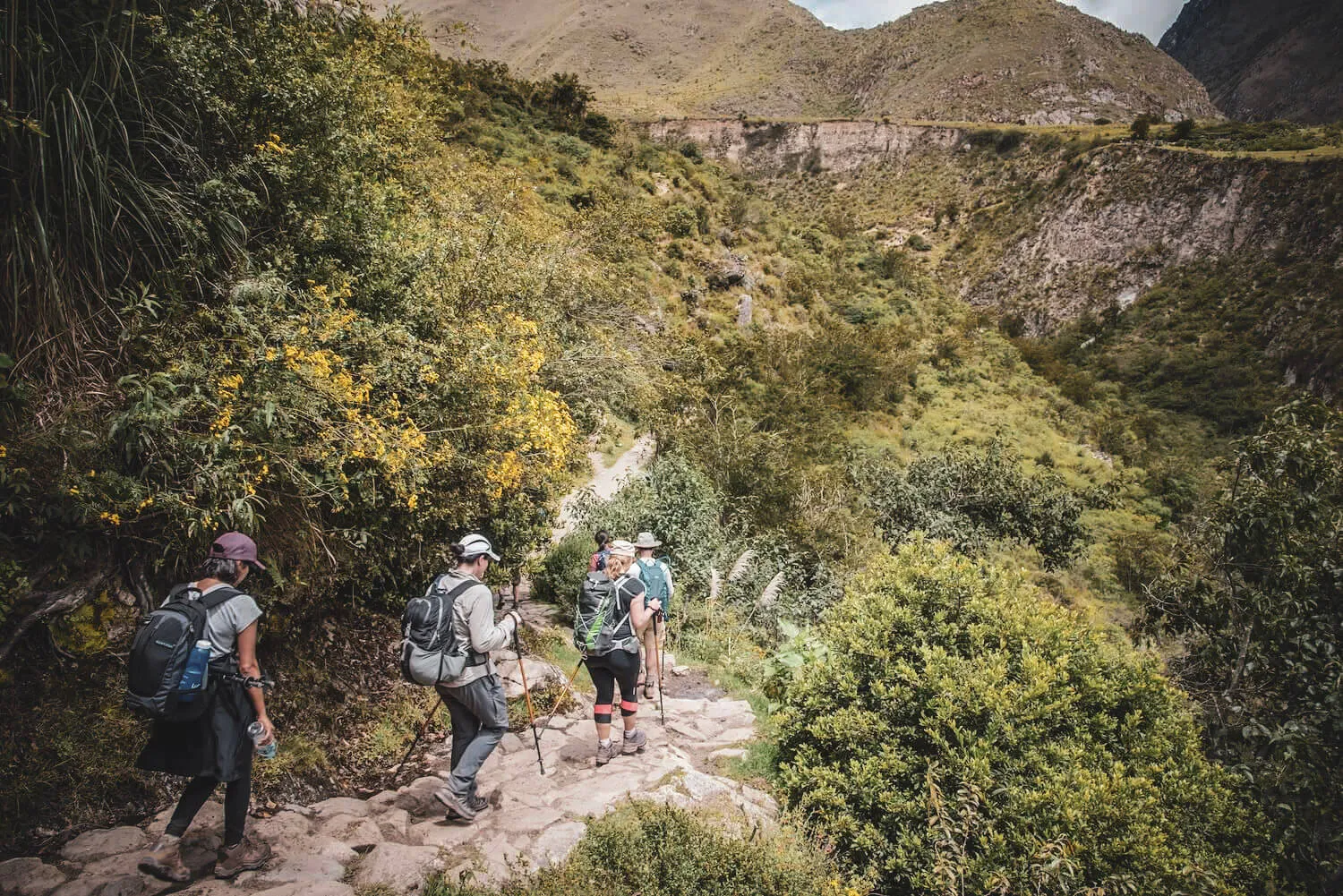
The terrain does not become easy
September may offer long dry walking periods, but the Classic route still includes altitude, sustained climbing, thousands of stone steps and consecutive hiking days. If rain arrives, descent technique becomes even more important.
Understand the full difficultyAvailability before weather optimization
Confirm that inventory for the travel year has been released, then check the applicable route and start date. One September day can be unavailable while nearby dates remain open.
The checker is a planning signal—not a reservation, operator agreement or guarantee of surrounding transport and admission.
Understand permit availabilityPlease wait while we check the selected date.
Dates in the same month currently showing permits
Availability data may be delayed. It does not guarantee a permit, tour departure or confirmed booking.
What should decide your week?
Historical weather cannot rescue a date with no permit, an unsafe acclimatization plan or an unsuitable operator.
Does the exact route and departure exist?
Can you arrive with enough time before the trek?
Do transport, admission and accommodation align?
Only then use early-versus-late September as a tie-breaker.
Does September fit you?
Classic or Short in September?
The Short Inca Trail reduces nights and total trail time. It does not eliminate steep stone, sun, showers or regulated access.
Choose it for the complete progression through high passes, camps and ecological zones when you are ready for changing conditions.
Choose it when Wiñay Wayna and Intipunku matter more than high passes or multi-night camping.
If September is sold out
Confirm exactly what is unavailable before abandoning the goal or buying an ambiguously labeled trek.
Moving the departure by a day or two may preserve the whole itinerary when your calendar has room.
It uses separate controlled inventory and removes multi-night camping, but remains a distinct hiking experience.
Late August or early October may be closer in real conditions than generic month labels suggest.
Salkantay and Lares can be excellent trips, but neither recreates the protected Inca-road arrival.
September packing changes
This adjusts the full packing list for September. Confirm operator-supplied equipment and porter-load rules before finalizing the bag.
Carry it where it can be deployed before a short shower becomes soaked clothing.
Isolate sleep layers, documents, medication and electronics from the pack exterior.
September moves beyond the coldest midwinter period, but high or exposed camps can still feel cold.
Cloud transitions do not eliminate high-altitude UV; keep sunglasses, hat and sunscreen in the daily routine.
Prioritize downhill stability and performance on damp stone over a dry-month assumption.
Use pieces that adapt between exposed sun, shaded forest, wind, rain and inactive camp hours.
Operator questions for September
Inca Trail Company is an independent information and availability platform, not a tour operator. We may earn commissions from selected partners and sell API tools to tourism businesses; operators do not pay to change official availability.
Compare operatorsAround September
Move toward August when lower rain uncertainty matters more than September's move away from midwinter.
August guide →Next · OctoberMove toward October when warmer seasonal direction is worth greater rain preparedness.
October guide →Full calendarBalance weather probability, permit pressure, scenery and fixed travel dates.
Best-time guide →September questions
September offers a strong compromise. It cannot guarantee sun, warmth, quiet or availability.
Yes. September sits within SERNANP's recommended April–October season and can balance generally favorable walking conditions with movement away from the coldest midwinter period. Increasing weather variability is the main compromise.
It is outside SERNANP's November–March rainy season, but labels should not be read as guarantees. September occupies a transition position: long dry periods are possible, as are cloud and showers.
It can. Prepare for a mostly favorable pattern with the possibility of brief or localized rain rather than assuming four completely dry days.
Early September has a slight seasonal advantage for travelers focused only on staying closer to the dry-season core. Permit availability, acclimatization and the complete itinerary usually matter more than a one- or two-week difference.
There is no useful route-wide temperature. SENAMHI says the highland frost period generally extends through September, although its coldest and most frequent phase is June–July. Camp elevation, exposure and wind remain decisive.
Not necessarily. September may reduce some wider tourism pressure compared with midwinter, but the Inca Trail remains regulated and popular. Expect other groups at checkpoints, camps and major archaeological sites.
They can. Availability is specific to the route and departure date, so check the actual calendar instead of assuming September permits remain available at short notice.
Choose the four-day Classic route for the full high-pass and camping progression. Choose the Short Inca Trail when reducing nights and total weather exposure matters more. Each has separate date-specific availability.
Keep the dry-season emphasis on layers and sun protection, but make rain gear and internal waterproof storage easier to access as seasonal variability increases.
Check nearby days first, then the Short Inca Trail, adjacent months or a genuinely different trek. Never accept an ambiguously named product without confirming its trailhead and regulated route.
Official sources establish the recommended season, rainy-season window, authorized-operator requirement, varied sanctuary ecosystems and highland frost period. We infer September's transition position from those seasonal boundaries and label it as probability—not a date-specific forecast.
A dated SENAMHI September outlook is included only as supporting context that the Andean rain transition can begin during this month; it is not reused as a forecast for another year.
Reviewed August 10, 2026 · Corrections: contact our editorial team
September fits the balance?
A slight early-month weather preference is useful only after the route, acclimatization and complete itinerary work.