Firm is not frictionless
Lower seasonal rainfall can mean fewer persistently wet sections. Smooth steps, loose grit and long descents still reward controlled foot placement.
Deep dry season · high demand
August offers favorable dry-season odds, firm trail sections and strong visibility potential. It also exposes the route's colder, dustier and wind-sensitive side—and leaves little room for late permit planning.
Dry-season value
date pressure
The August decision
August sits well outside SERNANP's November–March rainy season, making it attractive for trekking. But favorable weather is irrelevant if the route-and-date inventory is gone—or if no authorized operator can support the visible space.
August at a glance
These are decision signals across multiple elevations and ecosystems—not conditions promised for a particular departure.
Dry season accumulated
This is an editorial inference from August's position outside the official rainy season—not a claim that every surface is dry.
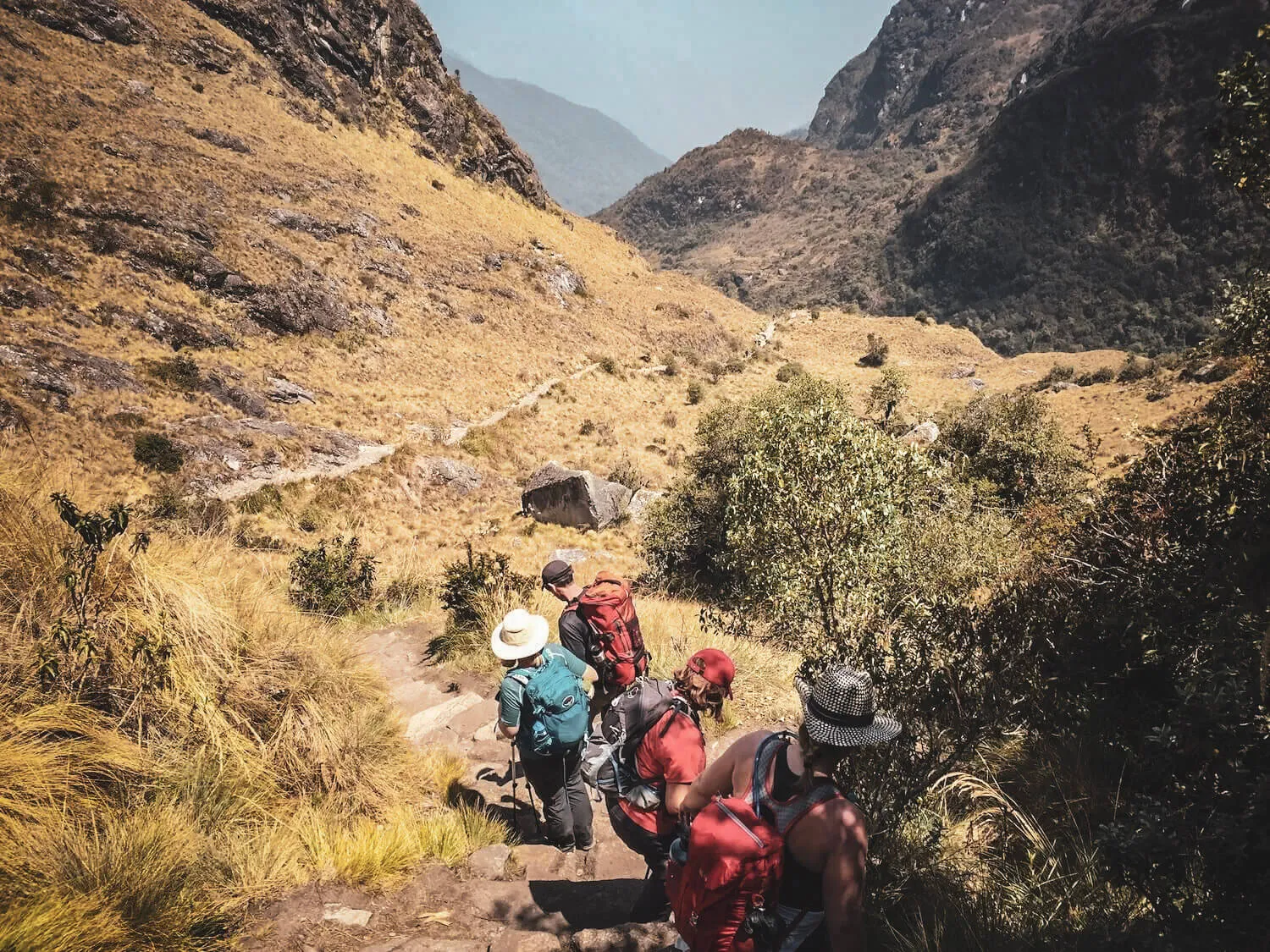
Lower seasonal rainfall can mean fewer persistently wet sections. Smooth steps, loose grit and long descents still reward controlled foot placement.
Dry, high-traffic sections can lift dust around feet and packs. Close internal dry bags, protect lenses and keep sleep clothes separate from trail clothing.
Exposed highlands can look straw-colored after months with less rain. Descending cloud forest remains a different, greener ecosystem.
Mountain weather remains variable. Pack a lightweight waterproof layer even if the seasonal pattern makes sustained rain less likely.
Wind: risk, not daily promise
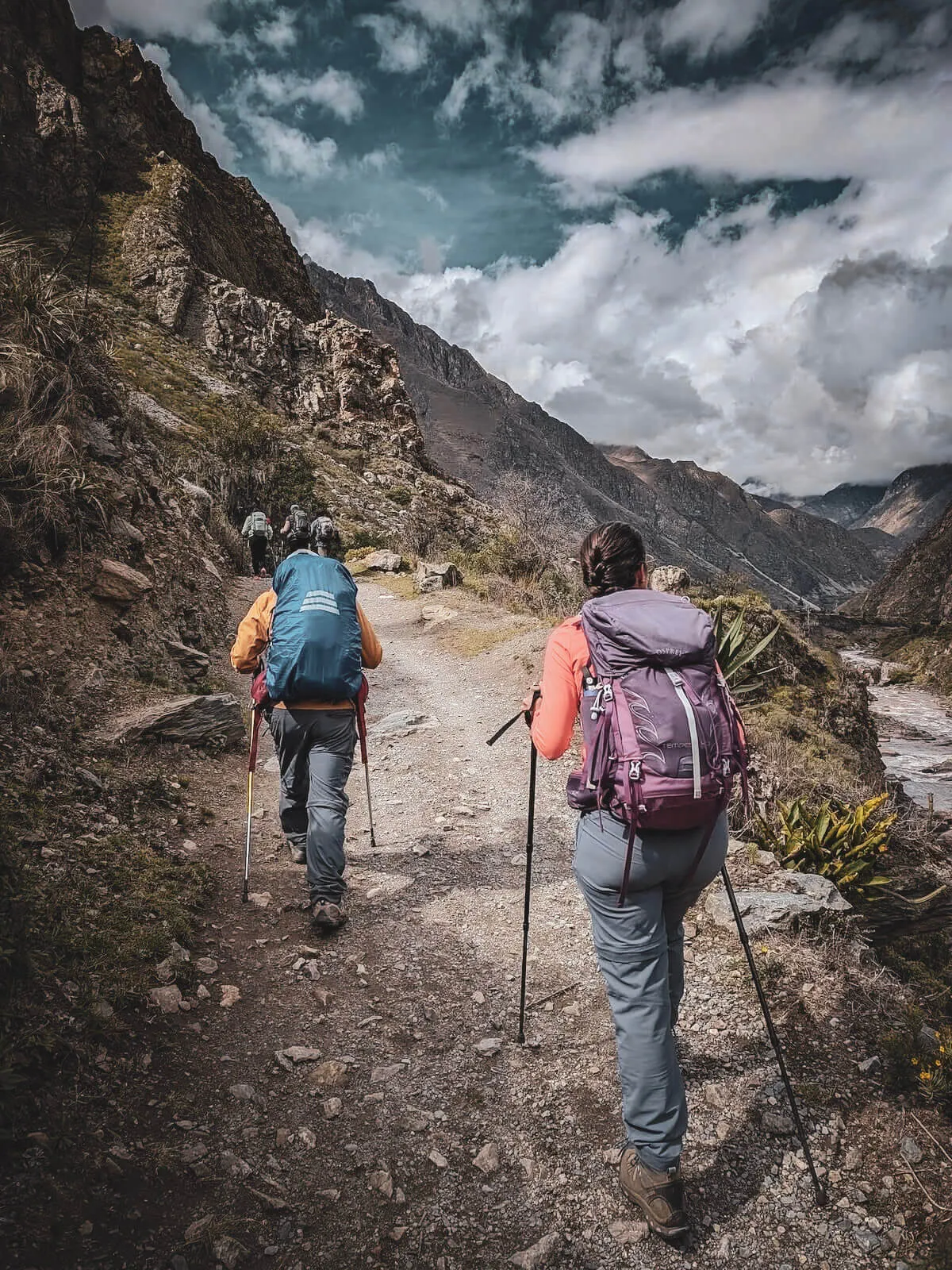
SENAMHI issued several increased-wind notices for the southern sierra during August 2025. That confirms events can matter; it does not establish a windy forecast for every August trek.
Check official notices near departure and prepare for the practical effects without overpacking for a hypothetical storm.
Read the safety frameworkA comfortable sunny climb can feel cold when you stop on a pass. Keep a light wind-blocking layer accessible.
Gusts matter more on exposed steps and ridges. Slow down and keep poles and pack under control.
Glasses can help when dry ground and wind combine. Secure contact-lens supplies and clean hands before handling them.
Secure hats, rain covers, wrappers and anything attached outside the pack. Protected-area etiquette matters in gusty conditions.
Availability is not one state
A public checker cannot replace operator capacity, payment, traveler registration or written confirmation.
The applicable year's inventory is open in the official system.
→The route and date show potential space at the time checked.
→An authorized operator can support that departure and required services.
→Reservation, payment and traveler details have been processed under written terms.
Start with route and date
Check several nearby departures if possible. Then confirm that an authorized operator can secure and operate the route before locking non-refundable parts of the trip.
The result below is a planning signal—not a reservation or guarantee.
How availability worksPlease wait while we check the selected date.
Dates in the same month currently showing permits
Availability data may be delayed. It does not guarantee a permit, tour departure or confirmed booking.
Peak period evidence
For 2026, Culture placed all of August inside Machu Picchu's maximum-capacity period. That supports planning for a busy corridor, but the llaqta and Inca Trail remain separate access systems.
Regulated Inca Trail inventory, authorized operator and support logistics.
Permit guide →Separate site capacity, entry arrangements and broader visitor flows.
Understand other arrivals →If August is sold out
Each fallback preserves something different: date, regulated route, hiking duration or Machu Picchu arrival.
May require changing hotels or transport
Check nearby dates →Not the Classic high-pass or camping journey
See the Short Trail →Seasonal transition gradually resumes
Compare September →Different archaeology, access and arrival experience
Compare alternatives →Wider August calendar
August 6 and August 30 are national holidays in Peru. Neither date automatically closes the Inca Trail. Verify transport, hotels, office hours and current operating notices for the actual year.
Does August fit you?
Classic or Short in August?
Route 5 removes multi-night camping and high passes. It remains regulated and still includes sun, stone, ascent and Machu Picchu logistics.
Choose it for the complete ecological and high-pass progression when cold camps and prolonged exposure are acceptable.
Choose it to preserve Wiñay Wayna and Intipunku while reducing total trail time and removing multi-night camping.
August packing changes
This is the August adjustment, not a duplicate packing list. Confirm supplied sleeping equipment and porter-load rules.
Use a light shell that works at exposed stops without duplicating heavy insulation.
Warm base layers, hat and insulation should remain dry for the hours after sunset.
Use sunscreen, sunglasses, lip protection, a secure hat and lightweight coverage.
Close internal bags and protect cameras, lenses, medication and sleep clothing.
Keep basic rain protection even when the seasonal probability is favorable.
Prioritize downhill control, toe room and traction on stone and loose grit.
Operator questions for August
Inca Trail Company is an independent information and availability platform, not a tour operator. SERNANP requires authorized operators for the protected network.
Compare operatorsAround August
July shares dry-season demand, with the national-holiday travel period concentrated at month end.
July guide →Next · SeptemberSeptember can preserve good trekking conditions while moving gradually toward a changing seasonal pattern.
September guide →Full calendarBalance weather probability, permit pressure, scenery and fixed travel dates.
Best-time guide →August questions
August improves the weather probability. It does not guarantee calm air, warm camps, empty trails or available permits.
Yes. August is a strong choice when dry-season probability and visibility matter more than flexibility or solitude. Cold nights, intense sun, possible wind events and high demand are the main trade-offs.
SERNANP identifies November through March as the sanctuary's rainy season, placing August outside that window. This supports a generally drier pattern; it does not guarantee a rain-free departure.
Wind events can affect the southern highlands, and SENAMHI issued multiple August 2025 notices for increased wind in the southern sierra. That dated evidence supports checking current alerts—not claiming every August day is windy.
Cold varies with elevation, exposure, wind and campsite assignment. Sunny hiking conditions do not predict nighttime comfort. Verify the sleeping bag and mat supplied for your exact itinerary.
It can. Sustained rain is generally less likely than during the November–March rainy season, but a waterproof shell and protected sleep layers still belong in the pack.
August sits within a high-demand travel period and regulated trail inventory is date-specific. Check the exact route and departure rather than trusting a universal booking deadline.
No. Visible inventory is only one step. An authorized operator must be able to support the departure and complete the reservation and payment process under agreed terms.
Expect other permitted groups, especially at checkpoints, camps and archaeological sites. The wider Cusco–Machu Picchu corridor can feel busier because it also includes train-based visitors and separate site circuits.
Check nearby dates first, then Route 5/Km 104, September or genuine alternative treks. Each option changes a different part of the experience.
Choose the Classic route for high passes and camps. Choose Route 5 when reducing cold-night and total weather exposure matters more. Both require regulated, date-specific access.
Official sources establish the rainy-season window, authorized-operator requirement, dated wind events, 2026 Machu Picchu high-capacity period, reservations and national holidays.
“Dry season accumulated” is an editorial interpretation of August's seasonal position. Wind remains a current-notice question, not a guaranteed monthly condition.
Reviewed August 10, 2026 · Corrections: contact our editorial team
August fits the trip?
Check the route and date, then verify that an authorized operator can actually secure and operate the departure.