01More dry-season influence
Early October
Favorable does not mean guaranteedIf weather is the main priority, the earlier part of October is the more conservative target. Showers and cloud remain possible.
Dry-to-rain transition
October can combine good trekking windows with returning cloud and showers. It suits hikers who want a transitional landscape and can protect the experience from weather uncertainty.
Transition value
weather flexibility
The October verdict
SERNANP's official rainy season begins in November, placing October just outside it. That boundary is not a switch: dated SENAMHI records show October can deliver meaningful precipitation, cloud, wind and cold events.
October at a glance
Dry-season influence and returning moisture can coexist across a route that changes elevation and ecosystem repeatedly.
Early vs late October
This sequence supports date selection; it cannot predict a particular week months in advance.
If weather is the main priority, the earlier part of October is the more conservative target. Showers and cloud remain possible.
Sun, cloud and rain can all enter the same trek. Current notices become more useful than a long-range monthly average.
Waterproofing, grip and realistic visibility expectations matter more as November approaches. This is a planning tendency, not a forecast.
Three weather clocks
A seasonal guide chooses the month. It should never pretend to replace an official notice or what the guide sees on the route.
SERNANP identifies November through March as rainy season. October sits immediately before that official window.
SENAMHI notices identify dated precipitation, wind or temperature events. Check them near travel—not months before.
Elevation, ridge exposure, valleys and cloud forest can produce different conditions on the same day.
What rain changes
October preparation is less about predicting rain and more about preventing one shower from reaching footing, sleep and trip value at the same time.
After a shower, reduce downhill speed, increase spacing and place feet deliberately. Dry footwear marketing does not replace technique.
Protect sleep layers, medication, documents and electronics independently from the pack cover.
A hidden Intipunku view is possible, but mountain cloud can also move. Do not treat the first glimpse as the whole visit.
Keep damp shells and trail clothing away from the warm system reserved for dinner, sleep and the next morning.

The route becomes greener unevenly
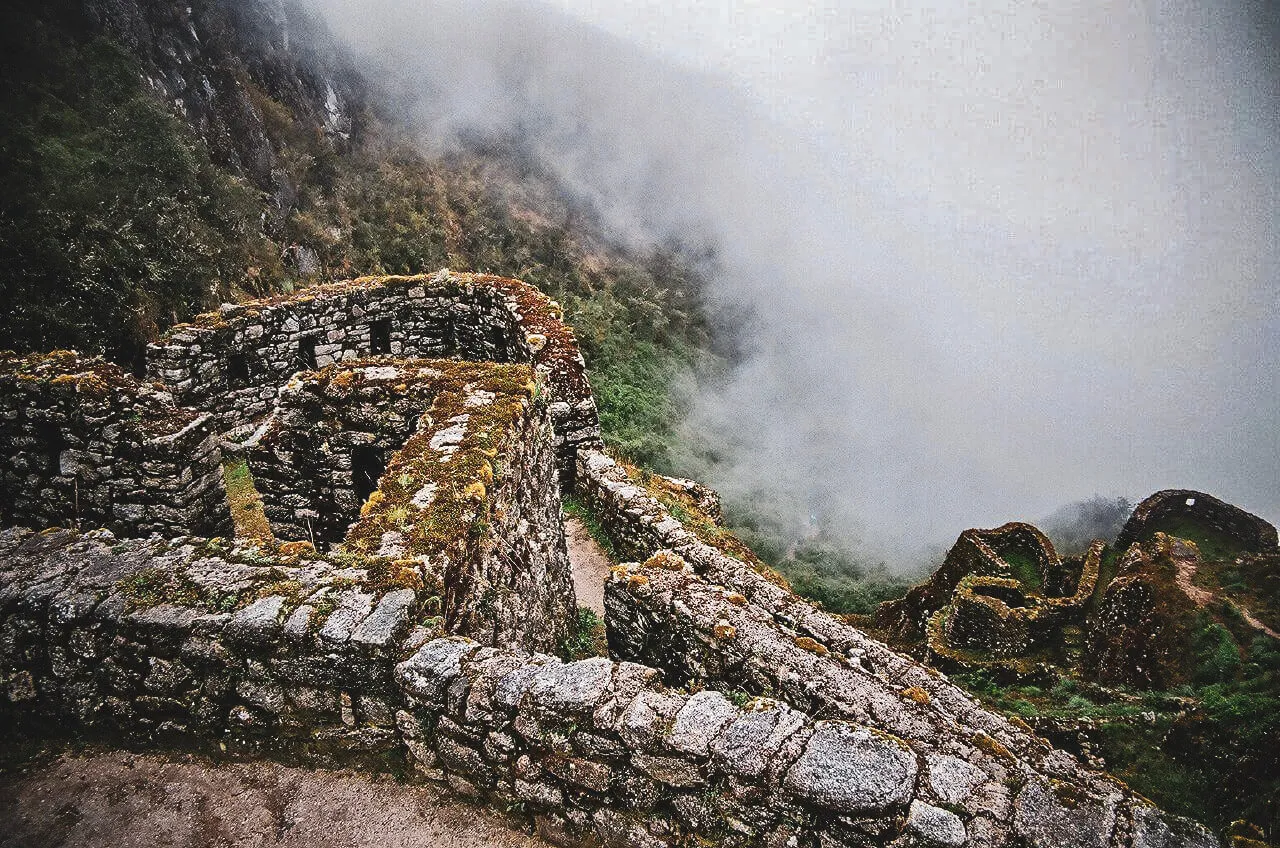
Returning moisture does not repaint the whole route overnight. Exposed high-Andean terrain and the lower cloud-forest corridor can show different seasonal responses within the same trek.
Wiñay Wayna, Intipata and the Intipunku approach should be understood as humid ecological context—not proof that every October departure is lush or wet.
Understand Wiñay WaynaTransition does not mean unlimited
October permits can still become unavailable. Confirm that inventory is released, then verify the departure with an authorized operator before organizing non-refundable logistics.
A checker result is a planning signal—not a reservation, operator contract or weather promise.
Understand permit availabilityPlease wait while we check the selected date.
Dates in the same month currently showing permits
Availability data may be delayed. It does not guarantee a permit, tour departure or confirmed booking.
Shoulder month ≠ empty destination
Culture's dated 2026 resolution set the llaqta's maximum-capacity period through November 2. That does not measure trail crowds, but it prevents a false promise of a quiet final destination.
Groups spread out while hiking and concentrate at checkpoints, camps and archaeological sites.
Trail visitors join train-based arrivals across separately managed circuits and time slots.
October readiness test
If any answer depends on perfect weather, adjust the equipment or expectations before reserving.
Shell is reachable; pace and spacing change immediately.
The trek still has value beyond one promised photograph.
A protected base layer and sleep system remain dry.
Operator terms and monitoring process are already understood.
Does October fit you?
Classic or Short in October?
Route 5 removes multi-night camping and high passes. It still includes stone, cloud forest, sustained ascent and regulated access.
Choose it when the full high-pass, campsite and ecological progression remains worth several days of transition-weather exposure.
Choose it to reduce total exposure and remove trail camping while preserving Wiñay Wayna and Intipunku.
October packing changes
This is the October adjustment, not a duplicate packing list. Confirm supplied equipment and porter-load rules.
Pack it where it can be worn before clothing and straps become wet.
Separate the sleep system, medication, documents and electronics.
Use tested tread and downhill control for irregular, potentially wet stone.
Rain, wind and stopping can cool the body even after a warm climb.
Cloud and transition weather do not remove high-altitude UV exposure.
Confirm current pole-tip rules and practice technique before the trek.
October 8
The Battle of Angamos is a national holiday in Peru. It does not automatically close the Inca Trail; verify service hours, transport and current notices for the applicable year.
Operator questions for October
Inca Trail Company is an independent information and availability platform, not a tour operator. SERNANP requires authorized operators for the protected network.
Compare operatorsAround October
Move earlier when lower rain uncertainty matters more than October's returning moisture.
September guide →Next · NovemberMove later only when a wetter planning framework and greater rain exposure remain acceptable.
November guide →Full calendarBalance weather probability, permit pressure, scenery and fixed travel dates.
Best-time guide →October questions
October can be excellent. Its value depends on whether changing weather is an acceptable part of the trek.
Yes, for hikers who accept a transition month. October can still offer favorable walking periods, while showers, cloud and changing visibility become more relevant as November approaches.
SERNANP identifies November through March as the sanctuary's rainy season. October is immediately before that official window, so it should be treated as a transition—not guaranteed dry season or full rainy season.
It can. SENAMHI recorded several precipitation events and normal-to-very-humid conditions in parts of Cusco during October 2025. That dated year demonstrates variability, not the forecast for another October.
If reducing rain uncertainty is the priority, early October is the more conservative part of the month. The comparison is a seasonal planning tendency; actual conditions require current notices.
There is no single trail temperature. Elevation, wind, cloud and campsite assignment matter. Days can feel warm while climbing, with colder passes, evenings and early starts.
Do not assume so. Access remains regulated and date-specific. In 2026, all of October also fell within Machu Picchu's maximum-capacity period, showing that the wider corridor was still treated as high season.
No. Machu Picchu receives visitors through trains and several circuits in addition to the Inca Trail. Trail flow and llaqta capacity are separate systems.
Yes. Cloud can reduce or remove the first view, then move later. October is a poor choice if one guaranteed cloud-free photograph determines whether the trip succeeds.
Choose the Classic route for the full multi-day journey when longer weather exposure is acceptable. Choose Route 5/Km 104 to remove trail camping and reduce total exposure. Both remain regulated.
Move waterproofing and dry storage from backup status to daily systems. Keep the shell accessible, protect sleep layers internally and retain warm and sun layers.
Official sources establish the rainy-season boundary, dated October precipitation, 2026 Machu Picchu capacity, advance reservations, operator requirement and national holiday.
Early–late October guidance is a conservative seasonal inference. Current SENAMHI and access notices remain decisive for a specific departure.
Reviewed August 10, 2026 · Corrections: contact our editorial team
October fits the mindset?
Transition weather becomes manageable when route access, dry storage, expectations and operator terms all align.