
Proven hiking
The child has completed long, hilly walks and still wants to hike again.
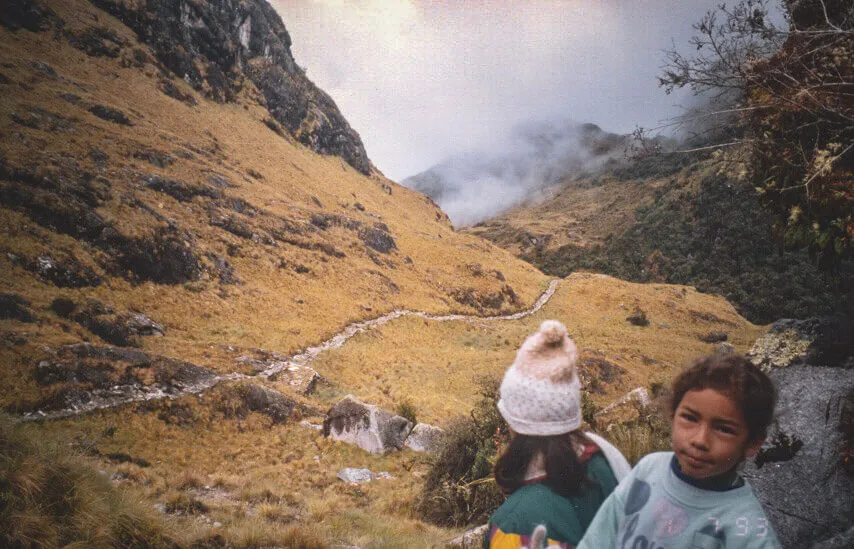
A family decision—not a childhood challenge
Some children can thrive here. The right question is whether your child has tested the route's physical, practical and emotional demands—and still wants to go.
Another child's success is a story—not a suitability test.
A child's age cannot reveal hiking experience, balance, camping tolerance or what happens when they are tired. The useful evidence comes from progressively difficult family hikes, honest conversation and a willingness to choose the Short Trail or train when the Classic route does not fit.
This guide supports planning. It cannot medically clear a child or override an operator's written policy.
Assess family readinessReadiness has eight parts
Finishing a walk is not the only result to observe. Notice whether the child needed repeated pressure, could explain discomfort and would willingly repeat meaningful activity the next day.
The child has completed long, hilly walks and still wants to hike again.
They understand the difficult parts and want the experience for themselves.
They reliably describe headache, nausea, dizziness, pain, cold or unusual fatigue.
They respond consistently around steep steps, camps and archaeological sites.
They climb and descend irregular ground without constant physical assistance.
For the Classic route, they can repeat meaningful activity the following day.
They have tested tents, basic facilities, early starts and changed sleep.
Adults will change the route or stop without framing it as failure.
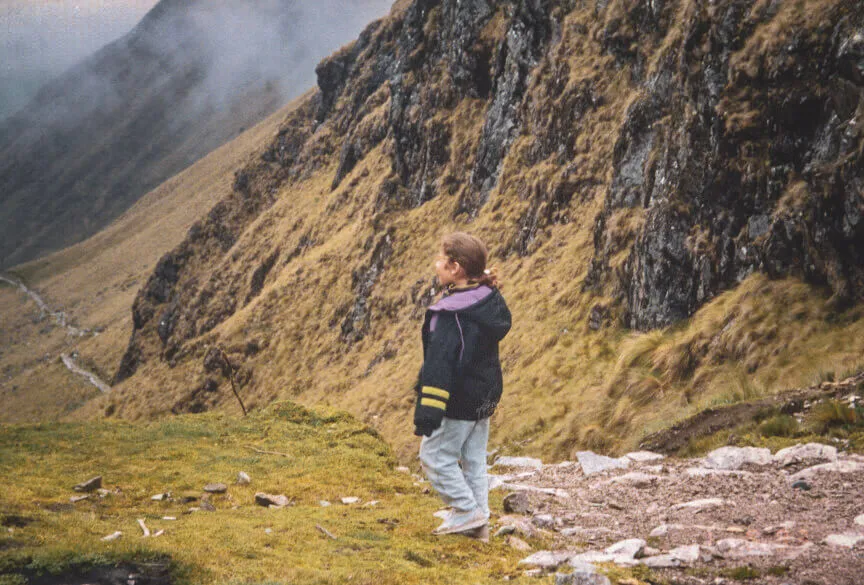
Signals to slow the booking down
Several uncertain answers do not end the Peru trip. They can point toward the Short Trail, a train-based visit or more preparation before a future trek.
One trail network, different commitments
The Short Trail is not simply a smaller Classic itinerary. It removes multi-day camping and the highest passes, but retains a substantial mountain hike and archaeological approach.
| Decision factor | 4-Day Classic Inca Trail | Short Inca Trail |
|---|---|---|
| Trail format | 4 days / 3 camping nights | One principal hiking day; normally hotel-based trip |
| Official route distance | 33.7 km | Approximately 10.5 km |
| Highest-terrain context | Includes Warmiwañusca at about 4,215 m | Avoids the Classic route's highest passes |
| Recovery demand | Repeated hiking days | One substantial hiking effort |
| Family test | Back-to-back hiking plus camping | One long climb-and-descent day |
| Consider when | Everyone has tested multi-day readiness | The family wants trail and archaeology with less cumulative commitment |
Replace guesswork with a rehearsal
Build up gradually first. Then reproduce the parts families often overlook: descent, pack management, a basic night, imperfect sleep and another active morning.
The result is not pass or fail. It tells you whether to train longer, choose the Short Trail or proceed to an operator assessment.
Adapt the training guideSeveral hours on a hilly, uneven route with a real descent and the intended daypack.
Normal meal, packing tasks and a tent or deliberately simple overnight setup.
Another meaningful walk—not a recovery day spent entirely in transport.
Ask what the child enjoyed, feared and would change before asking whether they finished.
Children need observation, not assumptions
CDC states that children are as susceptible to high-elevation effects as adults. Older children may describe headache or breathlessness; young children who cannot talk can show non-specific changes such as appetite loss, irritability, fussiness, sleep changes or different activity.
Gradual ascent is preferred. Unexplained symptoms after ascent need attention, and descent can be necessary. A fixed permit must never become a reason to push a symptomatic child higher.
Understand symptoms and responseComfort is part of safety
Children may become dehydrated more quickly during gastrointestinal illness, and familiar snacks can help when available food is unappealing. Dietary needs, allergies and treated-water procedures should be confirmed before departure.
For the Classic route, ask what sleep system, tent arrangement, toilets and washing access the operator actually provides. Test the child's footwear and layers on real outings.
Review trail food and dietary checksA correctly fitted light pack with an accessible layer, water and one familiar snack.
Shared equipment, backup layers, first-aid supplies and items that would overload the child.
Sleeping equipment, treated water, meals, porter service and exact personal baggage limits.
Shoes, rain layers, sun protection, pack fit and camp sleep before Peru.
Why families choose it
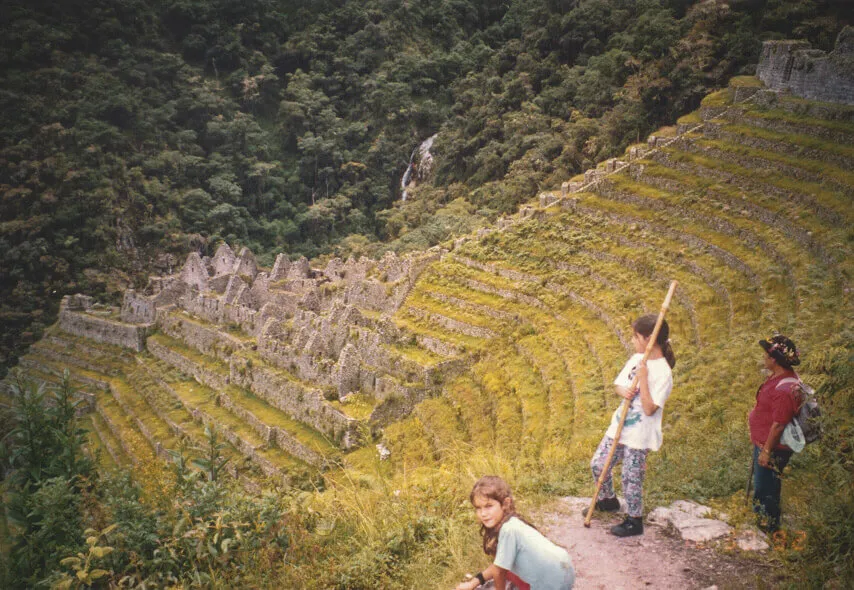
Walking connects landscape, engineering and archaeology in a way transport cannot reproduce. On the Classic corridor, sites such as Patallaqta, Runkurakay, Sayaqmarka, Phuyupatamarka and Wiñay Wayna build the story before Intipunku and Machu Picchu.
The Short Trail also includes Chachabamba, Wiñay Wayna and Intipunku. Choosing it can preserve the part a family values most without requiring four trekking days.
Explore the archaeological sites in route order →Authorization is the floor
Official access requires an authorized tourism operator. That confirms the access channel, not the company's suitability for your child.
Before any deposit, distinguish the official access rules from the operator's own minimum-age policy, screening standard, staffing and insurance requirements. A private service can improve guide attention, but it does not establish family readiness.
Compare operator standardsEvery traveler must be recorded correctly
Ask the operator which identity document, minor category and separate Machu Picchu admission apply to every child. Names and document details must match the regulated booking requirements supplied by the responsible seller.
School holidays can narrow date flexibility, so check route availability before fixing flights and the rest of the Cusco itinerary. Inventory does not prove family suitability or reserve a place by itself.
Read the permit guidePlease wait while we check the selected date.
Dates in the same month currently showing permits
Availability data may be delayed. It does not guarantee a permit, tour departure or confirmed booking.
Decide in this order
A permit date can create pressure to justify a route. Reverse that sequence and the decision becomes clearer.
Use tested hiking, communication, consent, terrain and recovery.
Classic, Short or train—without treating difficulty as prestige.
Preserve acclimatization and school-travel constraints.
Compare policy, staffing, food, equipment and withdrawal plan.
Family questions
Official eligibility, operator acceptance and a child's readiness are three different decisions.
Some can. The decision depends on the selected route, proven hiking experience, communication, motivation, altitude planning and the operator's policy—not on another family's success.
There is no universal best age. Two children of the same age can differ completely in hiking experience, maturity, camping tolerance and ability to report symptoms.
We found no universal minimum visitor age in the current official material reviewed. Individual operators can still set their own acceptance policy, and absence of an official cutoff does not establish readiness.
It can suit children who already enjoy long hikes, manage steep uneven terrain, recover on consecutive days, tolerate camping and genuinely want the challenge. It should not be their first major hike.
Often, but not automatically. It removes repeated trekking days, camping and the Classic route's highest passes while retaining one substantial 10.5 km mountain day with ascent and stone stairs.
Carrying changes the physical burden but does not remove the child's altitude exposure, weather exposure or evacuation constraints. Families considering infants or non-verbal children need itinerary-specific medical and operator advice.
Use progressively longer walks, hills, stairs, uneven terrain and the footwear and light daypack planned for Peru. For the Classic route, test consecutive hiking days and camping.
No. CDC states that children are as susceptible as adults and that physical fitness does not determine susceptibility. Gradual ascent, observation and early reporting remain important.
It may provide clearer pace and attention, but it cannot change the protected route, control schedules or evacuation reality. Compare the actual staffing and procedure, not the label.
Every traveler must be included correctly in the regulated booking. Ask the authorized operator which identity documents, minor category and separate Machu Picchu admission apply; do not assume a child is added informally to an adult permit.
SERNANP supplies current route, distance and regulated-access context. CDC supplies pediatric travel and altitude guidance.
Family anecdotes were not used as proof of suitability. Exact policies, ticket categories, inclusions and emergency resources must be confirmed for the selected departure.
A good family trek respects a child's answer
The best route is the one your family can experience with curiosity, enough energy and permission to change course.