
Possible state
Bright opening
Direct sun at altitude can feel strong even during rainy season. Keep sun protection accessible.
Rainy season · route normally open
Hike in January if the historic route matters more than dry stone or a guaranteed view. Expect green landscapes, frequent rain and four days that no monthly average can predict.

Open
Wet
Worth considering
The honest verdict
SERNANP identifies November through March as the sanctuary’s rainy season and recommends April through October for visiting conditions. January still suits flexible hikers who value lush scenery and accept wet stone, damp camping and uncertain visibility.
January at a glance
The trail moves between valleys, exposed passes and humid forest. Conditions at one elevation do not describe the whole walking day.
How a January day can change
These are plausible transitions, not a clock-based forecast. Prepare for all three states every day.
Direct sun at altitude can feel strong even during rainy season. Keep sun protection accessible.
A short shower may pass—or settle in. Waterproofs must be reachable before the pack interior gets wet.
Mist can remove the horizon while revealing closer stone, forest and water in sharper detail.
SERNANP’s broad route context spans very different elevations and reports rainy season from November to March. Monthly labels cannot predict your four trekking days.
What rain changes
Distance, passes and stairs remain. January adds traction, drying and visibility decisions to the normal physical demands.
Rain can make steps and long descents slippery. A conservative pace and deliberate foot placement matter more than preserving dry-weather speed.
A tent protects the sleeping space only if wet outer layers and packs are managed carefully. Keep sleeping clothes isolated in their own dry bag.
Lower sections may feel mild while exposed elevations feel much colder. Carry an accessible insulating layer instead of burying it deep in the duffel.
Cloud can hide Machu Picchu from the Sun Gate and clear minutes later. January rewards patience, but it cannot promise the panorama.
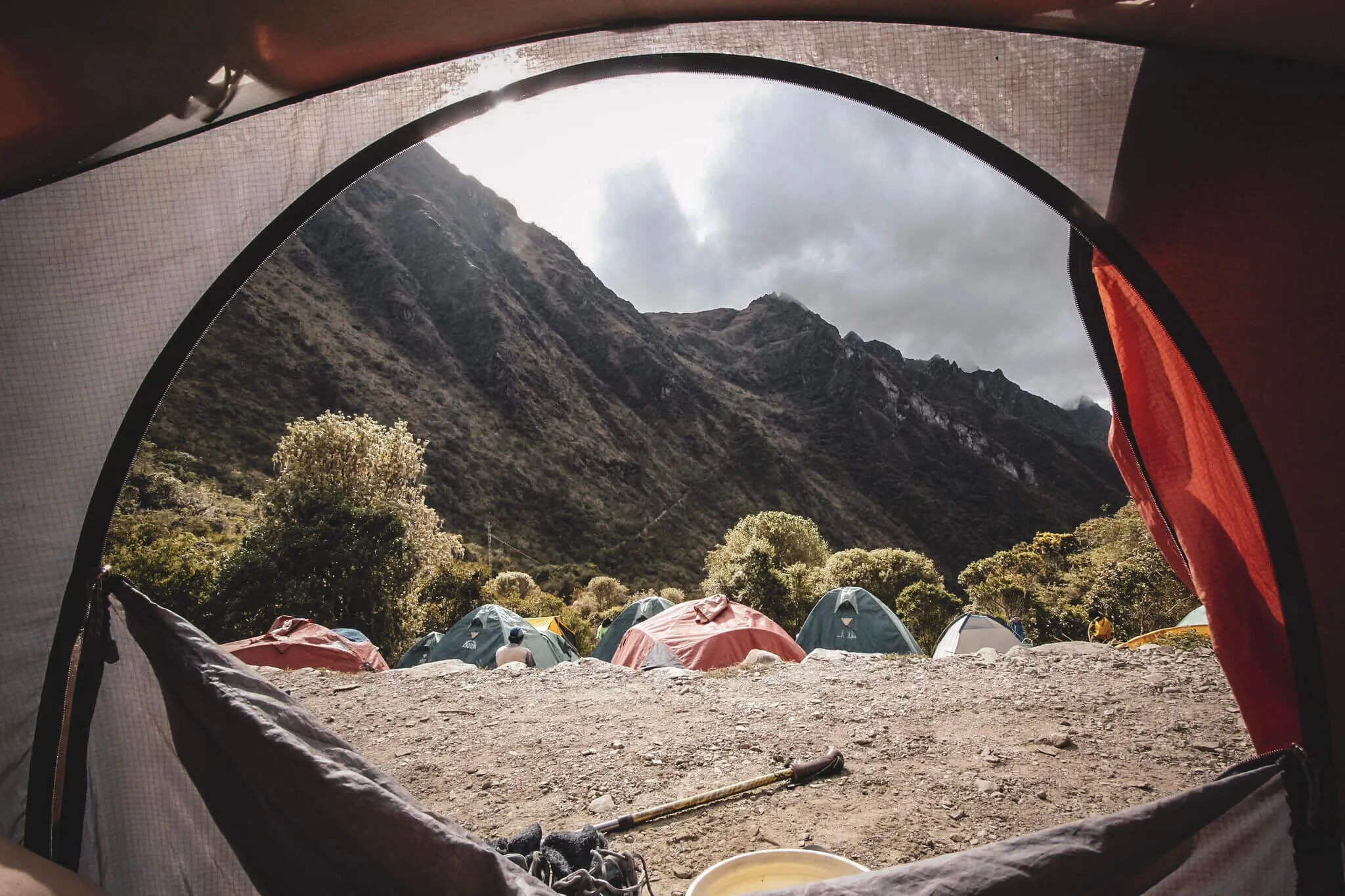
The January comfort test
Rain itself is only part of the decision. The repeated cycle—walk, arrive, isolate wet layers, protect sleeping clothes and repack—determines how comfortable the Classic route feels.
Understand campsites and facilitiesSuitability check
Classic or Short?
Both regulated routes can operate in January when permits and conditions allow. The Short Trail changes duration and camping, not the month.
The complete pass, campsite and archaeological progression. Best when completing the traditional multi-day route outweighs the added wet-weather logistics.
A concentrated historic-trail experience without several camping nights. Useful when time and damp-camp tolerance—not rain itself—are the constraint.
Availability is date-specific
Peru’s 2026 sales process explicitly opened January inventory, confirming that January is an operating month rather than the scheduled closure. But availability still changes by route and exact departure.
Use the result to plan; it is not a confirmed booking or operator reservation.
How permits workPlease wait while we check the selected date.
Dates in the same month currently showing permits
Availability data may be delayed. It does not guarantee a permit, tour departure or confirmed booking.
January packing changes
This is the wet-season adjustment, not a complete packing list. Weight limits and supplied equipment depend on the operator.
A real outer layer with a hood; not only a windbreaker.
Useful when rain lasts longer than a passing shower.
Protect documents, electronics, medication and camp clothing inside the pack.
Reliable wet-stone grip matters; new boots create a second problem.
Separate dry camp pairs from the walking rotation.
Extra stability on descents when used with controlled technique.
Cotton is difficult to manage once saturated.
Rainy season does not remove high-altitude UV exposure.
Operator questions for January
Judge preparation, communication and equipment instead of promises about sunshine.
How to compare operatorsBefore and after January
Similar seasonal uncertainty, with travel demand affected by year-end dates.
December guide →Next · FebruaryFebruary is not a wetter version of January. It is the scheduled maintenance closure.
February alternatives →Next open month · MarchMarch restores access after maintenance, subject to official reopening and actual conditions.
March guide →January questions
Patterns explain the trade-off. Current conditions and inventory decide the trip.
Normally, yes. January inventory was explicitly included when Peru opened the 2026 Camino Inka reservation process. February is the scheduled annual closure month. Any exceptional restriction or weather disruption still needs to be checked for the actual departure.
It can be a good fit for travelers who accept rain, wet stone, cloud and damp camping in exchange for green scenery and generally lower demand than the middle of the dry season.
Not necessarily. Rain can be brief, intermittent or prolonged, and conditions vary across elevation zones. Plan to hike in rain instead of assuming either continuous rain or a reliable dry window.
It may be clear, partly obscured or hidden by cloud when you arrive. Visibility can change quickly, but no guide or forecast can guarantee the classic January panorama.
The distance and altitude do not change, but wet stone, mud, slower descents and damp equipment can add physical and mental effort.
January demand is often lower than peak dry-season demand, but permits remain limited by exact date and route. Check inventory rather than treating a seasonal pattern as availability.
It reduces time on the trail and removes multi-night camping, which can make wet-weather logistics simpler. It does not remove rain, cloud or slippery stone.
Prioritize a waterproof shell, rain pants, internal dry storage, quick-drying layers, spare socks and footwear already tested on wet or uneven ground. Keep warm layers and sun protection too.
This guide uses official seasonal context and current access records, then translates them into conservative planning implications for trail surface, visibility, camping and equipment. It does not convert a regional average into a daily forecast.
January still fits?
Weather tolerance selects the month. Current inventory determines whether the regulated route is possible.